Why Knowing Good vs Bad Microblading Could Save Your Face (and Your Money)
Good vs bad microblading comes down to a handful of clear differences you can spot in any artist’s portfolio — before you ever book an appointment.
Quick answer: how to tell good from bad microblading
| Good Microblading | Bad Microblading | |
|---|---|---|
| Strokes | Crisp, individually visible, natural flow | Blurred, parallel “ladder” pattern, crossed “fishbone” lines |
| Color | Stays in the brown family as it fades | Shifts to gray, blue, orange, or red over time |
| Shape | Custom-mapped to your bone structure | Boxy, stencil-stamped, one-size-fits-all |
| Photos | Healed results shown (4-8 weeks post-procedure) | Only fresh, filtered, or heavily edited photos |
| Edges | Soft and natural at the front | Harsh, dark outlines with sharp boxy fronts |
If you’ve spent any time scrolling brow portfolios, you already know the problem. They all look good at first. Fresh microblading is almost always sharp and impressive right after the appointment. The real story shows up 6-8 weeks later — once the skin has healed, the pigment has settled, and the filters are gone.
And the stakes are real. Microblading is a cosmetic tattoo that lasts 12-18 months or longer. A poor result isn’t something you wash off before work. Fixes require either expensive laser removal sessions (typically $300–$1,000 per session) or waiting for the pigment to fade on its own over one to three years.
The good news? Bad microblading has a very recognizable set of warning signs. Once you know what to look for, you can protect yourself before sitting in the chair.
This guide walks you through everything — from reading a portfolio like a pro, to understanding why results go wrong, to knowing your options if they already have.
Understanding the Basics: What is Microblading?
To understand the difference between good vs bad microblading, we first have to look at what’s actually happening to your skin. Unlike a traditional tattoo that uses a machine to buzz ink deep into the dermis, microblading is a manual technique.
We use a handheld tool equipped with a row of tiny, fine needles (often 14 to 18 needles in a line) that act like a small blade. This tool creates paper-thin cuts in the epidermal layer of the skin. As these channels are opened, we implant specialized pigment. The goal? To mimic the look of individual, natural hair strokes.
According to Cosmopolitan, microblading is technically a tattoo, but it is considered semi-permanent because the pigment particles are smaller and placed more superficially than a “forever” tattoo. Because the skin on your face exfoliates and regenerates constantly, these strokes naturally fade over time. You might wonder, Is Microblading Permanent? Not exactly. While the pigment can linger for years, it typically requires a “perfecting” touch-up 6–8 weeks after the first session and maintenance every 12–18 months to keep looking its best.
Good vs Bad Microblading: How to Spot the Difference
Spotting good vs bad microblading is an art form in itself. When you look at Microblading Before After photos, your eye should be drawn to how the new “hairs” blend with the real ones.
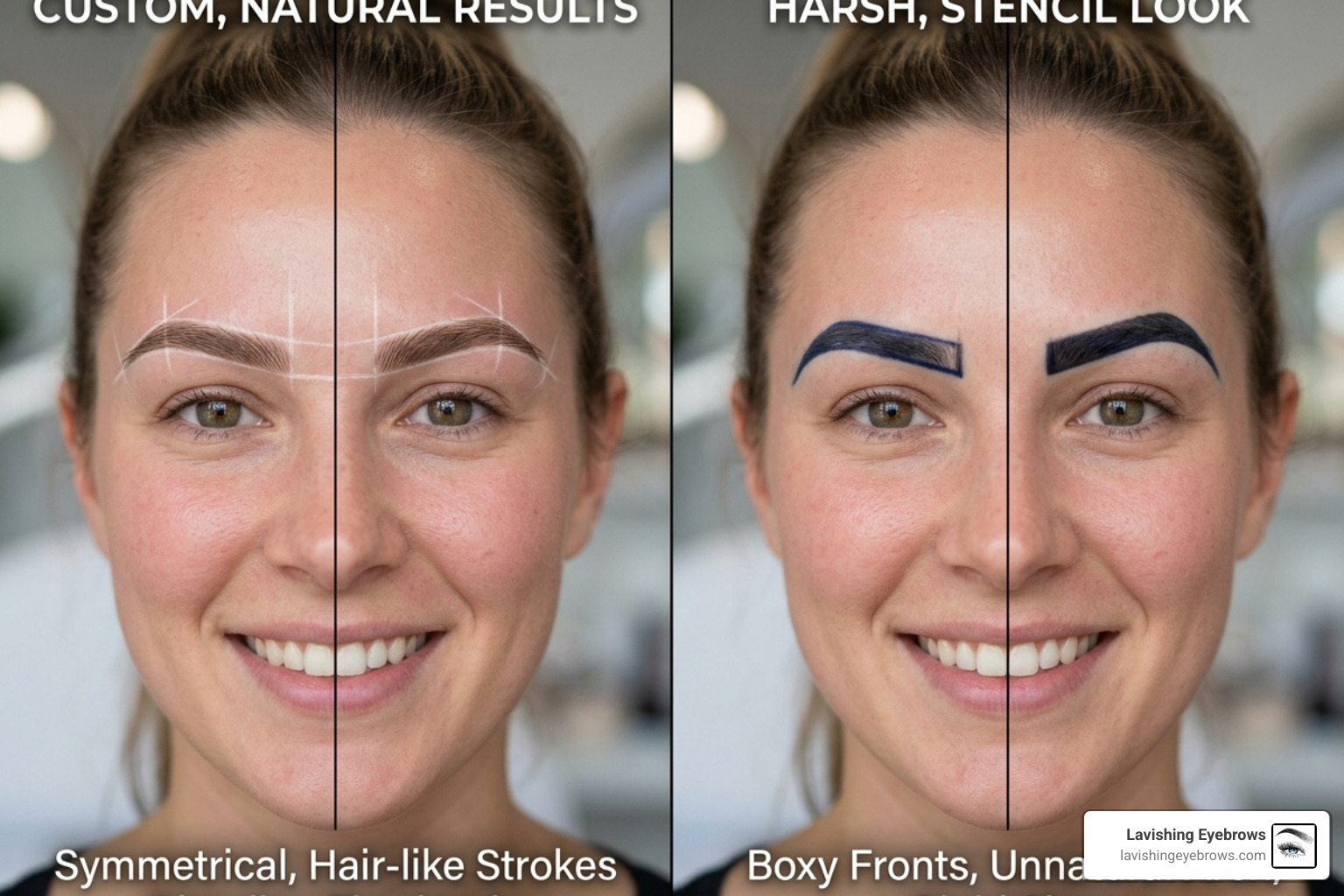
The most glaring difference often lies in the mapping. A high-quality artist uses your unique bone structure, orbital bone, and facial proportions to “map” a shape that belongs to you. “Bad” microblading often looks like a “one-size-fits-all” stencil—boxy at the front and unnaturally arched.
| Feature | High-Quality Artistry | Low-Quality Technical Errors |
|---|---|---|
| Stroke Depth | Consistent, superficial, and crisp | Too deep (causes blurring/graying) or too shallow (fades in days) |
| Pattern | Mimics natural hair growth direction | “Ladder” rungs or “fishbone” patterns that cross over |
| Pigment | Matches hair undertones (cool vs. warm) | One-size-fits-all black or “sharpie” brown |
| Symmetry | Sisters, not twins (natural balance) | Uncanny valley (perfectly identical but looks fake) |
Signs of High-Quality Artistry in a Portfolio
When browsing Our Work, you should look for “healed” results. Anyone can make a fresh brow look sharp for a photo, but the true test of skill is how it looks 4–8 weeks later.
In a high-quality portfolio, you will see:
- Natural Flow: The strokes follow the direction your real hair grows.
- Color Stability: The brows remain in the brown family and don’t turn an odd shade of pink or blue.
- Crispness: The strokes remain individually visible without “bleeding” into each other.
- Customization: No two sets of brows in the portfolio look exactly the same because every face is different.
Red Flags and Common Signs of Bad Microblading
The world of Microblading Risks is often hidden behind filters. Here are the red flags that scream “run”:
- Ladder Strokes: When the strokes are perfectly parallel and evenly spaced like rungs on a ladder. Real hair doesn’t grow that way.
- The Fishbone: When strokes are slanted toward a center line from both the top and bottom, creating a “skeleton” look.
- Color Shifts: If you see brows that have turned blue-gray, it usually means the pigment was placed too deep. If they’ve turned orange or red, the artist likely used a low-quality pigment or failed to balance the client’s warm undertones.
- Blurring (Blowouts): This happens when the artist presses too hard, causing the pigment to spread under the skin like a drop of ink on a paper towel.
Why Results Go Wrong: Skin Types and Risks
Sometimes, the “bad” in good vs bad microblading isn’t just about the artist—it’s about the canvas. Your skin type plays a massive role in how pigment heals.
Oily skin is the primary “nemesis” of traditional microblading. High sebum (oil) production can act like a solvent, causing those crisp hair strokes to expand and blur as they heal. This is often called “fanning out.” If you have very large pores in your T-zone or excessively oily skin, manual microblading might leave you with a soft, powdered look rather than distinct hairs.
Safety is another major factor. As WebMD points out, there are medical risks like infection, allergic reactions, and even granulomas (small bumps that can form around the pigment). You must ask yourself, Microblading is it Safe? It is, provided you choose a licensed professional who uses 100% disposable, single-use tools and follows strict sterilization protocols.
Who Should Avoid Microblading?
Not everyone is a candidate for this procedure. According to PBT America, you should avoid microblading if you:
- Are on Accutane: You must wait at least one full year after finishing this medication, as it thins the skin significantly.
- Are Pregnant or Nursing: Hormonal changes affect pigment retention, and the risk of infection (however small) isn’t worth it for the baby.
- Have Keloid Scarring: If your skin tends to heal with raised scars, microblading can trigger this on your face.
- Have Active Skin Conditions: Eczema, psoriasis, or chronic acne in the brow area will prevent the pigment from settling correctly.
- Use Retinol/Vitamin A: You must stop these at least a month prior, as they speed up cell turnover and will cause your “permanent” makeup to disappear prematurely.
The Critical Role of Aftercare in Preventing Bad Results
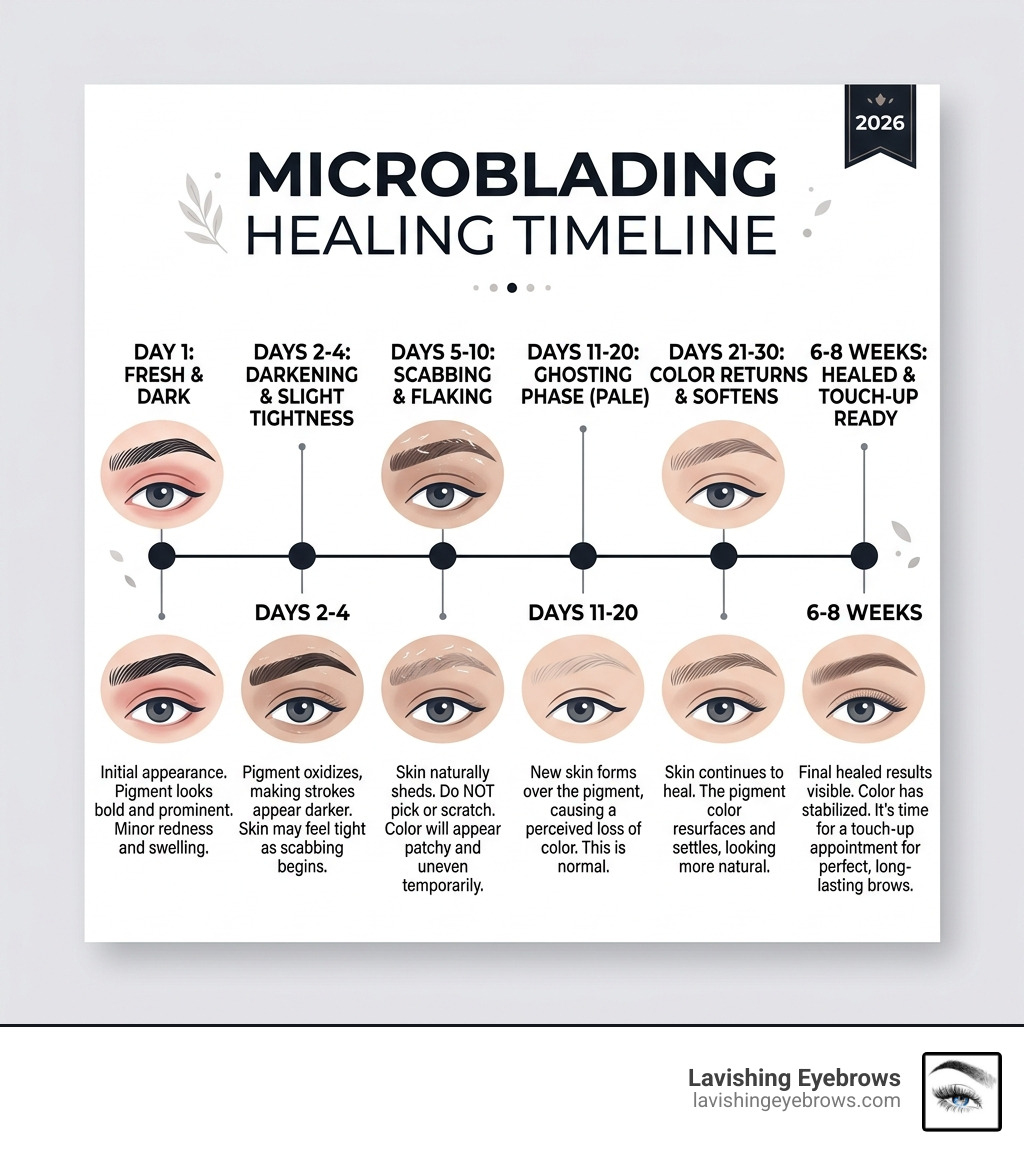
You can go to the best artist in the world, but if you don’t follow the aftercare, you’ll end up with a “bad” result. We often say that the artist is responsible for 50% of the result, and the client is responsible for the other 50% during the 10–14 day healing window.
The Pros and Cons of Microblading often hinge on this period. You must keep the area clean and dry. This means no sweaty workouts, no swimming, and no long, steamy showers for at least a week. You also have to blot away the “lymph fluid” (that clear liquid that beads up) in the first 48 hours. If that fluid dries on the skin, it creates a thick scab. When that scab falls off, it takes the pigment with it, leaving you with patchy, “bad” brows.
Long-Term Maintenance and Safer Alternatives
Microblading is a journey, not a one-time destination. Over 12–18 months, your body naturally metabolizes the pigment. Sun exposure is the biggest culprit for fading; UV rays break down the iron oxide or organic pigments used in the ink.
Allure notes that without touch-ups, the pigment will typically disappear entirely within three years. However, if the artist went too deep, you might be left with a permanent “shadow” that requires correction. This is why many people are moving toward Microblading vs Nanoblading.
Better Options for Oily or Sensitive Skin
If you’ve been told you aren’t a great candidate for microblading, don’t worry—there are better, modern alternatives.
- Nano Brows: This uses a machine with a single, ultra-fine needle to “tap” the pigment into the skin. It creates the look of hair strokes but is much gentler on the tissue and lasts longer on oily skin.
- Powder/Ombre Brows: Instead of lines, this technique uses a stippling method to create a soft, misty look that resembles brow powder. It’s the “gold standard” for longevity and works on every skin type.
- Microshading: This is a hybrid. You get the hair strokes at the front (microblading) and shading through the tail for density. Check out Microblading vs Microshading Eyebrows to see which fits your style.
How to Fix Bad Microblading
If you’re currently living with a “brow-tastrophe,” you have options.
- Saline Lightening: A specialized solution is tattooed over the old work to “draw out” the pigment. It’s gentler than laser but takes multiple sessions.
- Laser Removal: Best for very dark or saturated “bad” brows. Picosecond lasers are the industry favorite for removing cosmetic ink.
- Color Correction: If your shape is okay but the color is “off” (like orange or gray), an expert can use “complementary colors” to neutralize the tone.
When comparing Nano Brows vs Microblading Which One Wins the Popularity Contest, machine-based work is often easier to correct or cover than deep, scarred manual strokes.
Frequently Asked Questions about Good vs Bad Microblading
How long does microblading typically last before it looks “bad”?
Microblading usually looks its best for the first 10–12 months. Around the year mark, you may notice the strokes starting to blur slightly or the color losing its “punch.” If you have oily skin or spend a lot of time in the sun without SPF, it might start looking “tired” or patchy by month 8. Regular touch-ups prevent them from ever looking “bad.”
Can bad microblading be fixed without full laser removal?
Yes, in many cases! If the pigment is light enough, we can often perform a “cover-up” using powder brows to mask the old strokes. We have many From Sparse to Spectacular Real Microblading Before After Stories where we transformed old, faded work into something beautiful. However, if the old work is very dark, thick, or outside your natural brow line, removal is usually the first step.
Does microblading cause permanent scarring over time?
It can. Because microblading involves cutting the skin, repeated procedures over many years can lead to a buildup of scar tissue. This tissue is tougher and doesn’t hold pigment as well. This is a major point in the Microblading vs Nanoblading Which One is Your Arch Nemesis debate—nano brows (machine work) cause significantly less trauma to the skin, making them a safer long-term choice for your skin’s health.
Conclusion: Choosing Your Artist Wisely
At the end of the day, the difference between good vs bad microblading is the person holding the tool. You aren’t just paying for the pigment; you’re paying for their years of training, their eye for symmetry, and their commitment to your safety.
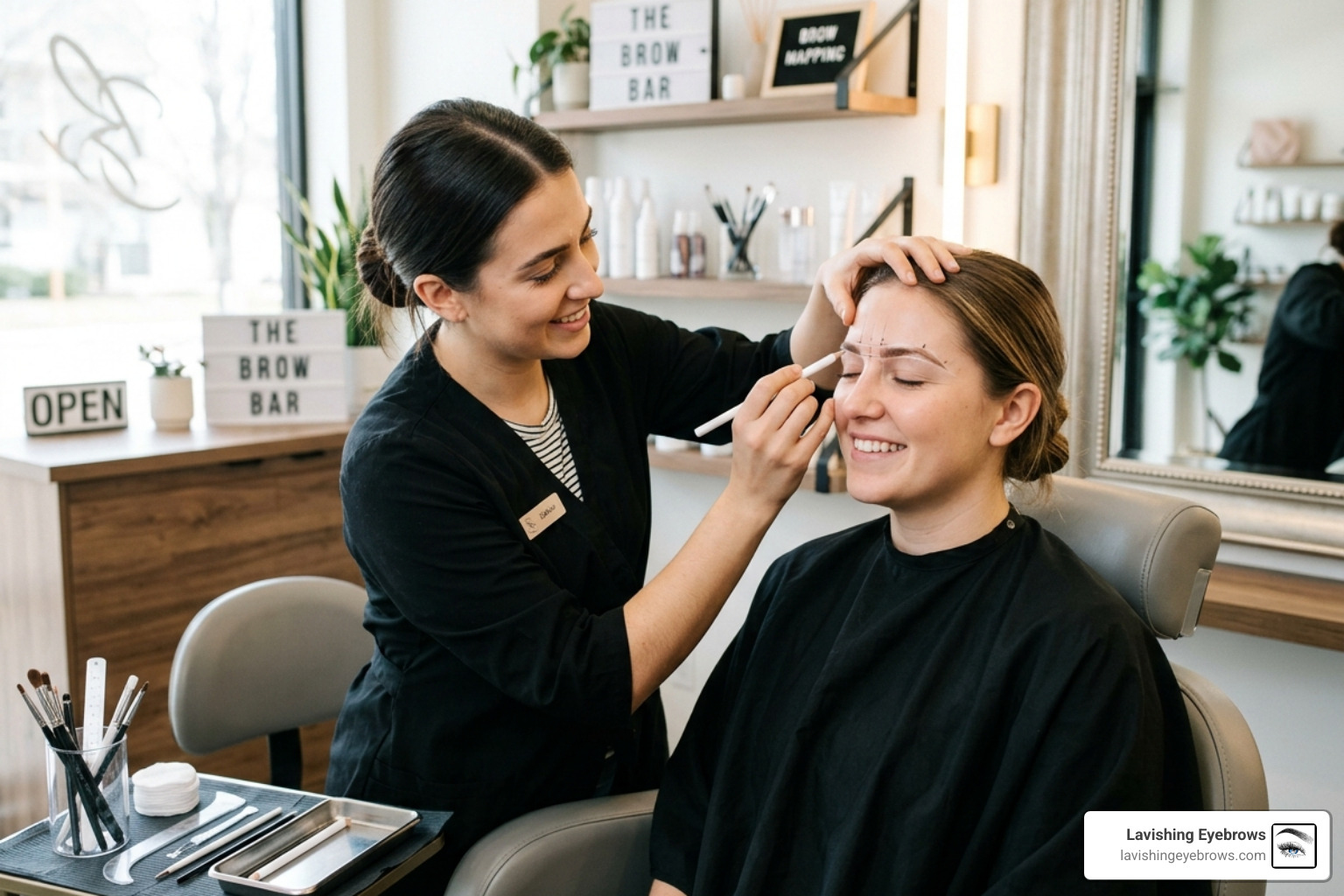
When you’re ready to move forward, look for an artist who:
- Is fully certified and licensed by the local health department.
- Shows a wide variety of healed work on different skin types.
- Uses premium, US-sourced pigments.
- Conducts a thorough, warm consultation to understand your goals.
At Lavishing Eyebrows in Murrieta, CA, our owner Vicky is a perfectionist artist trained by the world’s top academies (PHI, World Microblading, and Mystique). We serve clients across Southwest Riverside County—including Temecula, Menifee, Lake Elsinore, and Corona—who are looking for that perfect balance of technical skill and a personable, reassuring experience. Whether you have over-plucked brows from the 90s or are just tired of the morning pencil routine, we treat every brow as a unique piece of art.
Don’t leave your face to chance. More info about our professional brow services is just a click away. Let’s get you the “good” microblading you deserve!