Microblading Aftercare Process: Master 6-Week Healing
Why the Microblading Aftercare Process Makes or Breaks Your Results
The microblading aftercare process determines whether you’ll achieve stunning, long-lasting brows or disappointing results. While the procedure itself creates the foundation, how you care for your brows during the healing period accounts for up to 50% of your final outcome.
Here’s what the microblading aftercare process involves:
- Gentle cleansing twice daily with antibacterial soap for 7-10 days
- Applying thin layers of ointment (wet healing method) or letting brows heal naturally (dry healing method)
- Avoiding water, sweat, and sun exposure for the first 14 days
- Never picking or scratching the treated area as it heals
- Protecting your investment with SPF and proper long-term maintenance
- Scheduling your touch-up at 6-8 weeks to perfect the results
Think of microblading like getting a tattoo—except it’s on your face, and the healing process requires more precision. As one experienced microblading artist notes in their aftercare guide: “If you are in good health, you should be pleasantly surprised at how easily and quickly your microblading heals.”
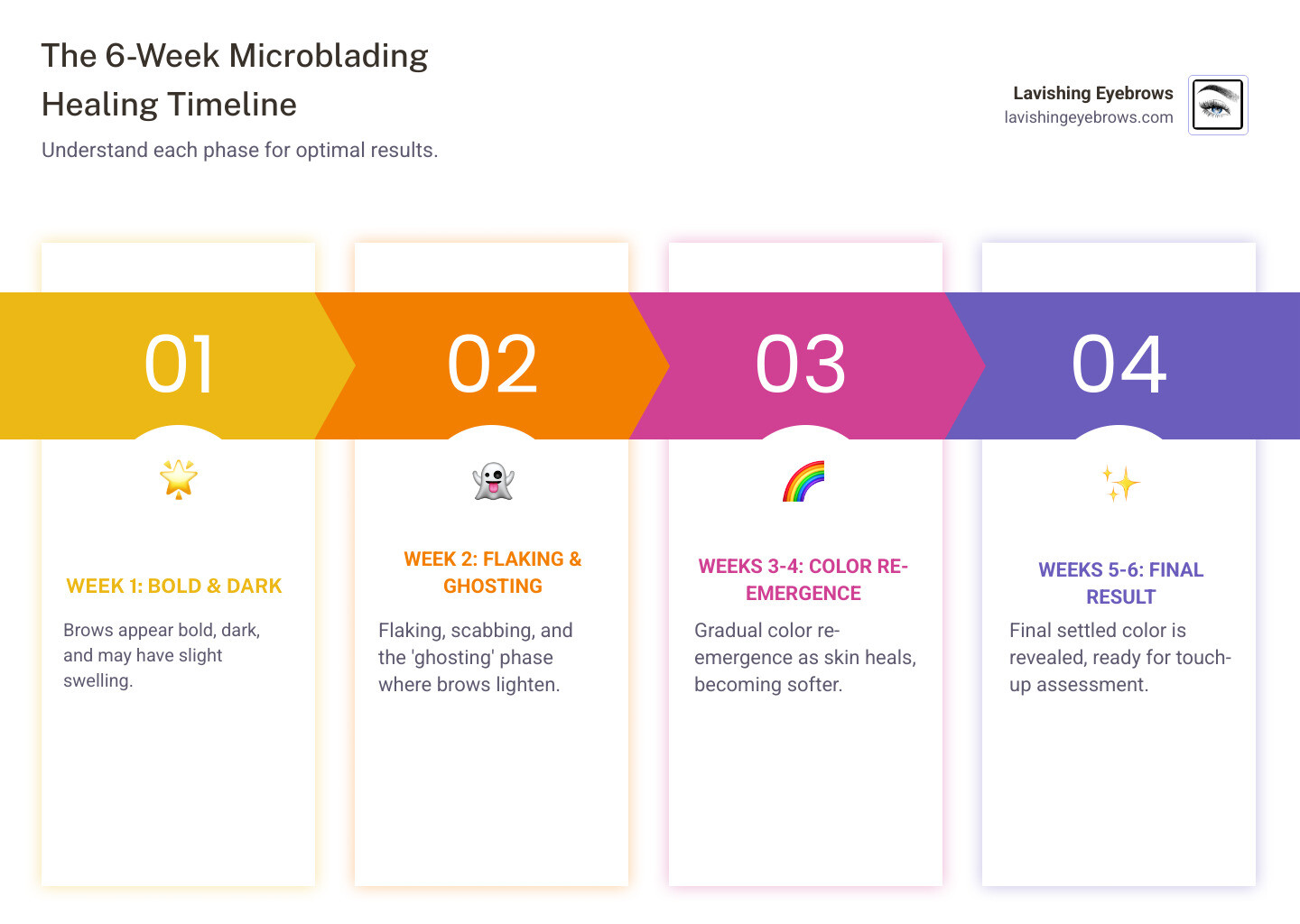
Your brows will go through distinct phases over the next 4-6 weeks. They’ll start bold and dark, then flake and seemingly disappear (the “ghosting phase”), before the color re-emerges softer and more natural. Understanding what to expect at each stage helps you stay calm and avoid common mistakes like picking at scabs or panicking when your brows look too light.
Most clients retain about 60-80% of the initial color after healing. Following these aftercare instructions with exactness—as emphasized by multiple professional microblading studios—is essential to making the most of your investment, which averages around $600.
The Microblading Healing Journey: A Day-by-Day Guide
The journey to perfect brows is a process, and understanding each step of the Microblading Healing Process is crucial. Microblading, considered a tattoo process by the Society of Permanent Cosmetic Professionals, involves implanting pigment into the skin, which then goes through a natural regeneration cycle. This can take anywhere from 7 to 14 days for the skin to appear healed, and up to 6 weeks for the pigment to fully settle into its intended shade. Patience is truly a virtue here!
Days 1-4: The Bold and Darkening Phase
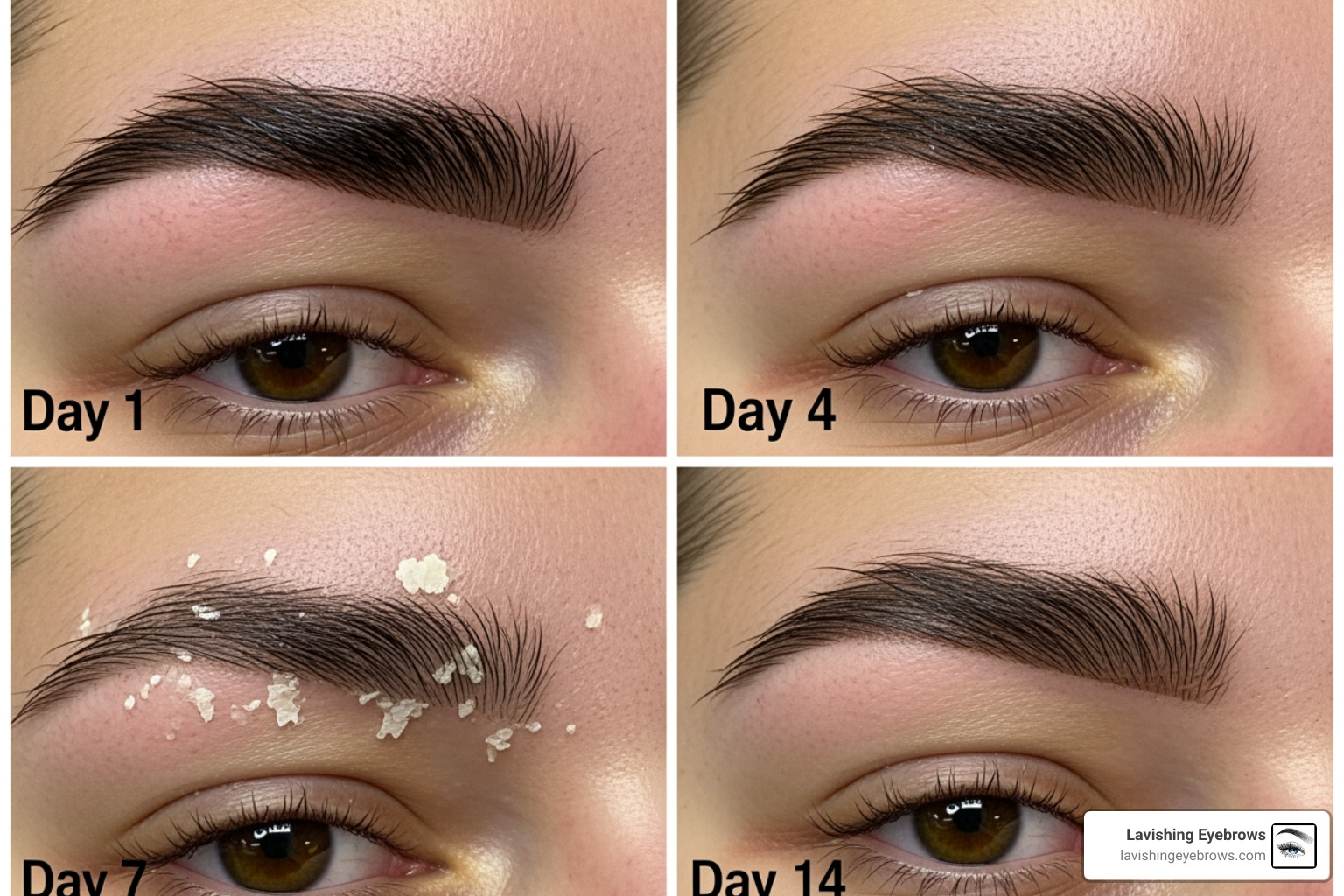
Congratulations on your new brows! On Day 1, you’ll likely be absolutely in love with the shape and immediate results. However, don’t be surprised if your brows appear quite bold and dark, possibly even a bit swollen and red. This is perfectly normal. The color will temporarily darken slightly over the next few days due to oxidation—the pigment reacting with the air and your skin. Tenderness is also expected, similar to a mild sunburn.
To minimize scabbing and ensure a smooth start to your microblading aftercare process, gently blot any excess lymph fluid from your brows on Day 1. We recommend using a clean, sterile gauze or cotton pad and lightly dabbing the area every hour or so until the oozing stops. This prevents the fluid from drying and forming thick scabs.
Days 5-10: The Flaking and “Ghosting” Phase
Around Day 5, you’ll start to notice light scabbing and flaking. This is a natural part of the healing process as your skin sheds the top layer. Itching is a common sign that your skin is regenerating, but it’s absolutely critical to resist the urge to pick, peel, or scratch your brows. Doing so can pull out the pigment, lead to uneven color, scarring, or even infection. Let the flakes fall off naturally.
As the flaking occurs, your brows may appear patchy, uneven, or even significantly lighter—this is what we call the “ghosting phase.” It can be a little alarming, making it seem like the pigment has disappeared entirely. Rest assured, this is a normal and temporary stage. New skin cells are forming over the pigment, creating an opaque layer that temporarily masks the color.
Days 11-28: The Color Re-Emergence
After the flaking has finished, usually by Day 10, your brows will start their “reappearing act.” The new skin cells will continue to mature, becoming more translucent, and the “ghosted” color will slowly begin to reappear, but much softer than the initial dark phase. This is when the true color starts to bloom and settle, and the shape becomes more defined.
During this period, your brows may still look a bit lighter than their final result, as the color is still surfacing. The full color and shape should be fully bloomed and just right around Days 14-28. This phase is crucial for the Eyebrow Tattoo Healing Time as the pigment fully integrates with your skin.
Days 28-42: Fully Healed and Ready for Touch-Up
By the end of this period, typically around Day 42 (or 6 weeks post-procedure), your brows will be considered fully healed from the initial session. The color has settled, and you can now see the final result of the initial pigment implantation. Any patchiness, unevenness, or areas where the pigment didn’t take as well will be assessed.
This is the perfect time to schedule your mandatory touch-up appointment. This session is essential for perfecting the shape, filling in any gaps, and adjusting the color to achieve your dream brows. It’s not just an option; it’s an integral part of the full microblading procedure, ensuring your beautiful brows last.
Your Essential Microblading Aftercare Process: Step-by-Step
Since microblading is indeed a tattoo process, it demands diligent care. Your artist will provide specific instructions custom to your skin type and the method they prefer. Generally, there are two primary aftercare methods: wet healing and dry healing. At Lavishing Eyebrows, we find that the wet healing method often yields the best results, leading to less scabbing and more even color retention.
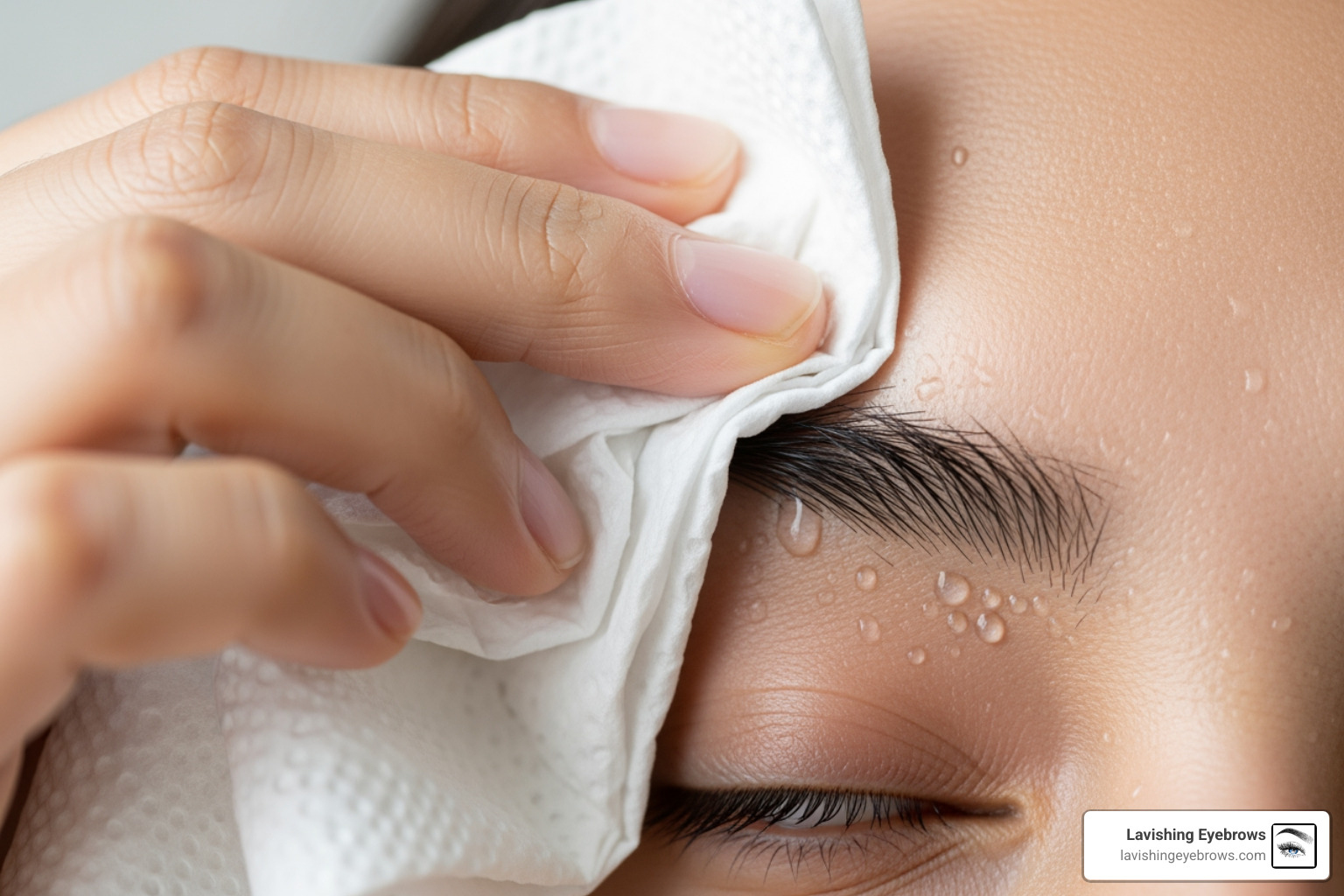
Step 1: Gentle Cleansing
For the wet healing method, gentle cleansing is paramount. You’ll need a few key supplies:
- A mild, antibacterial soap or a specialized Cetaphil Cleanser Wash Eyebrows
- Lukewarm water
- Clean cotton pads or swabs (we recommend using fresh ones each time)
The goal is to keep the area clean and free from excess lymph fluid, which can contribute to heavy scabbing. Here’s how we recommend cleansing:
- Frequency: Cleanse your brows gently morning and night for the first 7-10 days.
- Technique: With clean fingertips, apply a small amount of mild antibacterial soap to your brows. Gently cleanse the area for 10-15 seconds using a patting motion – never rubbing.
- Rinsing: Rinse thoroughly with lukewarm water to ensure all soap residue is removed.
- Drying: Gently pat your brows completely dry with a clean paper towel or tissue. Avoid rubbing, as this can irritate the healing skin.
Do NOT use any cleansing products containing acids (like glycolic, lactic, or AHA) or any exfoliants on your brows during the healing period. These can prematurely fade the pigment and irritate the delicate skin.
Step 2: Applying Ointment (The Wet Healing Method)
After cleansing and gently drying your brows, it’s time for the aftercare ointment. This step is crucial for the wet healing method to keep the area hydrated, prevent excessive dryness, and reduce heavy scabbing.
- Amount: Use a tiny amount – we’re talking half a grain of rice per eyebrow! More is not better; over-saturating the area can suffocate the skin and hinder healing, potentially leading to premature pigment loss.
- Application: Apply this very thin layer of approved aftercare ointment with a clean cotton swab or a clean pinky finger. Ensure the skin is completely dry before application.
- Purpose: This thin barrier helps to protect the healing skin, keep it supple, and promote even pigment retention.
Continue applying the ointment after cleansing until the flaking process has completed, usually around Day 7-10. After this, you can typically discontinue ointment use unless your skin feels excessively dry.
How Skin Type Affects the Microblading Aftercare Process
Your unique skin type plays a significant role in how your brows heal and how we tailor your microblading aftercare process.
- Oily Skin: If you have oily skin, you might experience faster fading because your skin naturally produces more oil, which can push out pigment. For wet healing, we often recommend even more sparing use of ointment and frequent blotting throughout the day (especially the first few days) to absorb excess oil and lymph fluid. Eyebrow blotting pads can be your best friend! Your artist may also use fewer strokes or space them out more to prevent them from blurring.
- Dry Skin: Individuals with dry skin may experience more noticeable scabbing, but often retain pigment very well. Consistent, thin application of the aftercare ointment is crucial to prevent the scabs from becoming too thick and dry, which could cause them to crack and pull out pigment.
- Mature Skin: Thinner and more delicate, Microblading for Older Women requires extra gentle handling during the entire microblading aftercare process. Cleansing should be done with the lightest touch, and ointment applied very carefully. Hydration is key to support the skin’s natural healing capabilities.
Understanding your skin type helps us provide the most effective aftercare instructions, ensuring your brows heal beautifully, regardless of your skin’s unique characteristics.
Wet vs. Dry Healing: Which Method is for You?
When it comes to the microblading aftercare process, the two primary methods are wet healing and dry healing. While your artist at Lavishing Eyebrows will always provide specific instructions based on their expertise and your individual needs, understanding the differences can help you feel more prepared.
Wet healing is widely preferred by many artists, including us, because it has been shown to produce more promising healed results. Dry healing, while still practiced, can sometimes lead to heavier scabbing and greater color loss.
| Factor | Wet Healing | Dry Healing |
|---|---|---|
| Procedure | Regular cleaning with mild soap and water, followed by thin application of aftercare ointment. | No touching, no water, no products applied to the brows; brows are left to heal completely on their own. |
| Pros | – Better color retention (60-80%) – Less scabbing, or very thin, light scabs – More even pigment healing |
– Minimal effort required from the client – No aftercare kit needed |
| Cons | – Requires diligence and adherence to a strict schedule – Requires an aftercare kit with specific products |
– Heavier scabbing – Higher risk of significant color loss or patchiness – Can lead to duller healed results |
| Best For | – Most skin types, especially those seeking optimal pigment retention and crisp strokes | – Clients who prefer a “hands-off” approach, though often with compromised results |
We strongly advocate for the wet healing method because we believe it provides the best foundation for gorgeous, long-lasting brows. It’s an investment in time and diligence, but the payoff is well worth it!
The “Do Not” List: What to Avoid for Flawless Healing
Following these rules is absolutely critical to prevent infection, ensure optimal pigment retention, and achieve the beautiful results you envision. Think of it as protecting your precious new artwork! Ignoring these guidelines can lead to complications like scarring, infections, pigment loss, or discoloration—outcomes we all want to avoid.
For the First 14 Days, Avoid:
This initial two-week period is the most sensitive and crucial for your microblading aftercare process.
- Getting brows wet (outside of cleansing): This means no long, steamy showers where water runs directly over your face. Try to keep your face out of the direct spray when showering, or even take baths. If your brows accidentally get wet, gently pat them dry immediately.
- Excessive sweating (gym, saunas, hot yoga): Strenuous exercise that causes sweat on the brow area should be avoided for at least 10-14 days. Sweat contains salt, which can push pigment out of the skin. Intense body heat can also cause pigment to expand under the skin, leading to a “muddy” appearance that cannot be rectified by the artist. If you must exercise, wear a sweatband to keep sweat away from your brows.
- Swimming pools, jacuzzis, oceans: Any submersion in water (especially chlorinated or salty water) can introduce bacteria and lead to infection, as well as cause pigment to fade prematurely. Refrain from swimming for at least 30 days.
- Direct sun exposure or tanning beds: UV rays are the enemy of fresh pigment! They can cause rapid fading and discoloration. Wear a wide-brimmed hat when outdoors, even for short periods.
- Picking, peeling, or scratching the brow area: We know it’s tempting, especially during the flaking phase, but this is the fastest way to lose pigment, create patchiness, or even cause scarring. Let your skin heal naturally. If they itch, gently tap around the area.
- Makeup, sunscreen, or other skincare on the brows: Keep all products off your healing brows. Makeup can introduce bacteria, and many skincare products contain ingredients that can irritate or prematurely fade pigment.
Skincare and Treatments to Pause
Beyond the initial two weeks, certain skincare ingredients and treatments should be avoided around your brows long-term or until after your touch-up has fully healed.
- Avoid Retin-A, retinols, glycolic acid, and other exfoliants near the brow area: These powerful ingredients accelerate skin cell turnover, which can cause your microblading pigment to fade much faster. We recommend avoiding them directly on or around your brows indefinitely.
- Postpone facials, chemical peels, and microdermabrasion for at least 4 weeks: These treatments involve exfoliation and strong chemicals that can compromise your healing brows or prematurely fade pigment.
- Inform medical professionals: If you’re scheduled for an MRI scan, chemical peel, or any other medical procedure, always inform your doctor or therapist that you have microblading. Similarly, if you’re due to give blood, inform the nurse. This is a crucial safety measure to prevent any unexpected interactions.
For more comprehensive guidance on what to avoid, you can always refer to our What to Avoid Before Microblading section.
Beyond the First Month: Long-Term Care and Touch-Ups
Once you’ve steerd the initial healing phases, the journey to maintaining your beautiful brows continues. Proper long-term care ensures your brows stay crisp and beautiful for as long as possible. Microblading results can last anywhere between 18 and 30 months, with some lasting up to 3 years without a touch-up, depending on your skin type, lifestyle, and aftercare diligence.
The Perfecting Touch-Up
Around 6-8 weeks after your initial session, it’s time for your perfecting touch-up. This session is not optional; it’s an essential part of the full microblading procedure. It’s where we fine-tune everything to ensure your brows are absolutely flawless.
During the touch-up, we will:
- Assess pigment retention: We’ll see how your skin has healed and how much pigment it has retained.
- Fill any gaps: Address any areas where the pigment may have faded or didn’t take as well.
- Refine the shape: Make minor adjustments to perfect the arch and tail.
- Adjust color: If you prefer a slightly darker or warmer tone, we can make those adjustments now.
Think of it like seasoning a delicious meal – the first session lays the foundation, and the touch-up adds that perfect final flavor. This is a crucial step for achieving the natural, beautiful brows you’re dreaming of. For more on this, check out our insights on Microshading Touch Up, which shares similar principles.
Maintaining Your Microblading Results
Once your touch-up has fully healed, usually another 4-6 weeks, you’ll want to adopt some long-term habits to protect your investment and extend the life of your microblading.
- Always apply SPF 30+ to your brows: Sun exposure is the number one cause of premature fading. Just like you protect your skin from harmful UV rays, your brows need that same defense. Apply a small amount of sunscreen directly over your brows every day, especially when outdoors.
- Avoid harsh exfoliants and laser treatments directly over the brow area: Continue to steer clear of products containing retinols, glycolic acid, lactic acid, and other chemical exfoliants near your brows. Similarly, laser treatments, IPL, or chemical peels can significantly fade or alter your pigment, so they should be avoided over the brow area. If you’re having these treatments done on other parts of your face, ensure your technician carefully avoids your brows.
- Schedule annual color boosts as needed: Over time, all semi-permanent makeup will naturally fade. We recommend scheduling a color boost every 12-18 months, or when you notice your brows have faded by about 50%. This helps keep them looking fresh, vibrant, and perfectly shaped without needing a full re-do. The exact timing will depend on your skin type, lifestyle, and how well your skin retains pigment. Want to know more about longevity? Read our guide on How Long Does Microblading Eyebrows Last?.
By following these long-term care tips, you can enjoy your beautiful, low-maintenance brows for years to come.
Frequently Asked Questions about the Microblading Aftercare Process
We know you’ll have questions, and we’re here to provide clear, reassuring answers. Our goal at Lavishing Eyebrows is to make sure you feel confident and informed throughout your entire microblading journey.
My brows are so itchy! What can I do?
Itching is a very common and completely normal part of the healing process. It’s a sign that your skin is regenerating and doing its job! However, it’s absolutely crucial to not scratch, pick, or rub your brows. Doing so can dislodge pigment, cause scarring, or lead to infection.
- Gentle Tap: If the itching is intense, you can gently tap the area around the brow with a clean fingertip to relieve the sensation.
- Thin Ointment: Sometimes, itching can be exacerbated by dryness. If your brows feel tight and dry, apply a very, very thin layer of your approved aftercare ointment. This can provide some relief and keep the skin supple.
- Cool Compresses: A cool, clean, damp cotton pad gently pressed to the area (without rubbing) can also offer temporary relief.
This phase will pass! Patience is key.
When can I work out or wash my hair normally?
These are common concerns, especially for our active clients in Murrieta, Temecula, Menifee, Lake Elsinore, and Corona.
- Working Out: We advise avoiding strenuous, sweaty exercise for at least 10-14 days after your microblading procedure. Excessive sweating can push pigment out of the skin, dilute the healing ointment, and introduce bacteria. Light exercise that doesn’t cause sweating on the brow area can usually resume after Day 10. When you do return to the gym, consider wearing a clean sweatband to keep sweat away from your brows, and gently pat away any moisture with a clean tissue.
- Washing Hair: During the first week, avoiding direct water pressure and shampoo on your brows is essential. We recommend tilting your head back significantly in the shower (like at a salon sink) to wash your hair, keeping your face completely out of the water stream. Dry shampoo will become your best friend during these initial days! After Day 7-10, you can typically resume more normal hair washing, but always be gentle around your brows.
What are signs of an infection?
While rare, especially with proper aftercare and choosing a certified artist like Vicky at Lavishing Eyebrows, it’s important to be aware of the signs of infection. Microblading is a semi-invasive procedure, and any time the skin is broken, there’s a minimal risk.
Contact your artist and a medical professional immediately if you experience any of the following:
- Excessive redness or swelling that worsens after the first 24-48 hours, or spreads beyond the brow area.
- Severe pain that is not relieved by over-the-counter pain medication (avoid aspirin/ibuprofen, opt for Tylenol).
- Thick yellow/green discharge or pus from the treated area.
- Fever or chills.
- Red streaks extending from the treated area towards the heart.
Some mild redness, swelling, and tenderness are normal in the first day or two. However, if these symptoms escalate or are accompanied by any of the above, seek medical attention promptly.
Conclusion: Your Beautiful Brows Await
Mastering the microblading aftercare process is the key to open uping the full potential of your new eyebrows. It’s a journey that requires patience, diligence, and a clear understanding of what to expect at each stage. By following our detailed guidance, you’re not just healing your brows; you’re protecting an investment in your confidence and daily convenience.
At Lavishing Eyebrows, serving clients in Murrieta, Temecula, Menifee, Lake Elsinore, and Corona, we pride ourselves on Vicky’s perfectionist artistry and her warm, reassuring consultation process. We treat each client’s brows as unique artwork, using premium US-sourced products to deliver natural-looking results. We guide you through every step, ensuring you feel comfortable and informed, from your first appointment to your final, flawless result.
Ready to learn more about achieving your dream brows and simplify your daily routine? Explore our detailed Microblading Aftercare Instructions or contact us to schedule your consultation today. Your path to effortless, beautiful brows starts here!