Let's get right to the big question on everyone's mind: Is microblading safe? The honest answer is yes, but with a huge asterisk. It's safe only when it's done by a licensed, certified professional in a sterile, regulated studio. The entire safety of the procedure rests on the artist’s expertise and their commitment to hygiene.
Why a Professional Artist Is Your Best Safety Guarantee
It helps to think of microblading less like a quick beauty treatment and more like a minor, artistic skin procedure. You wouldn't pick a surgeon just because they're the cheapest or closest, and that's the exact mindset you need here. The safety of your microblading experience is really a partnership between a highly skilled artist and a well-informed client. Your well-being is in their hands—it depends on their training, their tools, and their transparency with you.
Choosing a professional, certified studio isn't just a good idea; it's the only way to ensure a safe outcome. These artists have a deep understanding of skin anatomy, bloodborne pathogens, and exactly how to prevent cross-contamination. This crucial knowledge is what separates a beautiful, stress-free result from a high-risk gamble.
The Clear Difference in Safety Standards
The difference between a certified pro and an untrained technician is night and day. A licensed artist works under strict health and safety guidelines, using single-use, sterilized equipment and top-tier pigments specifically made for cosmetic tattooing. On the other hand, a risky provider might cut corners on these absolute essentials, which dramatically increases the risk of infection, allergic reactions, and disappointing results. Knowing this difference is your first step toward making a smart, safe choice for your brows.
The single most important factor in microblading safety isn't the procedure itself—it's the person holding the tool. An artist's dedication to hygiene, using only single-use tools, and holding proper certification is what truly protects you.
To make it even clearer, your safety is a direct result of who you choose. The table below breaks down exactly what separates a safe, professional experience from a dangerous one.
Safe vs. Risky Microblading At a Glance
This quick comparison highlights the critical differences between a studio that prioritizes your health and one that puts you at risk.
| Safety Factor | Professional Certified Studio | High-Risk Provider |
|---|---|---|
| Tools & Equipment | Uses single-use, pre-packaged, sterile microblades for every client to eliminate cross-contamination. | May reuse tools or fail to use proper sterilization methods, creating a high risk of infection. |
| Artist Certification | Holds valid certifications from reputable organizations and is licensed by local health departments. | Lacks formal training, certification, or proper licensing, often operating without oversight. |
| Pigment Quality | Utilizes high-quality, stable pigments tested for safety to prevent allergic reactions and color migration. | Uses cheap, unregulated inks that can contain harmful substances, cause allergic reactions, or fade to unnatural colors. |
| Studio Hygiene | Maintains a clean, sterile environment that meets or exceeds health code standards, with proper sanitation protocols. | Operates in an unclean or unprofessional setting, with little regard for established hygiene practices. |
| Client Consultation | Conducts a thorough consultation, including a patch test, to assess skin type and discuss contraindications. | Skips essential steps like patch testing and health screening, rushing into the procedure without proper assessment. |
Ultimately, paying attention to these details is how you guarantee not just beautiful brows, but a safe and positive experience from start to finish.
So, What Are the Real Risks of Microblading?
Let's be honest: every cosmetic procedure, whether it's a simple facial or something more involved, comes with some level of risk. The important thing is to understand what those risks actually are—and how likely they are to happen. When people ask, "is microblading safe," what they're really asking is, "What could go wrong, and how do we stop it from happening?"
First off, some of the most common "side effects" aren't side effects at all; they're just signs that your body is healing exactly as it should. A little bit of itching, some redness, and minor swelling are completely normal. It’s no different than when you get a small scratch—your body is just sending its healing crew to the area, which causes those temporary sensations.
The Difference Between Healing and a Real Problem
Here’s the good news: serious issues like infections or allergic reactions are incredibly rare. And more importantly, they are almost always preventable. Problems typically pop up because of a few specific, controllable things: an unsanitary environment, an artist using cheap or untested pigments, or a client not following aftercare instructions.
This is where choosing your artist is everything. The procedure itself is well-understood, but your safety hinges entirely on the professional's training, attention to detail, and the cleanliness of their studio.
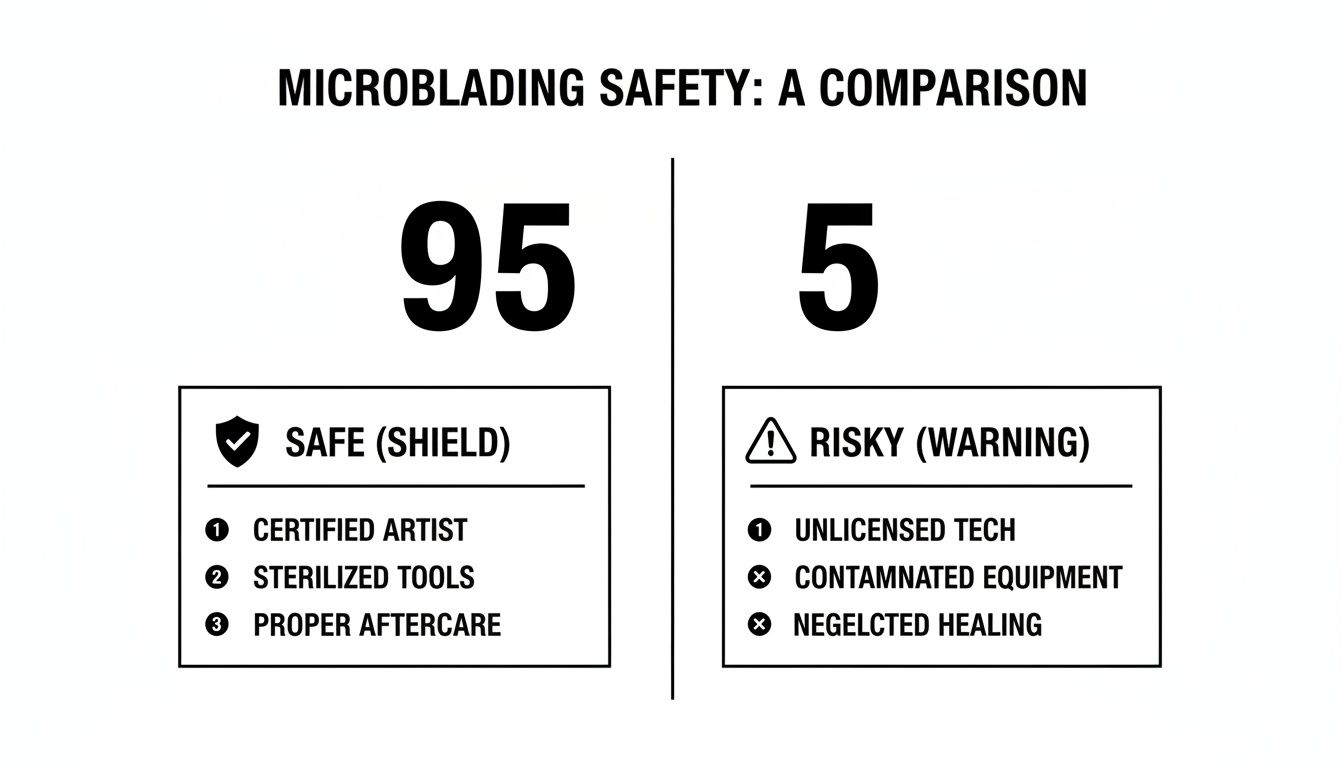
As you can see, the road to a safe and beautiful result is paved with professional standards. The risks are almost entirely confined to situations where those standards are ignored.
Let's Look at the Data: Safety by the Numbers
When done by a trained professional in a sterile setting, microblading is overwhelmingly safe. The numbers back this up.
A massive review of 1,352 permanent makeup clients found the risk of infection was a tiny 0.2%. The study also showed that the rate for any complication was just 12.1%, with none of them being severe.
For eyebrow procedures specifically, the most common issues were things you'd expect during healing:
- Mild itching (8.2%)
- Redness (1.7%)
- Swelling (1.1%)
These are all temporary and resolve quickly with the right aftercare. This incredible safety record is a direct result of sterile tools, high-quality materials, and strict healing protocols—which are the non-negotiable standards we live by at Lavishing Eyebrows Microblading.
Here's the bottom line: significant microblading complications aren't just bad luck. They are almost always the direct result of a breakdown in safety protocols—something a certified, meticulous artist will never, ever compromise on.
Why Pigment Quality Is a Huge Deal for Safety
One of the most critical safety factors that often gets overlooked is the quality of the pigment itself. Cheap, unregulated inks can be a recipe for disaster, sometimes containing heavy metals or allergens that can trigger a reaction months or even years down the road. This can show up as anything from stubborn itching and redness to more serious skin inflammation.
A true professional will only use stable, reputable pigments that are proven to be safe for cosmetic tattooing. They know the ingredients, understand the chemistry, and can predict how the colors will heal in the skin. This expertise is what prevents both immediate allergic reactions and long-term problems like the pigment shifting to an odd color.
Curious about what's actually in the ink? We break it down in our guide on the types of pigments used in semi-permanent makeup. An artist who is transparent about the pigments they use is a must. They should be able to tell you the brand and exactly why they trust it for their clients.
How Certified Studios Guarantee Your Safety
So, we've talked about the risks, but let's pivot to the solution. What does a real commitment to your safety actually look like when you walk into a professional studio? It’s more than just getting beautiful brows—it's about a non-negotiable process designed to protect your health at every single turn.
A truly professional artist never cuts corners. Their promise to you is built on a foundation of sterile tools, high-quality materials, and training you can verify. Understanding these key elements is how you'll know you're in the right hands.
The Unbreakable Rule of Single-Use Tools
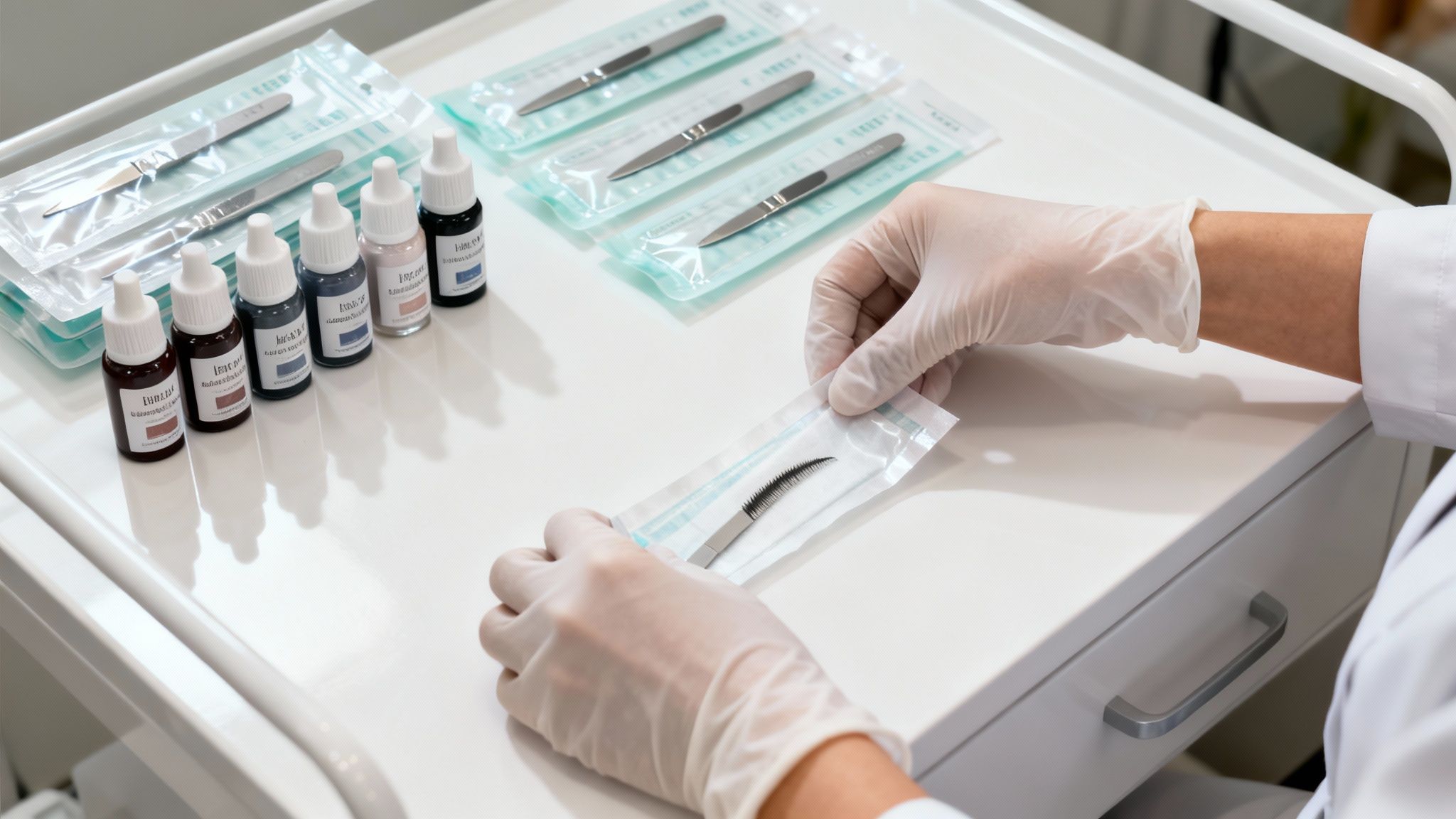
Think about it this way: you wouldn't expect a doctor to reuse a needle. The exact same standard applies here. The single most important safety measure in any microblading studio is the exclusive use of single-use, disposable tools.
Every single hand tool, which holds the tiny needles, must come in a sealed, sterilized package. Your artist should open this package right in front of you before the procedure begins. That simple action is your guarantee that the tool is 100% new and has never touched anyone else’s skin, completely eliminating the risk of cross-contamination.
There is no safe way to "clean" or "sterilize" a used microblading blade. The only safe blade is a new one, opened just for you. This is the gold standard, and there are no exceptions.
Once your session is finished, that entire tool goes straight into a designated sharps container, just like in a medical clinic. This isn't just a "best practice"—it's an ethical requirement that protects both you and the artist from infections and bloodborne pathogens.
Vetted Pigments: The Foundation of Safe Results
Beyond the tools, the quality of the pigment being implanted into your skin is incredibly important. Cheap, unregulated inks can be a nightmare, sometimes containing heavy metals or allergens that cause skin issues down the road. Worse, they can fade into strange shades of blue, orange, or even grey.
A reputable studio like Lavishing Eyebrows Microblading invests in high-quality, professional-grade pigments. These aren't just any inks; they're specifically formulated for cosmetic tattooing and have been rigorously tested for safety.
Here’s what sets professional pigments apart:
- Stability: They are made to heal true to their original color and fade naturally over time without shocking you with weird color shifts.
- Purity: They are free from harmful additives and known carcinogens, which dramatically minimizes the risk of allergic reactions or long-term health problems.
- Predictability: An experienced artist knows how these pigments work and can accurately predict how a color will settle and heal with your specific skin tone and undertones.
This focus on quality materials is another critical layer in your safety net.
The Power of Certification and Regulation
Finally, an artist's certification and their adherence to local health regulations are what tie everything together. That certificate on the wall isn't just decoration; it represents hours of intense training in skin anatomy, color theory, and most importantly, bloodborne pathogen control and sanitation protocols.
The industry has come a long way, much like general tattooing did in the mid-20th century when disposable needles and sterilization became mandatory. However, microblading regulations can still be inconsistent from one place to another. This makes it crucial to find certified professionals who hold themselves to the highest standards.
For instance, while a survey showed 65% of adults had a general sense of the risks, many didn't know the specifics to look for. Studios like Lavishing Eyebrows Microblading close that gap. Vicky's World Microblading certification is your assurance that we use only vetted, safe pigments and adhere to a strict disposable-tool policy for zero cross-contamination. You can read more about these public health considerations on neha.org.
This combination of training and accountability is proof that the studio is serious about performing the procedure safely. Before you commit, it's also a great idea to read through documents like our informed consent for microblading so you understand every part of the process.
When You Should Avoid Microblading
Knowing if microblading is safe isn't just about what happens in the artist's chair. A huge part of safety is knowing when to say "no" to the procedure altogether. A truly professional artist will always put your well-being ahead of getting another client on the books.
This means we have to be honest about situations—what we call contraindications—where microblading just isn't a good idea, or could even be risky. Think of it as a partnership. Your full health history and your artist's expertise are both essential pieces of the puzzle. If anything on this list sounds like you, it's absolutely critical to bring it up during your consultation.
Temporary Conditions
Pregnancy and Nursing
This one is a non-negotiable rule across the entire permanent makeup industry. We do not perform microblading on anyone who is pregnant or nursing, period. While the actual risk of pigment getting to the baby is practically zero, that's not the main concern. The real issue is the potential for infection. Even a small skin infection could require antibiotics or cause stress, both of which you want to avoid during such a precious time.
On top of that, the hormonal rollercoaster of pregnancy and postpartum life can make your skin unpredictable. It can affect your sensitivity, how you heal, and how well the pigment holds. The results would be a gamble, and your safety—and your baby's—is always the top priority. It's best to just wait until you're finished nursing.
Active Skin Conditions on or Near the Brows
Microblading works by creating tiny, delicate strokes in the skin. For that to work, the "canvas" has to be healthy. If the skin in your brow area is already irritated, inflamed, or compromised, the procedure simply can't be done safely.
You’ll need to put your appointment on hold if you're dealing with any of these right on or around your eyebrows:
- Eczema or Psoriasis: If the skin is flaky, inflamed, or broken, it won't heal properly and the pigment will look patchy and uneven.
- Active Acne or Dermatitis: Working on inflamed or broken skin is a recipe for a higher infection risk and a messy, blotchy final result.
- Rosacea: Skin with rosacea is often very sensitive and can bleed more easily, making the healing process and final color totally unpredictable.
- Sunburn: Sunburned skin is damaged skin. It needs to heal completely before you can even think about a cosmetic tattoo procedure.
Any artist willing to work on compromised skin is waving a giant red flag. They're risking scarring, infection, and giving you a result you'll be unhappy with. A true professional will always insist on waiting until the skin is healthy.
Medical Conditions and Medications
Some health conditions and medications can seriously interfere with how your body heals, handles inflammation, or even holds onto pigment. This is where total honesty with your artist is absolutely essential for your safety.
Be sure to discuss any of the following:
- Autoimmune Disorders: Conditions like Lupus can put your immune system into overdrive, which can really complicate healing and sometimes cause the body to reject the pigment. We often require a doctor's note to proceed.
- Uncontrolled Diabetes: High blood sugar makes it harder for your body to heal and leaves you more open to infection. Your diabetes must be well-managed, and we'll need your doctor's okay.
- Blood Thinners: Medications like Aspirin or Warfarin—and even high doses of supplements like fish oil—can cause you to bleed more during the procedure. This bleeding literally pushes the pigment right back out of the skin, leading to poor results.
- Accutane Use: This is a big one. You must be off Accutane for at least one full year before getting microblading. The drug makes your skin incredibly fragile and prone to scarring.
- Chemotherapy: Your immune system is compromised during treatment, so you must wait until you are finished and have clearance from your oncologist.
Ultimately, a good, thorough consultation is where all of this gets sorted out. Your artist's goal isn't just to give you beautiful brows, but to make sure the entire process is completely safe for you from start to finish.
Your Pre-Booking Safety Checklist
This is where you take control. Knowing what to ask and what to look out for is your best defense against a bad experience. Think of this as your personal safety toolkit, helping you spot a top-tier professional and sidestep a risky operator with total confidence.
Your research should start long before you even book a consultation. An artist's online presence, from their portfolio to client reviews, tells a story about their professionalism and the quality of their work.
Essential Questions to Ask Your Artist
A great artist will be happy to answer your questions—in fact, they'll expect you to have them. If you get any pushback or annoyance, that’s your cue to leave. During your chat, make sure you get solid answers to these questions:
- “Can I see your portfolio of healed work?” Anyone can make brows look sharp right after the procedure. The real test of skill is how they look once they’ve healed and settled into the skin. This is what you'll be living with.
- “Will you open the sterile, single-use tools in front of me?” The only acceptable answer is an enthusiastic "yes." This is a non-negotiable safety standard that completely removes the risk of cross-contamination.
- “What are your certifications, and are you licensed by the local health department?” A pro will be proud to show off their qualifications. This proves they've been properly trained in crucial areas like sanitation and bloodborne pathogens.
- “What kind of pigments do you use and why?” They should be able to name the brand and tell you exactly why they trust it—its safety record, how stable it is, and whether it heals true to its original color.
- “Can we do a patch test first?” Offering a patch test, particularly for clients with sensitive skin, shows an artist genuinely cares about preventing allergic reactions.
Remember, a consultation isn’t just about them sizing you up; it’s a two-way interview. You're there to vet their commitment to safety, and you have every right to feel 100% comfortable before moving forward.
Critical Red Flags to Watch Out For
Sometimes, what an artist doesn't do speaks volumes. Keep your eyes peeled for these major warning signs that could point to a high-risk situation:
- Suspiciously Low Prices: Quality pigments, sterile tools, and proper training cost money. A price that seems too good to be true usually means corners are being cut, most likely on hygiene and materials.
- A Pressure-Filled Sales Pitch: A true professional gives you space to think. If you feel rushed or pushed into making a decision, it's a huge red flag that they care more about your money than your safety.
- An Untidy or Unprofessional Studio: The studio should feel clean and clinical. Clutter, dust, or a disorganized workspace is a dead giveaway for poor hygiene standards.
- No Healed Photos: If an artist’s portfolio is filled with nothing but fresh, immediate results, they could be hiding inconsistent or downright bad long-term outcomes.
- Vague Answers to Safety Questions: Any defensiveness or inability to give you a straight answer about their safety protocols is a deal-breaker. End of story.
Knowing what to look for makes all the difference. Research shows that while public awareness of microblading is growing, proper vetting is key. In one study, 91.9% of clients confirmed their artists used sterile, disposable instruments—which is likely why only 16.3% reported any minor issues. You can dive deeper into these microblading safety findings and statistics. This directly reflects the standards at Lavishing Eyebrows Microblading, where our World Microblading-certified artist, Vicky, uses only single-use tools for every client.
Using this checklist isn't about being difficult; it's about being smart. You're choosing a partner for your health and safety. For more tips, check out our guide on how to prepare for microblading to ensure your appointment is a total success.
Still Have Questions? Let's Talk Microblading Safety
Even with all the details, it's totally normal to have a few lingering questions. Getting those last few worries sorted out is the final step to feeling 100% confident before you book. So, let’s tackle the most common questions I hear from clients about the safety and comfort of the whole process.
Does Microblading Actually Hurt? (The Real Answer)
This is usually the first thing everyone wants to know. The mental image of needles and faces can be a little unnerving, I get it. But the reality is so much more comfortable than you’re probably picturing. A true professional cares just as much about your comfort as they do about your safety, and that starts with making sure you feel as little as possible.
Before we even think about starting, a powerful, medical-grade topical anesthetic is applied all over your brow area. This isn't just any numbing cream; it's designed specifically for cosmetic skin procedures and is completely safe when used by a trained artist. It works wonders to dull the sensation, making the whole thing very manageable—even for my most sensitive clients.
Most people don't even use the word "pain." The most common descriptions I hear are a light "scratching" feeling or something similar to tweezing a few hairs at once. My goal is for you to be relaxed, not wincing in discomfort. A skilled artist works with a light touch and a steady hand, which makes all the difference.
It's worth remembering that any sensation you do feel is temporary and closely monitored. I always check in with my clients throughout the process to make sure they're comfortable from the very first stroke to the final reveal.
Ultimately, that mild sensation is a totally normal and safe part of the process. The numbing creams are incredibly effective and are standard practice for a reason. So while you might feel something, it’s almost certainly not the intense pain you might be worried about.
What if I Have an Allergic Reaction?
This is a really smart question to ask. Any time you're putting something into your skin, you should be thinking about how your body might react. The great news is that true allergic reactions to the high-quality, modern pigments we use today are extremely rare. Still, I would never just dismiss that possibility, and we have protocols in place to keep you safe.
The best way to prevent a surprise is with a patch test. Any reputable studio should offer one, and I especially recommend it if you have a history of sensitive skin or lots of allergies. It’s simple: we apply a tiny dot of the pigment to a discreet spot, usually behind your ear, a few days before your appointment. This gives us a chance to see if your skin has any issues—like unusual redness, itching, or swelling—before we commit to your brows.
The pigments themselves are also a huge part of the safety equation. Professional artists almost exclusively use iron oxide-based pigments. These have been used safely in cosmetics for decades and are chosen because they are incredibly stable and the body tolerates them very well. They are non-toxic and are designed to be safely metabolized by your body over time.
In the incredibly unlikely event a reaction does occur, a certified professional is trained to spot the signs. We can guide you on what to do next and advise you on when to see a doctor. Knowing the difference between what's normal and what's not is a key part of our expertise.
Is the Healing Process Safe?
Absolutely. Your safety journey doesn't end when you leave the studio—it's just as important during the healing phase. The healing itself is just your body’s natural, safe way of repairing itself. A beautiful, long-lasting result really comes down to you being a partner in the process by following your aftercare instructions.
Think of your aftercare sheet as your personal safety guide. Following it to the letter is the single most important thing you can do to prevent an infection and make sure your new brows heal perfectly. I'll send you home with a detailed list of instructions, which always includes these key steps:
- Keeping the area clean: You'll gently clean your brows as instructed to remove fluid and keep bacteria away.
- Applying a healing balm: The special ointment I provide creates a protective barrier, keeping the skin moisturized and safe from irritants.
- Avoiding moisture and sweat: For the first week or so, keeping your brows dry (other than when you're cleaning them) is critical. Too much moisture can mess with how the pigment settles into your skin.
It’s also crucial to know what normal healing looks and feels like. A little redness and minor swelling right after your appointment is normal. Over the next few days, you'll see some light flaking or scabbing—this is just the top layer of skin renewing itself. Whatever you do, don't pick at it! Picking can pull the pigment out and lead to scarring.
The warning signs of an actual infection look very different from the normal healing process. You should call your artist right away if you notice:
- Swelling and redness that gets worse after the first 48 hours.
- Any kind of yellowish discharge or pus.
- Pain that feels intense, not just mildly tender.
- The skin around your brows feels hot to the touch.
These signs are very, very rare when aftercare is followed correctly. By understanding what to expect, you can watch your brows heal with confidence, knowing you're on the right track for a safe and stunning result.
Ready to get the flawless, easy-maintenance brows you've been dreaming of, with an artist who puts your safety first? At Lavishing Eyebrows Microblading, I'm here to answer every last question and design brows that are perfect for you. Book your consultation today and see what a difference true professional care makes.
Book Your Consultation at Lavishing Eyebrows Microblading
Article created using Outrank