When a Scar Stands Between You and the Brows You Want
Microblading for scars is a specialized technique that uses fine, hair-like pigment strokes to camouflage scar tissue within or around the eyebrow area — and yes, it can work beautifully when done right.
Here’s a quick overview of what you need to know:
| Question | Quick Answer |
|---|---|
| Can you microblade over a scar? | Yes, with the right conditions |
| How old should the scar be? | At least 1 year old, fully healed, and white in color |
| Does pigment hold well on scars? | It’s unpredictable — results vary by scar type |
| Is it safe for keloid-prone skin? | No — keloid-prone clients should avoid microblading |
| How many sessions are needed? | Typically 4, with ~80% seeing great results |
| What’s the best alternative? | Powder brows or ombre shading for difficult scars |
Maybe it’s a childhood injury. Maybe it’s a surgical mark that cut right through your brow. Whatever the cause, a scar in the eyebrow area can feel impossible to cover with daily makeup — and exhausting to deal with every single morning.
The good news? You have options.
Microblading can — in the right circumstances — make a scar nearly invisible by depositing pigment in precise, natural-looking hair strokes directly over and around the affected area. Some clients describe the results as genuinely life-changing.
But here’s the honest truth: scar tissue behaves very differently from normal skin. It can absorb pigment unevenly, reject it altogether, or cause strokes to blur and spread. The results aren’t always 100% predictable — and the wrong approach can make things worse, not better.
This guide walks you through everything: which scars are suitable, what the procedure involves, what to realistically expect, and when a different technique might serve you better.
Microblading for scars vocab to learn:
Understanding Microblading for Scars: Is it Safe?
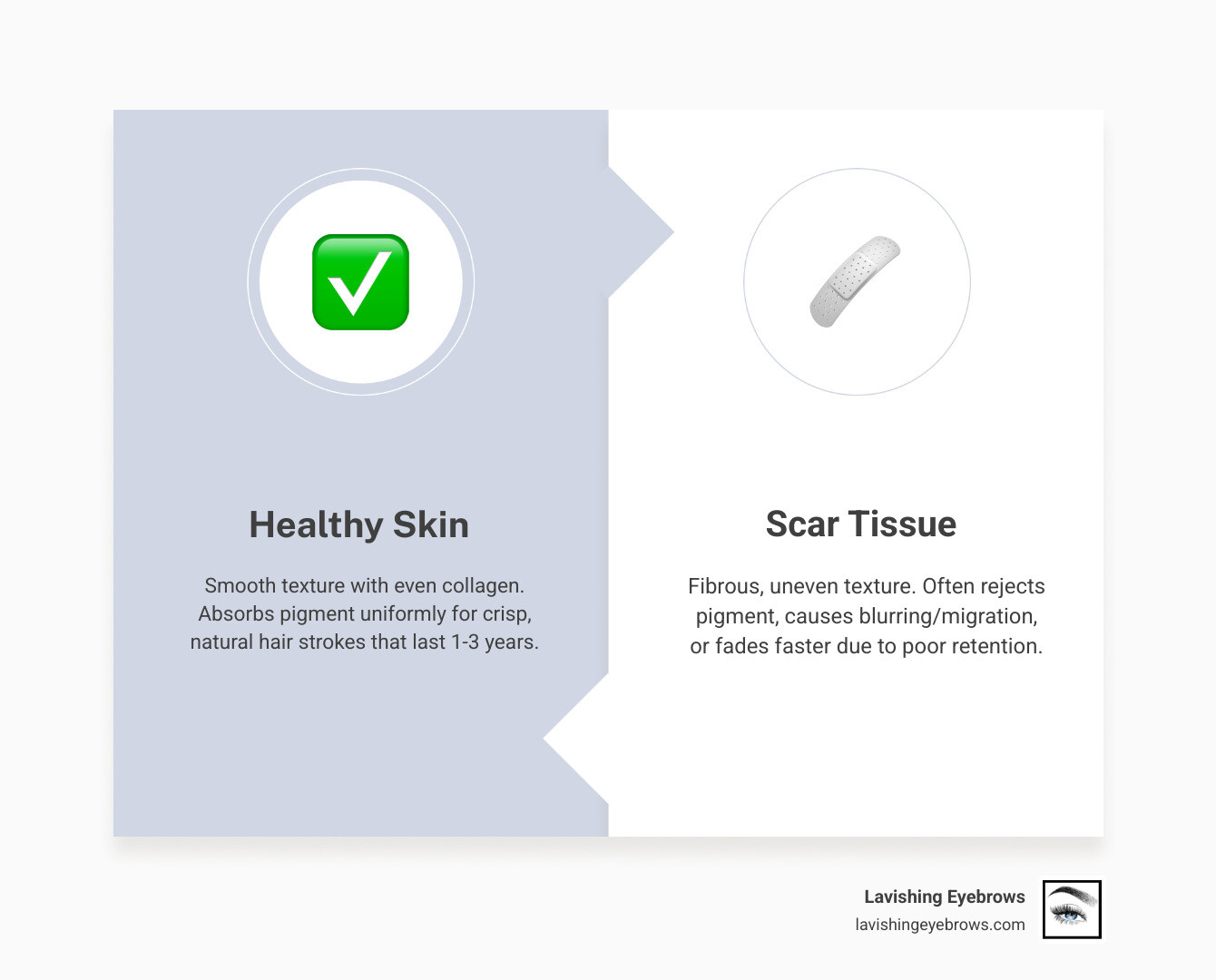
When we talk about Microblading for scars, safety is the absolute priority. Many clients come to us in Murrieta wondering if their skin can even handle the process. The short answer is yes, but with major caveats. Unlike healthy skin, scar tissue is a complex web of fibrous collagen. It doesn’t have the same “give” or blood supply as the surrounding area.
The primary safety concern isn’t just the procedure itself, but how the skin reacts to the trauma of the microblade. Because microblading involves creating small channels in the skin, we have to be incredibly careful not to trigger more scarring. Is Microblading Safe? Generally, yes—but for scarred skin, we must follow a much stricter set of rules to ensure we are helping the situation rather than adding to the trauma.

Identifying Suitable Scars for Microblading
Not all scars are created equal. In our experience serving clients from Temecula to Corona, we look for very specific physical markers before we agree to work on a scar:
- Flat Scars: These are the gold standard. If the scar is level with the surrounding skin, it is much easier to blend hair strokes across it.
- Old Injuries: Childhood falls or long-ago accidents usually provide the most stable “canvas.”
- Surgical Marks: Scars from brow lifts or medical procedures can often be camouflaged, provided they have settled completely.
- The Color Test: We only work on scars that are white or very pale. If a scar is still pink, red, or purple, it means it is still vascular and actively healing. Working on a “live” scar is a recipe for disaster, often leading to pigment migration or even infection.
Risks and Pigment Retention in Microblading for Scars
The biggest risk with Microblading for scars is unpredictability. Scar tissue is notorious for “pigment rejection.” Because the tissue is so dense, it may push the ink right back out during the Microblading Healing Day by Day process.
Conversely, some scars are “thirsty” and absorb too much pigment, causing the thin hair strokes to blur into a solid, dark smudge. There is also the risk of collagen overproduction; if the skin is already prone to over-reacting to injury, the microblading process could cause the scar to become raised or textured. This is why a thorough assessment is non-negotiable.
The Science of Scar Tissue and Pigment Behavior
To understand why Microblading for scars is so tricky, we have to look under the surface. Healthy skin has a clear structure of dermal layers that hold pigment in place like a sponge. Scar tissue, however, is more like a dense piece of rubber.
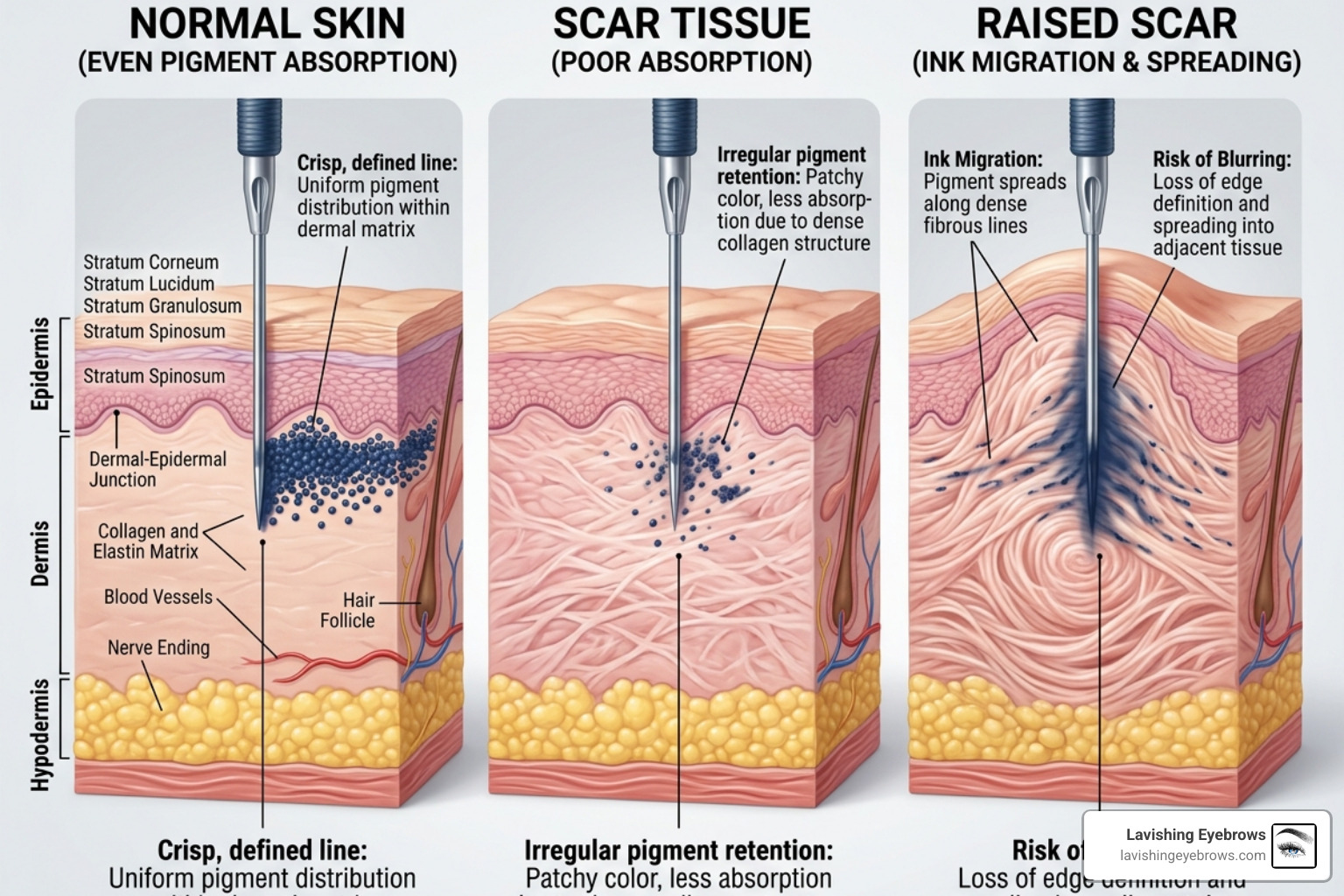
When we implant ink into a scar, the lack of normal pore structure means the ink has nowhere to “sit.” This often leads to ink migration, where the pigment travels along the fibrous lines of the scar rather than staying in a crisp stroke. Understanding the Microblading Healing Process is vital here; while normal skin might heal in 4 weeks, scarred skin often takes longer to fully lock in the color.
Before we begin any work on a scar, we require an Informed Consent form. This ensures you understand that while we are perfectionists, the unique nature of your scar means we are working with a “wildcard” element of biology.
The Procedure: From Preparation to Perfection
If you’ve decided to move forward with Microblading for scars, the process starts long before the blade touches your skin.
First, we focus on symmetry. Scars often pull the skin in one direction, making one brow look higher or shorter than the other. We use advanced mapping techniques to design a shape that balances your face while hiding the scar’s “pull.” Knowing How to Prepare for Microblading is essential—this includes avoiding blood thinners and caffeine, which can cause excess bleeding on sensitive scar tissue.
So, What is Microblading Eyebrows? at its core, it’s the art of the stroke. When working over a scar, we use a lighter touch. We may even skip the densest parts of the scar in the first session to see how the surrounding skin reacts before going “all in.” We apply a high-quality numbing cream to ensure you’re comfortable, as scar tissue can sometimes be more sensitive than healthy skin.
Essential Aftercare for Microblading for Scars
Aftercare is where the battle is won or lost. For scarred skin, we emphasize a strict 7-day rule.
- Moisture Control: You must keep the area dry, but not “desert” dry. We provide specific ointments to keep the tissue supple without drowning the pigment.
- No Makeup: This is a big one. It’s tempting to cover the redness with concealer, but putting makeup on a fresh procedural site over a scar is an invitation for infection and poor retention.
- Hands Off: No picking! If a scab forms over the scar tissue, picking it will almost certainly pull the pigment out with it.
Follow our full Microblading Aftercare Instructions to give your brows the best chance at success.
Beyond the Blade: Alternatives for Scar Camouflage
Sometimes, microblading isn’t the best tool for the job. If a scar is particularly thick or “tough,” the manual cuts of microblading might be too traumatic.
This is where we look at the Pros and Cons of Microblading versus machine-based techniques.
- Powder Brows: Instead of cuts, this uses a machine to “pixelate” the skin with tiny dots of pigment. It’s much gentler on scar tissue and often provides better, more even coverage for large or indented scars.
- Nano Brows: This uses a single needle and a machine to create hair strokes. Because it doesn’t “slice” the skin like a blade, it’s often safer for compromised tissue.
- Ombre Shading: This creates a soft, misty look that can beautifully mask the texture of a scar that refuses to hold individual strokes.
Frequently Asked Questions about Microblading for Scars
How many sessions are typically needed for scar coverage?
Patience is a virtue here. While a standard client might be done in two sessions, Microblading for scars usually requires more. Research and industry statistics show that about 80% of clients see great results after 4 sessions. We use these multiple appointments to “layer” the pigment gradually. By building the color slowly, we avoid over-traumatizing the scar and achieve a much more natural blend. You can find more details in our FAQs.
Is microblading safe for those prone to keloid scarring?
This is a critical “No.” If you have a history of keloid scarring—where scars grow significantly larger than the original wound—microblading is generally not recommended. The process of creating micro-incisions can trigger the body to produce a new keloid right on your face. For these clients, we usually suggest non-invasive alternatives like brow lamination or tinting. Always consult with a specialist or dermatologist if you are unsure of your scar type.
How long does microblading last on scarred skin?
On healthy skin, microblading typically lasts 1 to 3 years. On scarred skin, the timeline can be shorter. Because scar tissue doesn’t hold ink as effectively, you might find you need a touch-up every 9 to 12 months to keep the camouflage looking fresh. Factors like sun exposure, your skincare routine, and how oily your skin is will also play a role. To learn more about longevity, check out Is Microblading Permanent?
Conclusion: Trusting Your Brows to an Expert
At Lavishing Eyebrows, we understand that a scar isn’t just a mark on your skin—it’s something that can affect your daily confidence. Our owner, Vicky, is a certified brow specialist who treats every set of brows as a unique piece of art. Whether you are in Murrieta, Temecula, or Menifee, we take the time to assess your skin’s specific needs.
Interestingly, about 50% of permanent makeup clients are actually seeking repairs for bad work done elsewhere, often involving scars caused by over-aggressive microblading. This is why choosing a perfectionist with a gentle touch is so important. We pride ourselves on a warm, reassuring consultation process that makes even the most nervous clients feel at ease.
Ready to turn those scars into stars? We invite you to experience the difference that expert artistry and premium products can make.
Book Your Microblading Consultation in Murrieta today and let’s create the brows you’ve been dreaming of.