When Your Brows Go Wrong: What Correction Microblading Can Do for You
Correction microblading is a specialized procedure that fixes discolored, misshapen, or faded eyebrow tattoos by applying new pigment over old work — without full removal.
Here’s a quick look at what it covers:
- Color shifts (grey, blue, orange, red tones) — neutralized using color theory
- Uneven or patchy brows — rebuilt with layered pigment strokes
- Shape problems — remapped to fit your facial structure
- Faded or outdated work — refreshed to look natural again
- Overly saturated or dark brows — lightened before a new color is applied
Imagine waking up one morning, looking in the mirror, and realizing your brows have turned an unexpected shade of grey — or worse, a cool, bluish tone that makes you look permanently tired. It’s more common than you’d think.
In fact, 4 out of 10 people who walk into a brow studio today already have previous pigment in their skin. That means a huge number of women are living with brows that shifted color, lost their shape, or simply aged poorly.
The good news? Almost everything is fixable.
Whether your microblading is brand new and nothing like what you expected, or you’ve been tolerating old work that went south years ago, correction microblading offers a real path back to brows you actually love — no full removal required in many cases.
This guide walks you through exactly how the brow repair process works, what causes brows to go wrong in the first place, and what you can realistically expect from a correction journey.
Understanding Correction Microblading vs. Standard Touch-Ups
When we talk about brow maintenance, there is a massive difference between a standard “refresh” and a true correction microblading service. A standard touch-up is like adding a fresh coat of paint to a wall that is already the right color. A correction, however, is like trying to turn a dark navy wall into a soft beige—it requires specialized knowledge of what lies beneath.
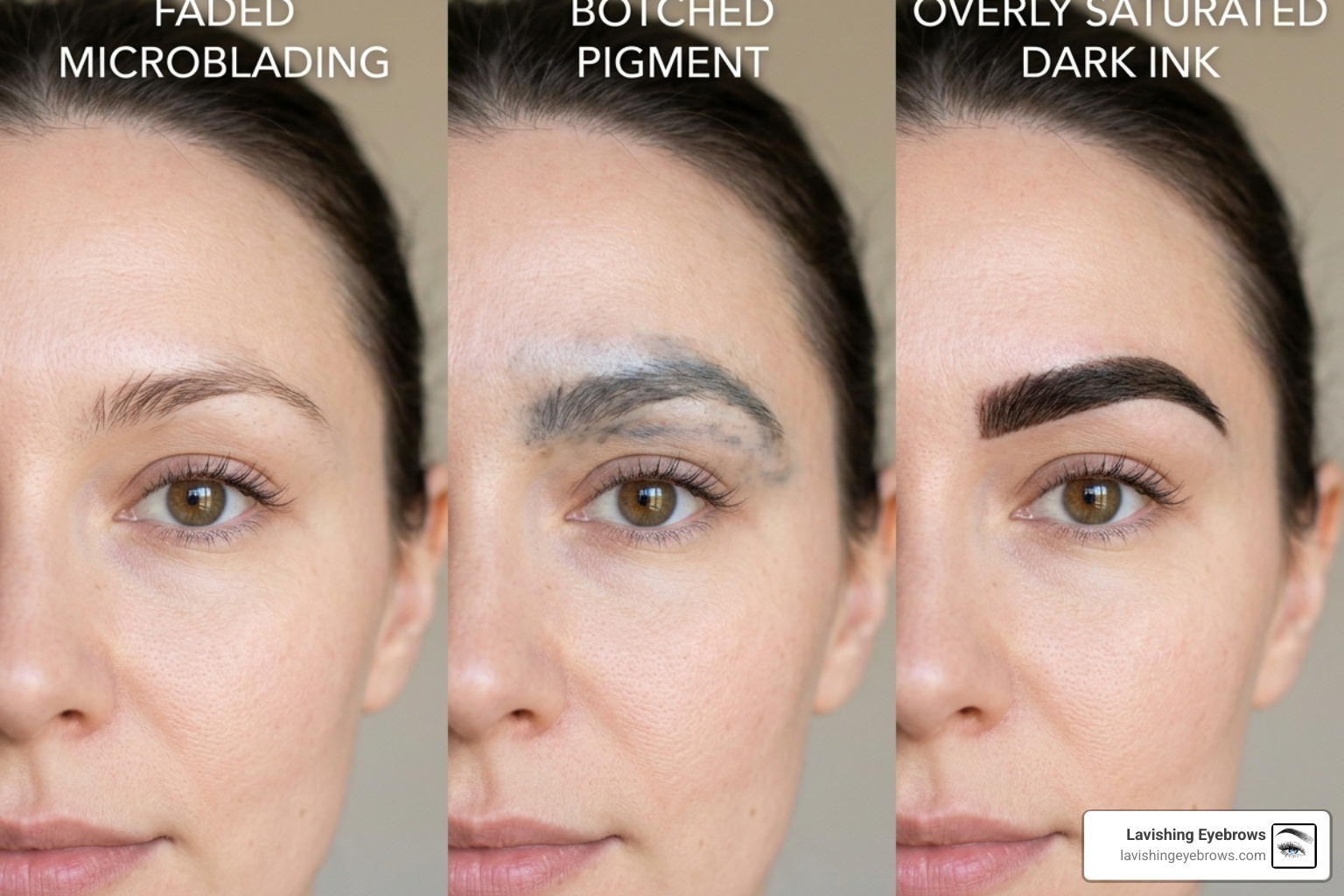
Standard touch-ups are for clients whose brows have simply faded naturally over 12 to 18 months but still hold a beautiful, brown-toned shape. Correction work is for when the “canvas” is compromised. This might mean the previous artist went too deep into the skin layers, causing the pigment to blur or turn “ashy.” It could also mean the shape was never mapped correctly to your bone structure in the first place.
At Lavishing Eyebrows, we often see clients who are confused about why their brows don’t just need a “quick fill-in.” Understanding the quality of your current work is the first step. For a deeper dive into what makes a brow “good” versus “bad,” check out our Good Vs Bad Microblading A Visual Guide To Quality. If you are just looking for info on how a normal session heals, you might find our Your Guide To Microblading Touch Up Healing And Results more helpful.
Identifying the Need for Professional Repair
How do you know if you need a correction? Usually, it’s one of three things:
- Color Shifts: Your brows are no longer brown. They are now salmon pink, sunset orange, or a ghostly blue-grey.
- Shape Asymmetry: One brow is a “social butterfly” (high and arched) while the other is a “homebody” (flat and low). If people keep asking if you’re surprised when you aren’t, it’s a shape issue.
- Saturation Levels: The pigment is so dense and “blocked in” that it looks like a solid marker line rather than natural hair strokes.
Before deciding on a fix, it’s worth weighing the Pros And Cons Of Microblading to ensure you’re ready for the commitment of a multi-session repair.
Why 40% of Clients Now Require Correction
The permanent makeup industry has exploded over the last few years. While that’s great for accessibility, it also means many technicians entered the field with minimal training. Technical errors—like using low-quality pigments or applying too much pressure—have led to a surge in “botched” brows.
Furthermore, because microblading is semi-permanent, many people have had 3 or 4 touch-ups over the years. This leads to pigment “stacking,” where the skin becomes so saturated with old ink that it can no longer hold new, crisp strokes. Safety is always our priority during these complex cases; you can read more about our standards in Microblading Is It Safe.
Why Brows Go Wrong: Common Issues and Causes
It’s frustrating to invest in your beauty only to have it change into something unrecognizable. But why does it happen?
The Science of Pigment Discoloration
Microblading pigment is not the same as traditional tattoo ink. It is designed to be broken down by your body over time. However, pigments are made of various components like iron oxides and titanium dioxide. Your immune system might “eat” the yellow and red molecules faster than the black ones, leaving you with ashy, blue-grey brows. Conversely, if the black fades first, you’re left with that dreaded “orange-juice” hue.
Incorrect depth is another culprit. If an artist places pigment too shallow, it disappears in weeks. If they go too deep, the light reflecting through the skin makes the pigment appear blue or grey—a phenomenon known as the Tyndall effect. For a technical breakdown, see Your Comprehensive Guide to Microblading Color Correction.
Environmental and Lifestyle Factors in 2026
As we move through April 2026, we’re seeing more lifestyle-related fading than ever. Our love for high-performance skincare is often the enemy of our brows.
- Retinol and Acids: If you apply Vitamin A or glycolic acid near your brows, you are essentially “peeling” the pigment away.
- UV Damage: The California sun in areas like Temecula and Murrieta is brutal on pigment. Without SPF, your brown brows will oxidize and shift color rapidly.
- Skin Regeneration: Some of us simply have “hungry” skin that regenerates quickly, pushing pigment out faster than average.
Proper maintenance starts the moment you leave the studio. Following strict Microblading Aftercare Instructions can prevent many of these issues, and checking Microblading Before After galleries can help you see what successful retention looks like.
The Science of Correction Microblading: Color Theory and Process
Fixing a bad brow isn’t just about drawing over it. It’s about math and art coming together. We use the color wheel to “cancel out” the bad tones before we ever apply your target brown shade.
Neutralizing Blue, Grey, and Red Tones
Think of this like using a green concealer to hide a red blemish.
- For Blue/Grey Brows: We use an orange corrector. Orange is the opposite of blue on the color wheel, so it warms up the “cold” ashiness and brings the brow back to a neutral base.
- For Red/Pink/Orange Brows: We use an olive or green-based corrector. This kills the warmth and prevents the brows from looking like they were drawn with a brick.
- For Purple Tones: A yellow corrector is often the magic wand needed here.
This process is similar to a Microshading Touch Up, where we use shading to create a uniform wash of color that masks the old strokes.
Step-by-Step Correction Microblading Process
- Consultation: This is where Vicky at Lavishing Eyebrows shines. We look at your skin, your old pigment, and your bone structure.
- Mapping: We don’t just follow the old shape. We remap the brows to ensure they are symmetrical and flattering, even if it means moving the “tail” or the “arch.”
- Neutralization: We apply the corrector pigment. At this stage, your brows might look a little crazy (yes, orange or green!), but trust the process.
- Target Color Layering: Once the base is neutralized, we layer in the beautiful, custom-blended brown that matches your hair and skin tone.
The Microblading Healing Process for corrections can be slightly more intense because the skin has already been worked before, so patience is key.
Correction vs. Removal: Choosing Your Path to Perfection
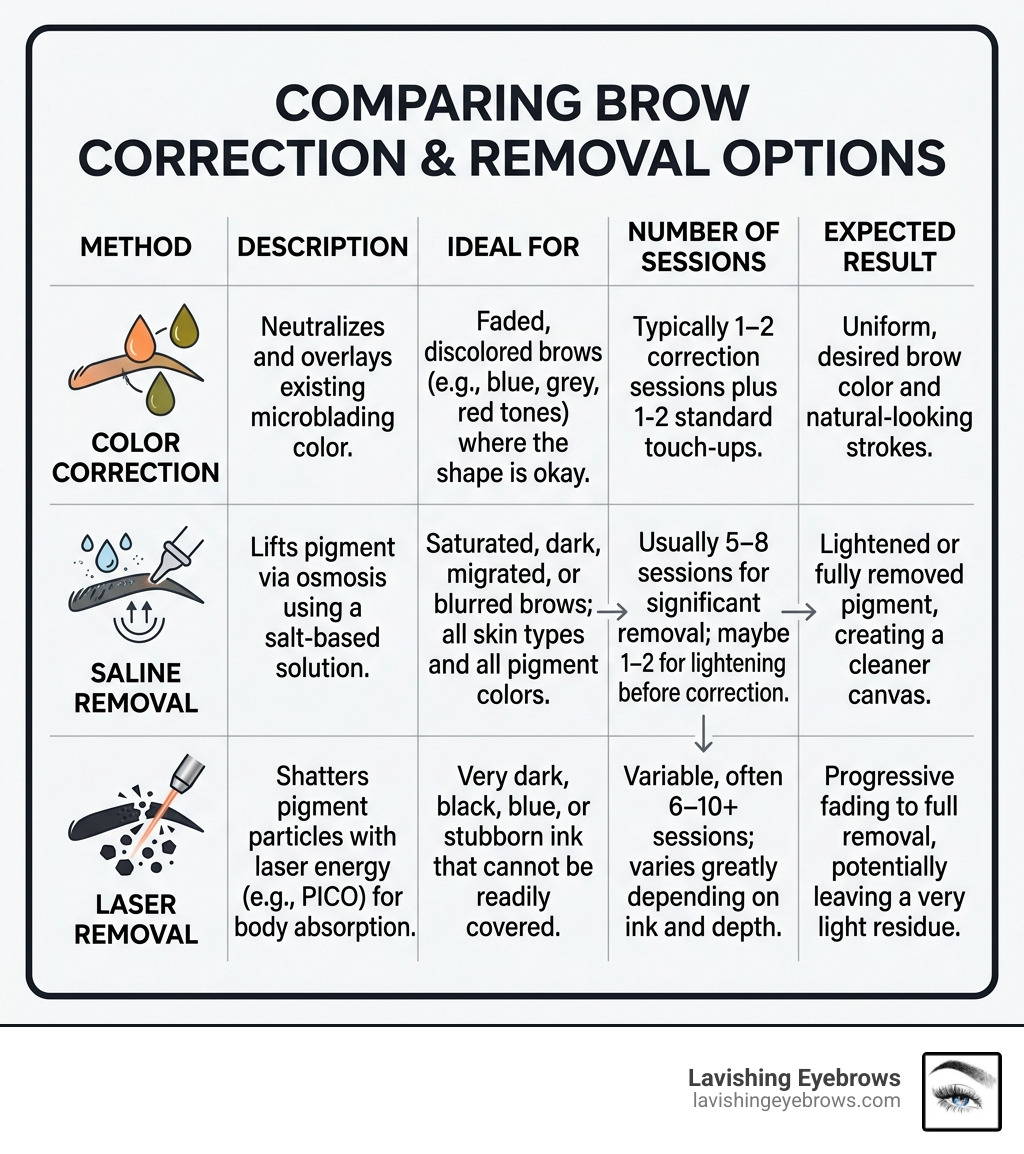
Sometimes, the “canvas” is too full. If your old brows are very dark, very thick, or the pigment has migrated (blurred) outside the brow line, we cannot simply “correct” them. Adding more pigment would just make them look like heavy blocks.
When to Opt for Saline or Laser Removal
If you have “saturated” brows, we recommend lightening them first.
- Saline Removal: This involves tattooing a salt-based solution into the skin to pull the pigment out via osmosis. It’s great for all skin types and colors. It typically takes 5–8 sessions for full removal, but often just 1 or 2 to lighten them enough for a correction microblading session.
- Laser Removal (PICO): Best for very dark, black, or blue ink. It shatters the pigment so your body can flush it out.
You can learn more about these options in Unveiling A Fresh Canvas Eyebrow Tattoo Removal Made Easy. For those worried about the “sticker shock” of a long journey, we break down costs in Everything You Need To Know About Microshading Touch Up Pricing.
Limitations and Managing Client Expectations
We want to be honest: correction work is a journey, not a destination. If your skin has scar tissue from a previous heavy-handed artist, the pigment may not take as perfectly as it would on “virgin” skin. We aim for a 70–90% improvement. Our goal is to make your brows look natural and beautiful again, but it may take 2 or 3 sessions to get there.
What to Expect: Timeline, Healing, and Maintenance
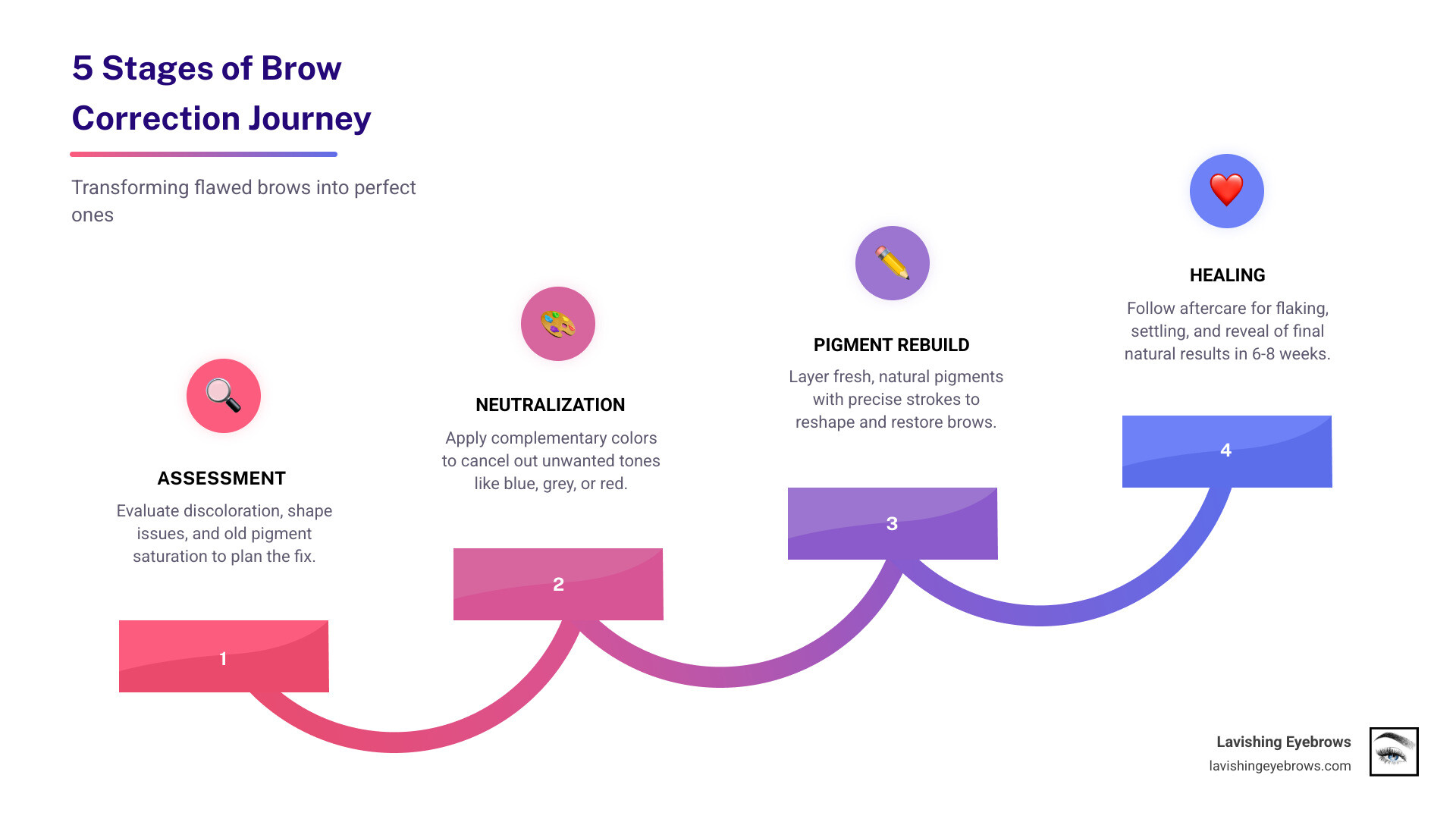
The healing process for a correction is a bit of a rollercoaster. Because we are often working over old ink and neutralizing colors, the “stages” can feel more dramatic.
The Correction Healing Journey
- Days 1–5: Your brows will look very dark and perhaps a bit “warm” (due to the corrector). Don’t panic!
- Days 7–14: The “Flaking Stage.” Your brows will start to peel. It is vital that you do not pick at them.
- Days 15–21: The “Ghosting Phase.” The pigment may seem to disappear or look very light. This is normal as the new skin grows over the pigment.
- Weeks 6–8: The “Big Reveal.” The pigment settles, and we can see how the neutralization worked.
For a detailed look at this timeline, see Microblading Healing Day By Day. Real-life success stories can also be found in From Sparse To Spectacular Real Microblading Before After Stories.
Maintaining Your Correction Microblading Results
Once we’ve achieved your masterpiece, you’ll want to protect it!
- Sunscreen is non-negotiable: Especially here in Southwest Riverside County.
- Avoid active skincare on the brows: Keep your Retinol and Vitamin C on your forehead and cheeks, but away from the brow hair.
- Regular Refreshers: Most corrections need a “color boost” every 12 months to keep the neutralized tones from peeking through.
Frequently Asked Questions about Brow Repair
What is the typical cost of correction microblading?
Correction work is generally more expensive than a first-time session because it requires more time, more specialized pigments, and higher technical skill. In the Murrieta and Temecula area, you can expect to pay anywhere from $500 to $800 per session. Complex cases involving removal and multiple correction passes can total $1,500 to $3,000 over a year-long journey. We view it as an investment in your face—it’s worth doing right.
Why should I avoid DIY eyebrow fixes?
We’ve seen it all—people trying to “scrub” out their tattoos with salt, or using “home removal” kits from the internet. Please don’t. DIY fixes often lead to permanent scarring, which makes professional correction nearly impossible. They also carry a high risk of infection. If you hate your brows, the best thing you can do is leave them alone and call a specialist.
How do I choose the right correction specialist?
Not every microblading artist is a correction specialist. Look for:
- A Healed Portfolio: Don’t just look at “fresh” photos. Ask to see how their corrections look after 6 months.
- Certifications: Ensure they have advanced training in color theory and pigment removal.
- A Consultation: A good artist will be honest with you about what is possible. If they promise “perfection in one hour,” they aren’t the right choice.
Conclusion
At Lavishing Eyebrows, we believe that every woman deserves to feel confident when she looks in the mirror. We know how much a “botched” brow can affect your self-esteem, and we are here to help you navigate the road to recovery. Vicky’s perfectionist artistry and warm, reassuring approach have made us the go-to studio for correction microblading in Murrieta and the surrounding Southwest Riverside County area.
Whether you’re from Temecula, Menifee, or Corona, we invite you to reach out. Your brows aren’t a disaster; they’re just a masterpiece in progress.