What the Microblading Healing Process Really Looks Like (Week by Week)
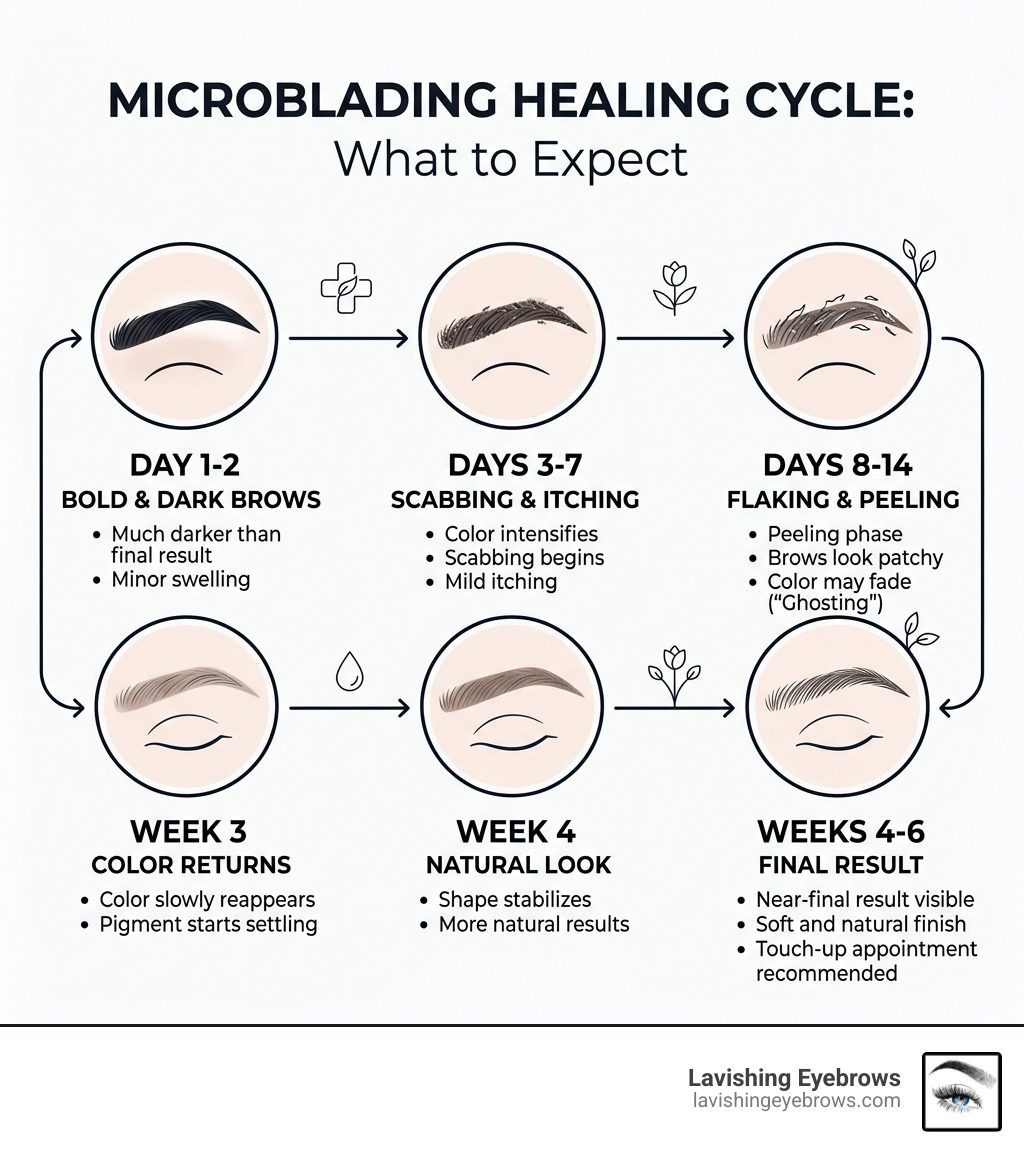
If you’re searching for pictures of microblading healing process week by week, here’s a quick visual summary of what to expect:
| Week | What Your Brows Look Like |
|---|---|
| Day 1-2 | Bold, dark, slightly swollen — much darker than the final result |
| Days 3-7 | Scabbing begins, color intensifies, mild itching |
| Days 8-14 | Flaking and peeling, brows may look patchy or nearly invisible (“ghosting”) |
| Week 3 | Color slowly returns, pigment starts to settle |
| Week 4 | Shape stabilizes, results look more natural |
| Weeks 4-6 | Near-final result visible, touch-up appointment recommended |
You just got your brows done. You’re excited. Then you wake up the next morning and think: “What happened to my face?”
This is one of the most common experiences for anyone new to microblading — and it’s completely normal.
The microblading healing process is a 30-to-42-day journey with distinct visual stages. Your brows will go from bold and dark, to scabby, to nearly invisible, and finally to soft and natural-looking. Each stage can feel alarming if you don’t know what’s coming.
The truth is: the procedure itself is only about 10% of the experience. The healing window that follows is where the real transformation happens — and where most people need reassurance the most.
At Lavishing Eyebrows, we believe an informed client is a calm client. Knowing what your brows will look like in each phase makes the process so much easier to get through.
The Immediate Aftermath: Day 1 to Day 7
The first week is often called the “emotional rollercoaster” phase. When you leave our studio in Murrieta, your brows look crisp, textured, and perfect. However, by the time you wake up on Day 2, you might notice they look significantly darker and “thicker” than they did during your appointment.
This happens because of pigment oxidation. Just like an apple turns brown when exposed to air, the pigment in your skin darkens as it reacts with oxygen and your body’s natural healing fluids. You aren’t just seeing the pigment; you’re seeing the initial stages of a protective scab forming over the micro-incisions.

During these first few days, it is normal to experience mild swelling and redness. Your skin may also produce a clear fluid called lymph. We recommend gently blotting this away with a clean tissue to prevent heavy scabbing. For a detailed breakdown of these early hours, you can check out our Microblading Healing Process guide.
According to the Microblading Healing Day by Day – Tina Davies report, the procedure is essentially creating hundreds of tiny “paper cuts.” Your body’s immediate response is to protect those wounds, which is why the area feels tender and looks intense.
Week 1: Why Your Brows Look Dark and Intense
Don’t panic! Your brows are not going to stay this dark. Most clients see 20-40% of the pigment fade as the skin heals and regenerates. The initial boldness is a combination of the pigment being at the very surface of the skin and the natural inflammation of the area.
By Day 3 or 4, the redness usually subsides, but the color remains peak-intensity. This is the stage where you might feel like your brows are “wearing you” rather than the other way around. It’s the perfect time to review your Microblading Aftercare Instructions to ensure you’re keeping the area clean and protected from bacteria.
Managing the Itch and Initial Scabbing
Around Day 5, the itching usually begins. This is a sign that your skin is repairing itself, but it can be incredibly tempting to scratch. Resist the urge! Scratching or picking at the scabs can pull the pigment out prematurely, leading to patchy results or even scarring.
There are two main schools of thought in the industry: dry healing (keeping the brows completely dry) and wet healing (applying a tiny amount of healing ointment). At Lavishing Eyebrows, we provide specific instructions tailored to your skin type. Regardless of the method, the golden rule remains: let the scabs fall off naturally. To understand more about the biology of this phase, read about Eyebrow Tattoo Healing Time.
Pictures of Microblading Healing Process Week by Week: The Flaking Phase
Welcome to Week 2 (Days 8-14). This is arguably the hardest part of the journey. If you were looking for pictures of microblading healing process week by week, this is the stage where the images look the most “messy.”
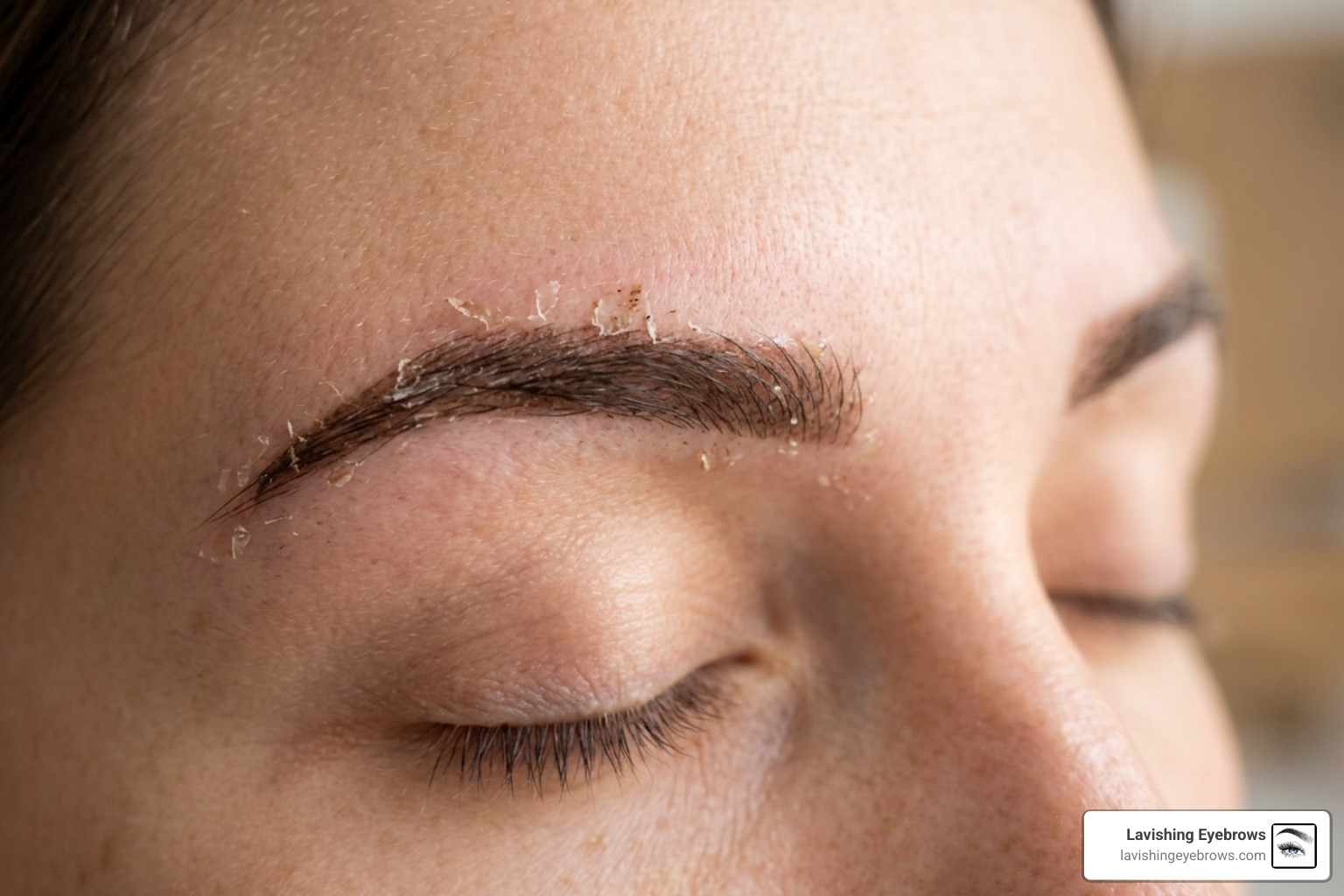
As the top layer of skin begins to flake off, your brows may look like they are falling apart. You’ll see little flakes of skin with pigment attached to them. This is normal skin regeneration. The “strokes” may look blurry, or you might see white patches where the skin has already peeled. This process is similar for other techniques as well; for instance, you can see how Nano Brows Day By Day Why Your Brows Look Crazy Right Now follows a very similar trajectory.
The Ghosting Phase: Where Did My Brows Go?
Around Day 10 to Day 14, many clients experience the “Ghosting Phase.” This is when the scabs have fallen off, but the skin underneath looks incredibly light—almost as if the microblading has completely disappeared.
Why does this happen? The new skin that grows over the pigment is thicker and more opaque than the skin that was there before. It essentially “hides” the pigment temporarily. Think of it like looking through a frosted window; the pigment is still there, but it’s buried. We cover this phenomenon extensively in our Microblading Healing Day By Day resource. Don’t worry—the color will return!
Essential Aftercare for Week 2
Even though the “open wounds” are closing, your aftercare is still critical.
- Moisture Control: Continue using your aftercare balm only as directed. Oily skin types may need to avoid ointment altogether at this stage.
- Sun Avoidance: Freshly healed skin is very sensitive to UV rays. Wear a hat if you’re out in the Temecula or Corona sun.
- No Makeup: Still no brow pencils or powders! You don’t want to introduce bacteria to the area while the skin is still regenerating.
For more tips on navigating this period, see After The Blade Mastering Your Microblading Aftercare Routine.
The Return of the Pigment: Week 3 and Week 4
By Week 3 (Days 15-21), you can finally breathe a sigh of relief. The flaking has stopped, and your skin is starting to look “normal” again. This is the stage where the pigment begins to “bloom” or resurface.
As the new skin cells settle and become more translucent, the hair strokes will reappear. They will look softer and more natural than they did on Day 1. It’s important to remember that the color might still look a bit uneven or patchy during this time. You can view various Microblading Before After galleries to see how common this “patchy return” is. According to the Microblading Healing Process: Day-by-Day Recovery Guide – HealthySat, this is simply the final stage of pigment stabilization.
Visualizing Results in Week 4 of the Pictures of Microblading Healing Process Week by Week
By Week 4, your brows have reached their near-final shape. The skin has completed its first full turnover cycle (which usually takes about 28-30 days). While the surface is healed, internal healing continues. The strokes should now look like real hair, and the color should be a close match to what was intended.
If you chose a different technique, like microshading, the visual process is slightly different but follows the same 4-week timeline. You can learn about that in Revitalizing Your Brows Microshading Healing Process.
Preparing for Your Perfecting Session
No microblading treatment is complete without the “Perfecting Session,” usually scheduled 6-8 weeks after your first appointment. This session is essential because:
- It fixes any patchiness that occurred during the ghosting phase.
- It allows us to reinforce the pigment in areas where your skin may have rejected it.
- We can make minor adjustments to the color or shape now that we see how your skin heals.
Think of the first session as the “rough draft” and the second as the “final edit.” For more on why this is non-negotiable, see Your Guide To Microblading Touch Up Healing And Results.
Factors That Influence Your Visual Healing Journey
Not everyone’s pictures of microblading healing process week by week will look identical. Your biology plays a huge role in how the pigment stays and how the skin repairs itself.
| Factor | Impact on Healing |
|---|---|
| Skin Type | Oily skin may experience more “blurring” and faster fading. Dry skin often holds crisp strokes better. |
| Age | Younger skin regenerates faster (closer to 28 days), while mature skin may take 45-60 days to fully heal. |
| Lifestyle | Heavy sweaters or those who exercise daily may see more pigment loss during the first 10 days. |
| Health | Conditions like diabetes or autoimmune issues can slow down the healing process significantly. |
We love sharing From Sparse To Spectacular Real Microblading Before After Stories because they show the diversity of healing across different skin types and ages.
Normal vs. Problematic Healing in Pictures of Microblading Healing Process Week by Week
While the healing process can look “scary” (especially during the flaking phase), it should never feel “scary.” It is vital to know the difference between normal healing and a potential infection.
Normal Symptoms:
- Itching (Weeks 1-2)
- Flaking/Peeling
- Temporary fading (Ghosting)
- Mild tenderness for the first 3 days
Problematic Symptoms (Contact a Professional):
- Spreading Redness: If the redness moves away from the brow area toward the eyes or forehead.
- Pus or Drainage: Yellow or green discharge is a sign of infection.
- Fever or Chills: This indicates a systemic reaction.
- Severe Pain: The area should be tender, not throbbing or excruciating.
If you experience any of these problematic symptoms, contact your artist or a medical professional immediately.
Frequently Asked Questions about Microblading Healing
When can I finally wash my face normally?
You can typically resume your normal face-washing routine after the flaking has completely stopped, usually around Day 10 to 14. However, you should still avoid harsh chemical exfoliants, Retinol, or Vitamin C directly on the brows for at least 4 weeks.
Why do my brows look patchy during Week 3?
Patchiness in Week 3 is normal! It’s usually caused by the skin regenerating at different speeds. One brow might “come back” faster than the other. This is exactly what the 6-week touch-up is designed to fix.
Is it normal for one brow to heal faster than the other?
Yes! Most people find that the side they sleep on heals differently, or simply that one side of the body is more efficient at repairing itself. Don’t compare your left brow to your right brow until after the 6-week mark.
Conclusion
The journey to perfect brows is a marathon, not a sprint. While the pictures of microblading healing process week by week can look a bit wild in the middle, the end result is worth the patience. By following your aftercare and trusting the process, you’ll move through the dark, itchy, and “ghostly” phases to arrive at the beautiful, natural-looking results you’ve always wanted.
At Lavishing Eyebrows, Vicky brings her perfectionist artistry to every client in Murrieta, Temecula, and the surrounding areas. Whether you have over-plucked brows from the 90s or age-thinned brows that need a lift, we are here to guide you through every day of your healing journey.
Ready to start your transformation? Schedule your consultation for perfect brows and let’s create your unique artwork together.