Why Menopause Hair Loss Catches So Many Women Off Guard
Menopause hair loss is one of the most common — and least talked about — changes women face during perimenopause and beyond. More than 50% of postmenopausal women experience noticeable thinning, and for many, it shows up not just on their scalp but in their eyebrows too.
Quick answer: What causes menopause hair loss?
- Estrogen and progesterone levels drop during perimenopause
- This allows androgens (like DHT) to become relatively dominant
- DHT shrinks hair follicles — on your scalp and your brows
- The result: thinner strands, slower growth, more shedding
It often starts quietly. A wider part. A ponytail that feels lighter. Brows that look more sparse than you remember. Many women don’t notice until they catch themselves in a photo or reach for their brow pencil again.
The change is real — and it’s hormonal. Hair follicles are estrogen-sensitive tissue. When estrogen declines, the hair growth cycle shortens, follicles miniaturize, and shedding increases. Research suggests up to 2 out of 3 women experience hair thinning during menopause.
This guide explains exactly what’s happening — and, more importantly, what you can do about it.
Understanding Menopause Hair Loss: The Hormonal Shift
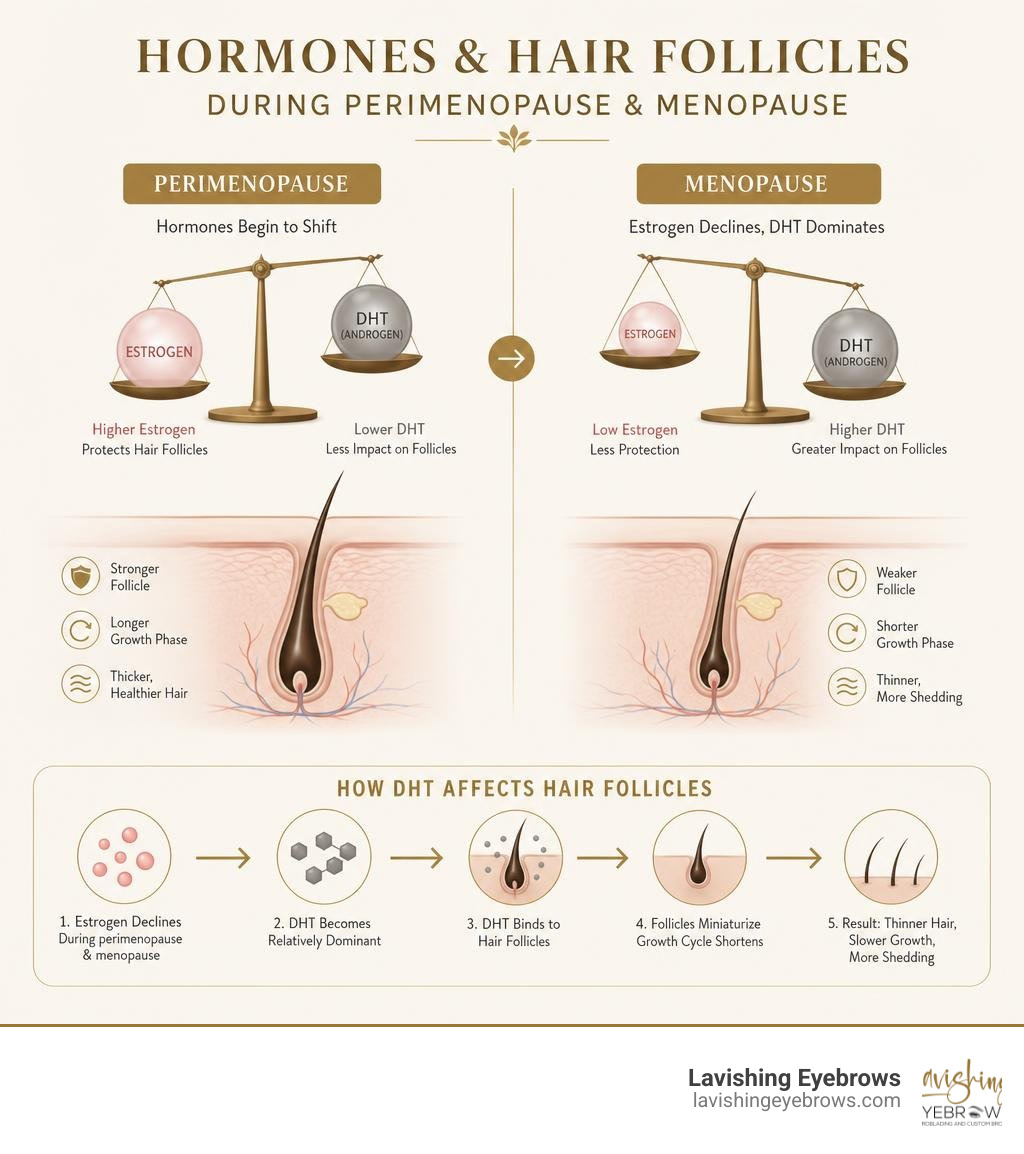
To understand why your hair and eyebrows are suddenly acting like they want to make a quiet exit, we have to look at the hormonal command center. During our reproductive years, estrogen and progesterone act like a luxurious spa treatment for our hair. They keep our hair follicles happy, well-nourished, and firmly anchored in the growth phase.
However, as we transition into perimenopause and menopause, our ovaries gradually wind down production of these protective hormones. This sudden drop triggers a state of relative androgen dominance. Androgens are male hormones (like testosterone) that women naturally produce in smaller quantities.
When your protective estrogen levels plummet, these androgens take center stage. Specifically, testosterone converts into a highly potent hormone called dihydrotestosterone (DHT). If you have a genetic sensitivity to DHT, this hormone binds to the receptors in your hair follicles, causing them to shrink. This biological process is known as hair follicle miniaturization.
To dive deeper into the clinical connection between your changing endocrine system and your hair, you can read this Scientific explanation of hormonal hair changes.
How Estrogen and Androgens Drive Menopause Hair Loss
The life of a single hair strand is divided into three distinct phases:
- The Anagen Phase (Growth): This is when your hair is actively growing. In a healthy scalp, about 85% to 90% of your hair is in this phase, which can last anywhere from two to eight years.
- The Catagen Phase (Transition): A brief two- to three-week phase where the hair follicle shrinks and detaches from its blood supply.
- The Telogen Phase (Resting/Shedding): A two- to four-month phase where the hair rests before eventually shedding to make room for a new strand.
Estrogen’s primary job is to extend the anagen (growth) phase. When estrogen levels drop, the growth phase shortens dramatically. Your hair rushes prematurely into the telogen (shedding) phase, causing you to lose more than the standard 50 to 100 strands a day.
Furthermore, estrogen and progesterone are responsible for keeping your scalp hydrated by supporting sebum (natural oil) production. As these hormones decline, you may notice a significant reduction in sebum, leading to scalp dryness, brittleness, and a change in overall hair texture. Your hair might transition from soft and shiny to dry, coarse, and prone to breakage.
The Three Main Types of Hormonal Hair Thinning
When women experience menopause hair loss, it generally falls into one of three clinical categories:
- Female Pattern Hair Loss (Androgenetic Alopecia): This is the most common form of hair loss, affecting over 50% of postmenopausal women. Instead of the receding hairline typical in men, women usually experience diffuse thinning across the crown and a gradual widening of the middle part.
- Telogen Effluvium: This is a temporary form of hair loss characterized by sudden, widespread shedding. It is often triggered by rapid metabolic changes, high stress, or the sudden drop in estrogen during perimenopause. Unlike pattern baldness, telogen effluvium can sometimes be accompanied by a sensitive, burning, or painful scalp.
- Frontal Fibrosing Alopecia (FFA): A less common but more severe form of scarring alopecia that almost exclusively affects postmenopausal women. FFA causes progressive, permanent hair loss along the frontal hairline (making the forehead appear larger) and is highly notorious for causing patchy or complete eyebrow loss.
Recognizing the Signs: Is Your Hair and Brow Thinning Normal?
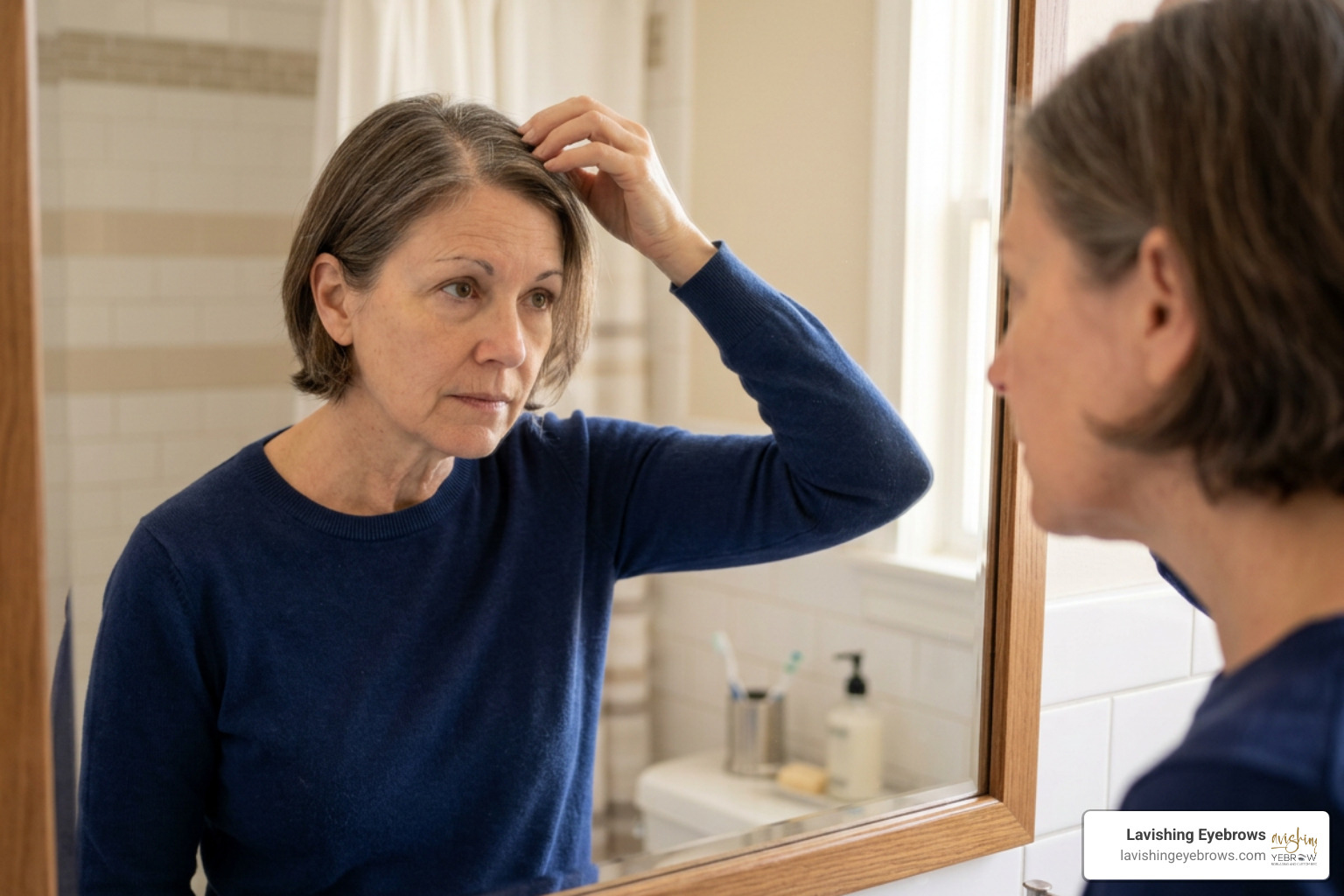
It is completely normal to lose some hair density as we blow out more birthday candles. However, there is a distinct difference between age-related hair changes and active menopause hair loss.
Because the changes happen gradually, it can be tough to know if what you are seeing is standard shedding or something that requires targeted intervention. Many women first notice the signs when styling their hair or looking at photos. You might find that your ponytail feels much lighter, your hair part looks wider under bathroom lighting, or your eyebrows are starting to look patchy — especially at the outer tails, which are highly sensitive to hormonal fluctuations.
If you are wondering whether your daily shedding has crossed the line into clinical thinning, you can check out these Dermatologist insights on hair shedding to help identify the early warning signs.
Key Statistics on Menopausal Hair Thinning
You are absolutely not alone in this transition. The numbers show that hair changes are an incredibly common part of the menopausal journey:
- By age 40, an estimated 40% of women already experience visible hair thinning.
- Over 50% of postmenopausal women will experience some degree of noticeable hair loss.
- Some clinical research suggests that 2 out of 3 women will deal with hair thinning or accelerated shedding during their menopausal transition.
To help you visualize the difference between normal daily shedding and menopausal thinning, we have put together this comparison table:
| Characteristic | Normal Daily Shedding | Menopause Hair Loss / Thinning |
|---|---|---|
| Daily Hair Loss Count | 50 to 100 strands per day | Well over 125 strands per day |
| Hair Part Appearance | Tight, consistent, and well-defined | Gradually widening, revealing more scalp |
| Overall Density | Consistent volume throughout the scalp | Diffuse thinning, especially at the crown and temples |
| Eyebrow Density | Full brows with natural aging changes | Sparse tails, patchy spots, or significant brow loss |
| Hair Texture | Strong, elastic, and naturally hydrated | Dry, brittle, coarse, and highly prone to breakage |
How to Manage and Prevent Hormonal Hair Thinning Naturally
While hormonal shifts are a natural part of life, you do not have to sit back and let them take your hair and brows without a fight. Managing menopause hair loss effectively requires a holistic approach that combines targeted nutrition, gentle daily habits, and stress reduction.
By addressing the root biological and environmental triggers of thinning, you can support your hair follicles from the inside out. For a comprehensive look at what actually moves the needle during this transitional phase, check out this practical Guide to perimenopause hair thinning solutions.
Nutritional Staples and Ayurvedic Remedies
Your hair is primarily made of a tough protein called keratin. To build strong hair, your body needs a steady supply of high-quality amino acids, vitamins, and minerals.
- Prioritize Protein: Aim for adequate protein intake daily. If your body isn’t getting enough protein, it will redirect its limited resources away from non-essential functions (like growing hair) to support your vital organs.
- Check Your Ferritin Levels: Iron is crucial for hair cell metabolism. A storage iron (ferritin) level below 70 ng/mL is strongly correlated with increased hair shedding, even if your standard red blood cell counts look normal.
- Optimize Vitamin D and Zinc: Low levels of vitamin D3 and zinc are closely linked to both female pattern hair loss and telogen effluvium.
- Incorporate Ayurvedic Remedies: Ayurvedic medicine has used natural botanicals for centuries to restore physical balance. Applying natural oils like rosemary oil (which has been shown in studies to perform similarly to 2% minoxidil without the scalp irritation), pumpkin seed oil (a natural DHT blocker), bhringraj, amla, and brahmi can nourish the scalp and stimulate dormant follicles.
Daily Scalp and Brow Care Habits
How you treat your hair on the outside matters just as much as how you feed it from the inside.
- Switch to Sulfate-Free Shampoos: Sulfates strip away the precious, dwindling natural oils your scalp produces, leaving your hair dry and brittle. Choose gentle, pH-balanced formulas that contain follicle-supporting ingredients like biotin, keratin, or caffeine.
- Incorporate Daily Scalp Massage: Spending just four minutes a day gently massaging your scalp with your fingertips can significantly increase microcirculation, delivering oxygen-rich blood and vital nutrients directly to your hair roots.
- Ditch the High Heat: Limit your use of blow dryers, curling irons, and straighteners. When you do use them, keep the temperature below 150°C (300°F) and always apply a heat protectant.
- Use Soft Hair Ties: Ditch tight elastics that pull on your delicate hairline. Opt for soft silk or satin scrunchies to prevent mechanical breakage and traction alopecia.
Clinical and Medical Solutions for Hair Restoration

Sometimes, natural remedies and lifestyle tweaks need a little extra help from modern medicine. If you are experiencing persistent, progressive thinning, scheduling a consultation with a qualified dermatologist or healthcare professional is an excellent next step. They can run targeted blood panels to rule out underlying thyroid issues, severe nutrient deficiencies, or complex autoimmune conditions.
For women open to systemic support, Hormone Replacement Therapy (HRT) — particularly transdermal bioidentical estrogen paired with micronized progesterone — can help restore declining hormone levels and directly address the root cause of hormonal thinning.
Evidence-Based Medical Treatments for Menopause Hair Loss
If you are looking for clinically proven options to halt thinning and encourage regrowth, several evidence-based treatments have a strong track record of success:
- Topical Minoxidil (Rogaine): The gold standard of over-the-counter hair loss treatments. Applying a 5% minoxidil foam or solution once daily helps widen blood vessels, prolongs the anagen growth phase, and coaxes miniaturized follicles back to life.
- Oral Medications: For more advanced cases, prescription options like oral minoxidil or spironolactone (a potassium-sparing diuretic that acts as a potent anti-androgen) can be highly effective under medical supervision.
- Low-Level Laser Therapy (LLLT): FDA-cleared red light therapy devices (such as caps or bands emitting 655nm light) use therapeutic light wavelengths to stimulate cellular activity and kickstart resting hair follicles.
- Platelet-Rich Plasma (PRP) or PRF Injections: This in-office procedure involves drawing a small amount of your own blood, spinning it in a centrifuge to isolate the growth-factor-rich platelets, and injecting it directly into the scalp to stimulate natural tissue regeneration.
To explore these medical pathways in detail and weigh their potential benefits, read this helpful overview of Medical options for hair loss.
Frequently Asked Questions About Menopausal Hair Thinning
When should I see a doctor or dermatologist about hair loss?
You should schedule a professional medical evaluation if you experience sudden, rapid hair shedding, patchiness, severe scalp itching, burning, or physical pain. Additionally, if you notice scarring, redness, or a rapidly receding hairline along with eyebrow loss, a dermatologist can test for conditions like Frontal Fibrosing Alopecia. A doctor can also run comprehensive blood panels to check your thyroid function, ferritin, and vitamin D levels.
Can hair loss from menopause be reversed or regrown?
Yes, in many cases, menopausal hair thinning can be partially reversed or significantly managed, especially with early intervention. If your hair follicles are still viable and have not yet undergone permanent miniaturization or scarring, treatments like minoxidil, HRT, and nutritional therapies can restore hair density. However, maintaining these results typically requires consistent, long-term care.
Does cutting hair or brows make them grow back thicker?
No. This is a very common beauty myth! Hair thickness is genetically determined by the size of your hair follicles deep beneath the skin. Cutting or shaving hair simply removes the tapered, older end of the hair shaft, making the blunt, freshly cut edge appear temporarily thicker as it emerges. Regular trims are still highly recommended, as they remove split ends and prevent breakage, giving your hair a healthier, fuller appearance.
Restoring Your Confidence: Beautiful Brow Solutions in Southwest Riverside County
While you are busy working on your scalp health with nutrition and medical treatments, there is a fast, incredibly rewarding way to bring back the frame of your face: professional permanent makeup.
If your eyebrows have started “ghosting” you due to perimenopause, we are here to help you get them back.
At Lavishing Eyebrows, located in beautiful Murrieta, CA, we specialize in helping women in Southwest Riverside County (including Temecula, Menifee, Lake Elsinore, and Corona) reclaim their confidence. Our owner, Vicky, is a highly trained, certified brow specialist who studied at the prestigious World Microblading Academy, PHI Brow Academy, and Mystique Brow Academy.
Vicky understands how emotional and frustrating hormonal brow loss can be. That is why she treats every set of brows as a unique piece of fine art, combining her perfectionist eye with a warm, comforting consultation process that puts even the most nervous clients completely at ease.
We offer a range of premium, natural-looking solutions tailored to your specific skin type and aesthetic goals:
- Microblading: Perfect for normal to dry skin, creating ultra-fine, crisp hair-like strokes to seamlessly fill in sparse areas.
- Nano Brows: An incredibly gentle, precise technique utilizing a cosmetic tattoo machine to create realistic hair strokes suitable for all skin types, including sensitive or mature skin.
- Powder / Ombre Brows: A soft, mist-like shading technique that gives your brows a beautifully defined, softly powdered makeup look.
We use only premium, US-sourced, medical-grade pigments to ensure safe, stunning, and long-lasting results. Best of all, we believe that restoring your self-assurance should be accessible, which is why we offer competitive pricing without ever compromising on quality or safety.
Ready to stop struggling with brow pencils every morning and step into this new chapter of life with radiant confidence? Explore our permanent makeup services and book your personalized brow consultation with Vicky today!