The Microshading Healing Process Scabbing Timeline: What to Expect
Microshading healing process scabbing is completely normal — and understanding it is the key to getting beautiful, long-lasting results.
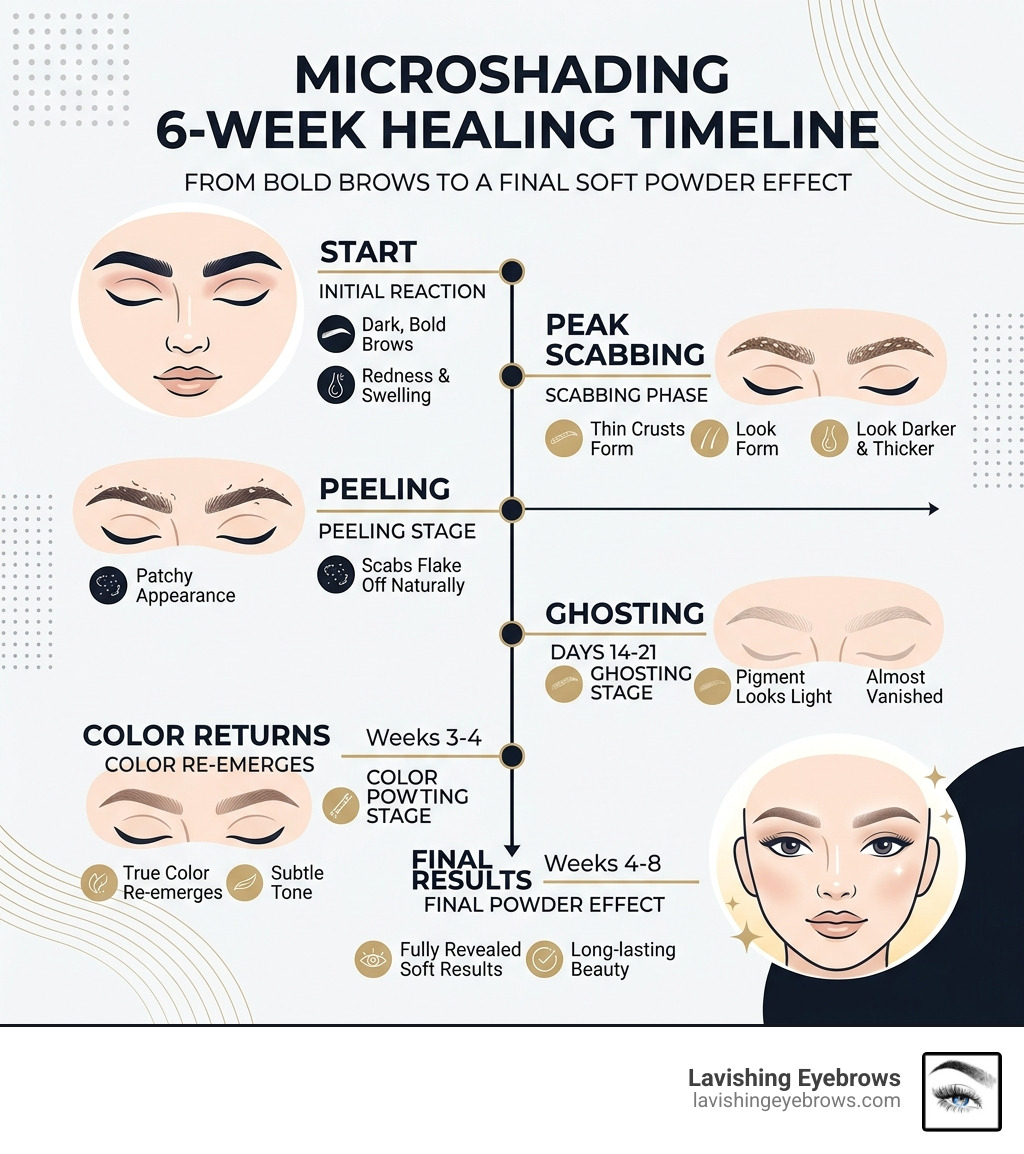
Here’s a quick overview of what to expect:
| Phase | Timeline | What You’ll See |
|---|---|---|
| Initial reaction | Days 1-3 | Dark, bold brows; some redness and swelling |
| Scabbing peak | Days 4-12 | Thin crusts form; brows look darker and thicker |
| Peeling | Days 8-14 | Scabs flake off naturally; brows may look patchy |
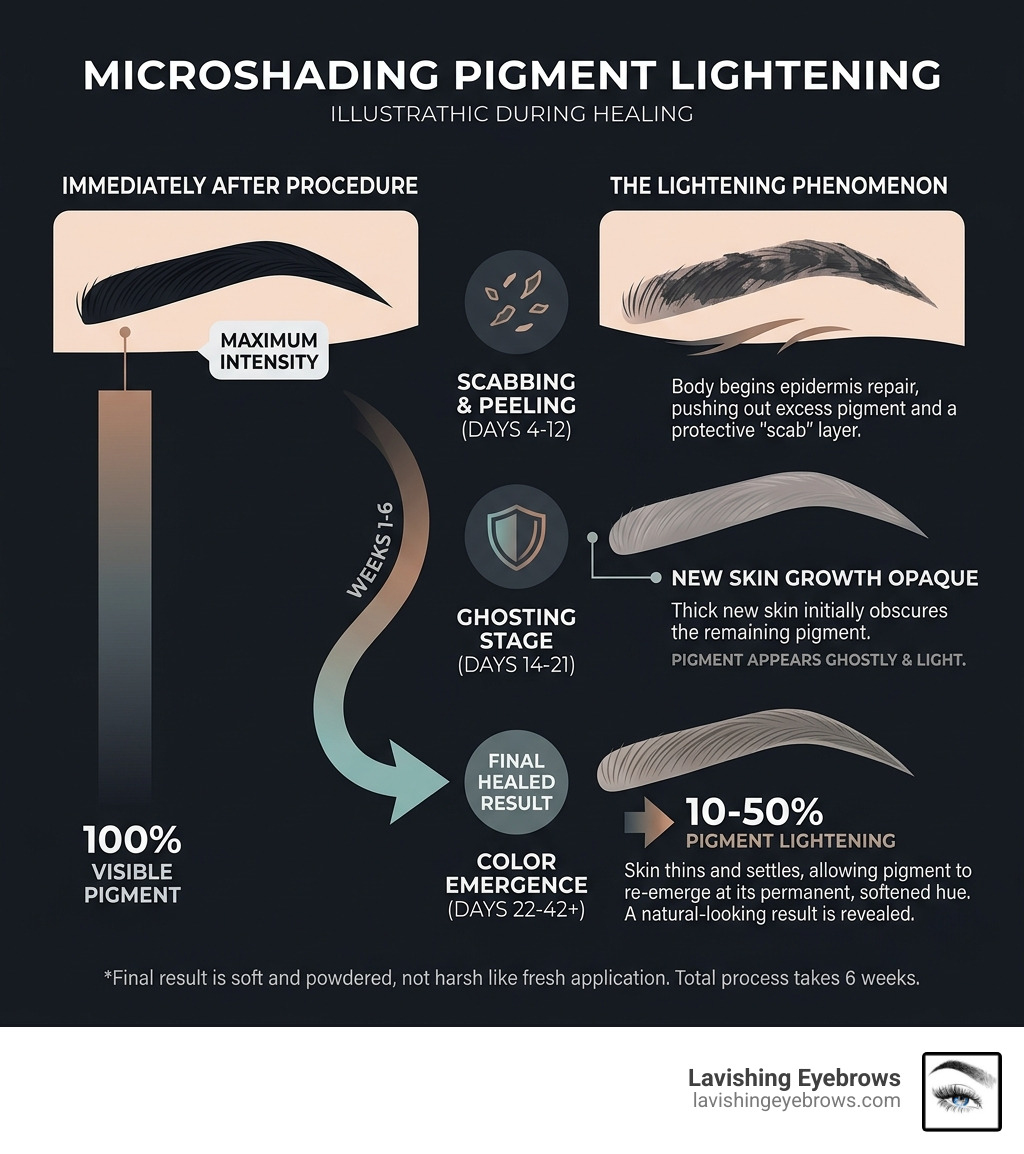
| Ghosting stage | Days 14-21 | Pigment looks very light or almost gone |
| Color returns | Weeks 3-4 | True color begins to re-emerge |
| Final results | Weeks 4-8 | Soft, powdery brows fully revealed |
So you just left the studio with gorgeous new brows — and now they’re forming scabs. Don’t panic. This is your skin doing exactly what it’s supposed to do.
Microshading works by depositing tiny dots of pigment at the junction between the outer and deeper layers of skin. Your body responds the way it always does to any minor skin disruption: it sends healing fluid to the area and begins building a protective crust over it.
That crust is the scab. It’s not a sign something went wrong. It’s a sign your skin is working.
The frustrating part? The scabbing phase falls right in the middle of the first two weeks — which are already the most intense part of the recovery. Your brows will look darker than expected, then form flaky patches, then possibly look like the pigment disappeared entirely. All of that is normal.
This guide walks you through every stage, day by day, so you know exactly what’s happening — and exactly what to do (and not do) to protect your results.
Understanding the Microshading Healing Process Scabbing Phase
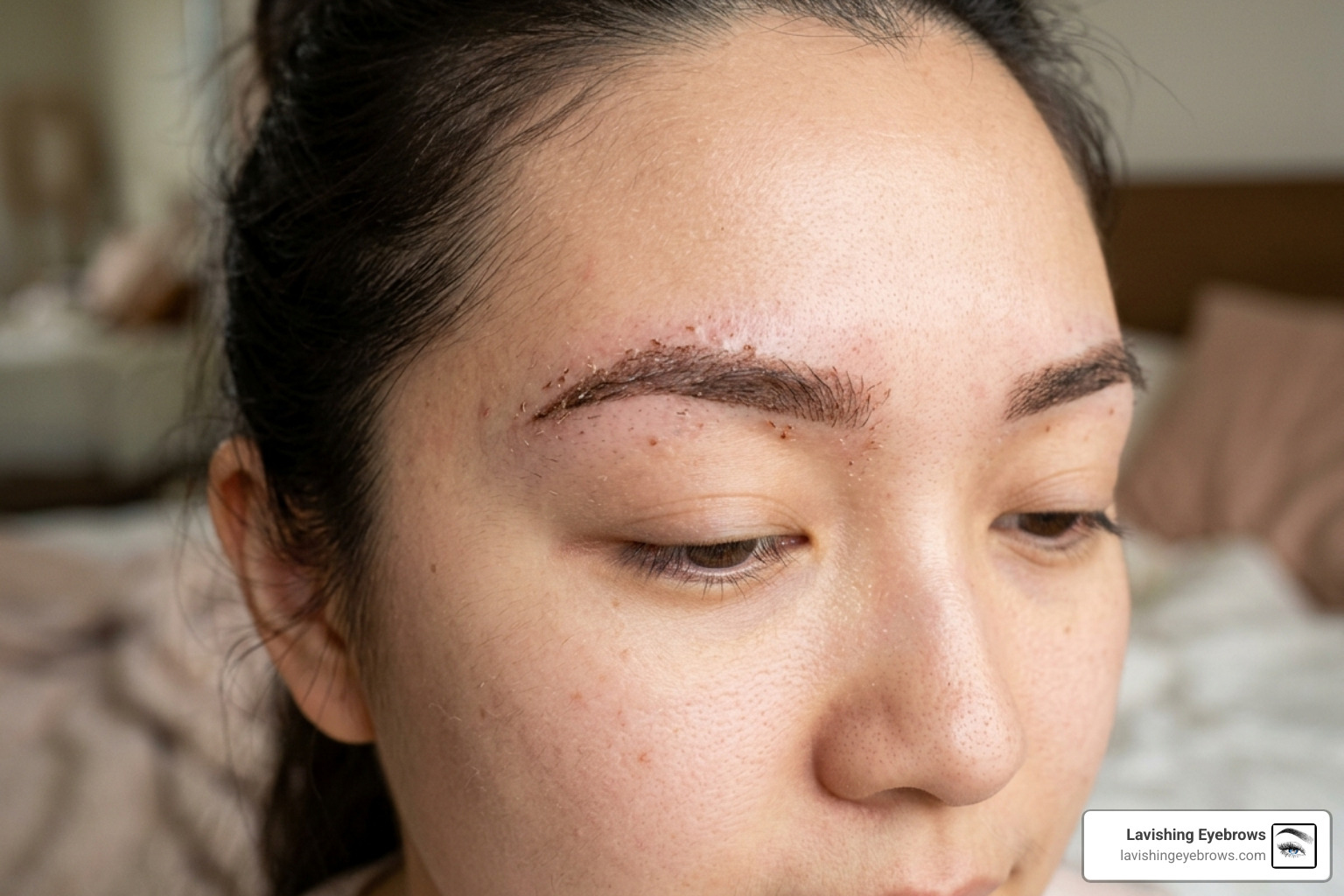
When we talk about the microshading healing process scabbing phase, we are really talking about your body’s incredible ability to protect itself. Unlike traditional tattooing which uses a solid needle to create deep lines, microshading uses a stippling technique. This creates thousands of tiny dots that result in a soft, powdered makeup look.
Because we are breaking the surface of the skin to deposit this pigment, your body naturally produces lymph fluid. This clear, yellowish fluid is the “glue” that creates the scab. It acts as a biological shield, keeping bacteria out while the skin underneath undergoes rapid regeneration. You can learn more about the specifics of this stage in this guide on the Microshading Scabbing Process – What to Expect During Healing.
At Lavishing Eyebrows, we always remind our clients that the scabbing stage is a temporary bridge to permanent beauty. For a deeper dive into the overall journey, check out our article on Revitalizing Your Brows Microshading Healing Process.
Why scabbing occurs during the microshading healing process scabbing stage
The scabbing stage is essentially an “epidermis repair” mission. When the pigment is implanted, it sits right at the junction of the epidermis and dermis. Your body sees this as a minor wound and immediately starts the repair process.
The “scab” is actually a protective crust that keeps the pigment trapped inside the skin while the new layer of skin grows over it. If you didn’t scab, the pigment would likely wash right out! For more on what to expect during this protective phase, see Microshading Eyebrows: What to Expect from Scabbing.
How skin type affects the microshading healing process scabbing duration
Not all scabs are created equal! Your skin type plays a massive role in how the microshading healing process scabbing unfolds:
- Oily Skin: If you have oily skin, your scabs might be softer or “mushier.” You might notice more pigment rejection initially, but the scabbing phase often ends sooner because the skin is well-hydrated.
- Dry Skin: Clients with dry skin often experience thinner, “crispier” scabs that may take a few extra days to fully flake off.
- Sensitive Skin: You might experience more lymph oozing in the first 48 hours, which can lead to slightly thicker scabs if not cleaned properly.
Understanding your skin type is the first step in a successful recovery. We discuss these nuances further in our Microblading Healing Process guide, which shares many similarities with microshading.
Day-by-Day Breakdown: What Normal Scabbing Looks Like
Navigating the microshading healing process scabbing can feel like an emotional roller coaster. One day you love them, the next day you’re worried they’ve disappeared! Here is a breakdown of the typical 42-day journey:
| Day Range | Appearance & Sensation | What’s Happening Underneath |
|---|---|---|
| Days 1-3 | Bold, dark, and maybe a bit red. | Pigment is fresh; lymph fluid is starting to dry. |
| Days 4-7 | Scabbing begins. Brows look “crunchy” or darker. | The biological shield is fully formed. |
| Days 8-12 | Peeling peak. Brows look patchy and unattractive. | New skin is pushing the old scabs off. |
| Days 14-21 | The “Ghosting Stage.” Brows look way too light. | New skin is thick and opaque, hiding the pigment. |
| Days 22-30 | Color returns. Brows look more defined. | The skin is thinning and settling; pigment re-emerges. |
| Days 31-42 | Final results. Soft, powdered perfection. | Internal healing is complete. |
For a more detailed look at the daily changes, visit Microshading Healing Process Day by Day – What to Expect or our own Microblading Healing Day By Day resource.
Essential Aftercare: How to Manage Your Brows While They Peel
How you treat your brows during the microshading healing process scabbing phase determines about 50% of your final result. You want to keep the area clean without soaking it.
We recommend a “gentle wash” routine: using lukewarm water and a fragrance-free, antibacterial soap, gently pat the brows for 10-20 seconds. This helps remove excess lymph fluid, which prevents heavy, thick scabbing. For a complete list of steps, check out How To Care For Eyebrows After Microshading.
Choosing the right moisturizer is also vital. You want something that lets the skin breathe while keeping the scabs from becoming too itchy or brittle. See our recommendations in Brow Tiful Healing Your Guide To The Best Aftercare Ointments.
The Do’s and Don’ts of microshading healing process scabbing
- DO sleep on your back to avoid rubbing scabs off on your pillow.
- DO keep your hair away from your face to prevent oils and bacteria from touching the area.
- DON’T pick, scratch, or pull at the scabs. This is the golden rule!
- DON’T engage in heavy exercise that causes sweating for at least 7-10 days. Sweat contains salt which can pull the pigment right out.
- DON’T apply makeup, sunscreen, or anti-aging creams to the brow area until peeling is finished.
For a deeper dive into these rules, read After The Blade Mastering Your Microblading Aftercare Routine.
Minimizing scabbing with proper ointment application
The goal of ointment isn’t to “smother” the brow, but to create a thin, breathable barrier. Think of it as a light glaze, not a heavy frosting! Using a clean cotton swab, apply a rice-grain-sized amount of ointment to both brows. This keeps the scabs flexible so they don’t crack and itch as much. Learn the pro tips here: Heal Like A Pro Microblading Ointment Aftercare Explained.
Troubleshooting Your Recovery: When to Worry About Scabs
Most clients experience a smooth microshading healing process scabbing stage, but it’s important to know the difference between “normal itchy” and “something is wrong.”
Normal Scabbing:
- Itching (often intense!)
- Flaking like dandruff
- Mild redness that fades after the first 48 hours
- Brows looking patchy
When to Contact Us (Potential Infection):
- Pus or yellow/green discharge
- Persistent, throbbing pain after Day 4
- The area feels hot to the touch
- Fever or chills
- Redness that is spreading away from the brow area
If you’re unsure about your timeline, take a look at our Eyebrow Tattoo Healing Time guide for more clarity.
Frequently Asked Questions about Microshading Scabbing
Will scabbing affect my final results?
If you let the scabs fall off naturally, they won’t negatively affect your results! However, you should expect the pigment to lighten by 10-50% during the healing process. This is normal. If you pick the scabs, you risk “pigment pulling,” which leaves white gaps in your brows. You can see how we fix these minor issues in Your Guide To Microblading Touch Up Healing And Results.
When should I schedule my touch-up appointment?
We typically schedule the “perfecting session” 6-8 weeks after your initial appointment. This allows the internal healing to finish completely. Even if your brows look a little patchy after the scabs fall off, don’t worry—that’s exactly what the touch-up is for! Learn more about the Microshading Touch Up here.
What happens if I accidentally pick a scab?
If you accidentally scratch a scab off in your sleep or while washing, don’t panic. Keep the area clean and apply a tiny bit of ointment. You might lose some pigment in that spot, but we can easily fill it in during your touch-up. Just try your best to avoid it, as picking can lead to minor scarring. For more on why brows might look a little “crazy” during this time, see Nano Brows Day By Day Why Your Brows Look Crazy Right Now.
Conclusion
At Lavishing Eyebrows, we understand that the microshading healing process scabbing can be a little intimidating. That’s why Vicky takes the time to walk every client in Murrieta and the surrounding areas (Temecula, Menifee, Corona, and Riverside) through the process with care and artistry.
By following these aftercare steps and having a little patience during the “ugly” phase of healing, you’ll be rewarded with the beautiful, effortless brows you’ve always wanted. Ready to start your journey? Read our Microshading Technique A Step By Step Guide to see how we create our signature looks, or Book your Microshading Touch-Up if you’re ready for your perfecting session!