When Hair Starts Thinning: Is Microblading the Answer?
Microblading for hair loss is a semi-permanent cosmetic procedure that uses a fine, handheld tool to deposit hair-like pigment strokes into the scalp or brow area — creating the illusion of fuller, denser hair without surgery or medication.
Quick answer for thinning hair:
| Question | Answer |
|---|---|
| What does it do? | Creates realistic hair-stroke impressions to camouflage sparse areas |
| Who is it best for? | Mild to moderate thinning, receding hairlines, sparse brows, traction alopecia |
| How long does it last? | Roughly 8 to 18 months depending on skin type and aftercare |
| Is it a cure for hair loss? | No — it is purely cosmetic and does not regrow hair |
| Average cost? | $700 to $1,200 |
Hair loss is more common than most people realize. Nearly 40% of all hair loss patients are women — and for many, it quietly chips away at confidence long before anyone else notices.
Whether it’s post-pregnancy shedding, age-related thinning, or brows that gradually disappeared after years of over-plucking, the emotional weight of losing hair is real. The daily routine of filling in sparse spots — sometimes 20 to 45 minutes every morning — can feel exhausting and defeating.
That’s exactly why cosmetic camouflage options like scalp and brow microblading have gained serious traction. They won’t regrow a single strand, but they can make you look — and feel — like yourself again.
This guide breaks down everything you need to know before booking: how the procedure actually works, who it helps, what it costs, and whether it’s the right fit for your situation.
Microblading for hair loss word list:
Understanding the Procedure: How It Works on the Scalp
To understand how microblading works on the scalp, it helps to throw out any mental images you have of traditional body art tattoos. Scalp microblading is a highly specialized, meticulous art form that relies on light, controlled pressure and medical-grade pigments designed to fade gracefully over time.
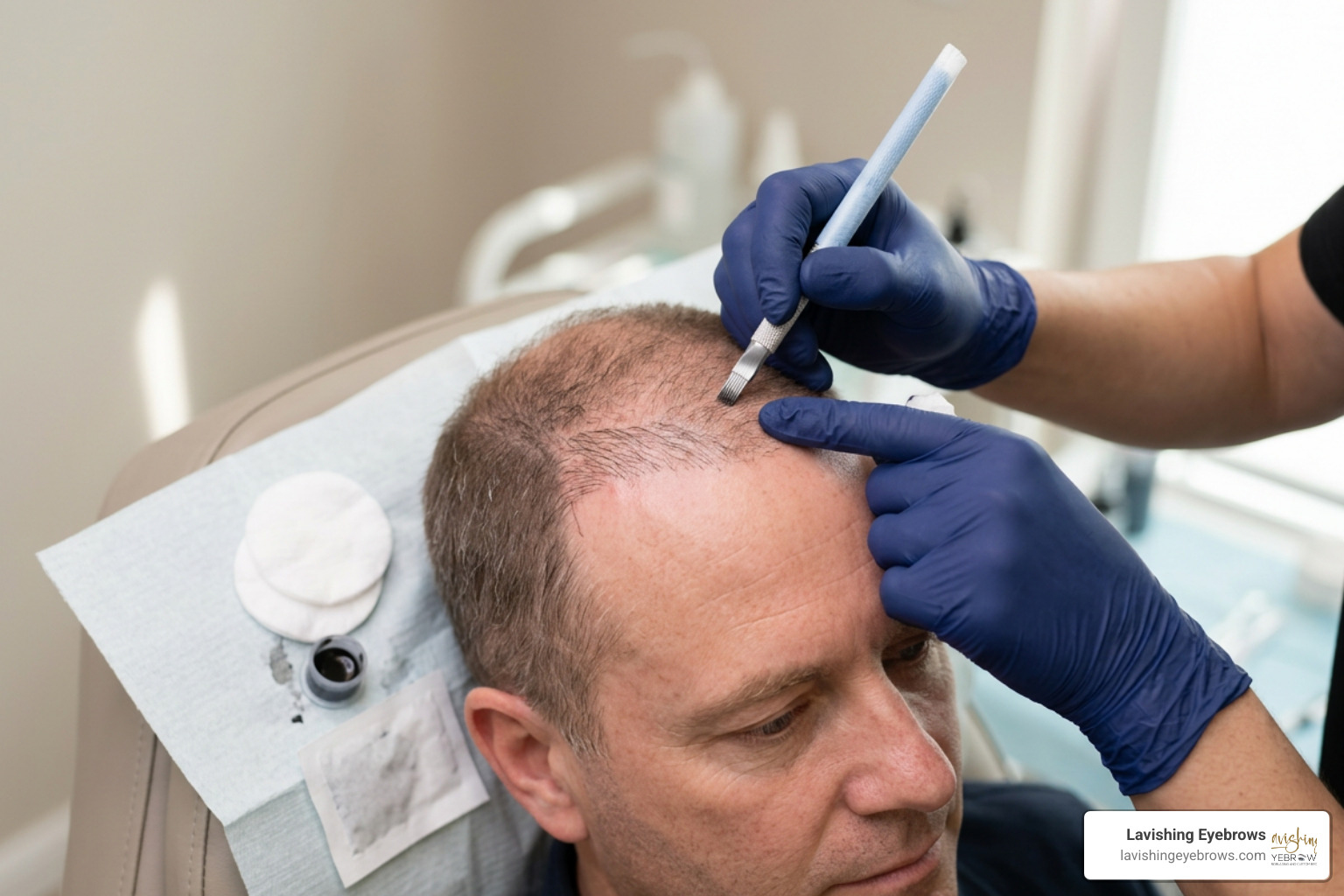
Unlike traditional tattooing, which uses a rapid mechanical machine to push ink deep into the dermis, microblading is performed completely by hand. We use a manual handheld pen tipped with a row of tiny, sterile needles. These needles are incredibly fine—about three times smaller than standard tattoo needles—allowing us to draw individual, microscopic lines that perfectly mimic the width and curve of real hair.
When applying this technique to the scalp, we carefully deposit pigment into the lower levels of the epidermis and the very superficial boundary of the dermis. Because the pigment is placed so shallowly, the results look incredibly crisp and realistic, avoiding the “blue-green” color shift associated with deep body tattoos. The ultimate goal is to build a convincing optical illusion, filling in the white space of the scalp so that your hair appears naturally dense and voluminous.
How Microblading for Hair Loss Works
The process begins with an in-depth consultation. We analyze your natural hair growth patterns, the health of your scalp, and your hair’s unique color profile. Custom pigment matching is arguably the most critical step; we blend high-quality, iron-oxide or carbon-fused pigments to match your exact hair color, taking your skin’s undertones into account so the strokes do not turn orange, blue, or ash-grey as they heal.
Next, we map out the treatment area. If we are addressing a receding hairline or thinning temples, we draw a customized blueprint that respects your natural facial symmetry and muscle movement. As highlighted in discussions about whether hairline microblading is the ultimate fix in Is Microblading Your Hairline the Fix for Thinning Hair? | Vogue, this procedure acts as a non-surgical visual solution. By placing delicate, individual hair strokes along the front hairline, we can soften a high forehead or camouflage patchy recession.
The physical procedure takes about one to two hours. We apply a medical-grade topical numbing cream to keep you comfortable throughout the process. Once the skin is prepared, we gently draw the ultra-fine strokes, layering them in the exact direction your natural hair grows to ensure the final look is completely seamless.
Microblading vs. Scalp Micropigmentation (SMP)
Many people confuse scalp microblading with Scalp Micropigmentation (SMP), but they are fundamentally different techniques designed for different types of hair loss.
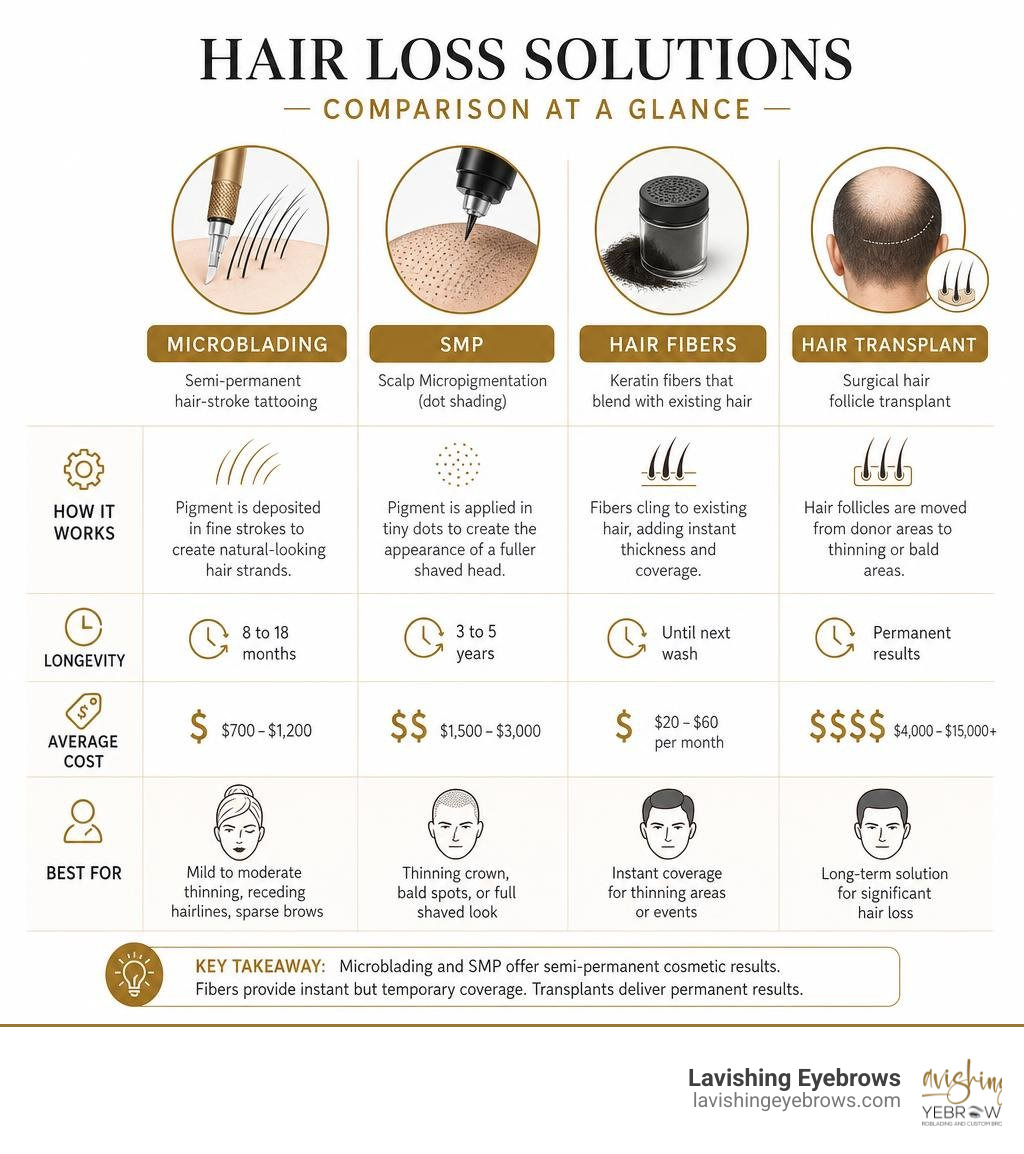
- Microblading uses a manual blade to draw fine, linear strokes that look like individual strands of hair. It is ideal for filling in small, localized gaps, defining a soft hairline, and blending into areas where there is still a decent amount of natural hair to provide three-dimensional texture.
- Scalp Micropigmentation (SMP) uses a digital rotary machine to deposit microscopic dot impressions into the skin. Instead of drawing lines, SMP creates the look of tiny hair follicles. This is the go-to technique for creating a clean “buzz-cut” look on completely bald heads or adding a shadow of density across a widely thinning crown. You can explore the detailed applications of dot-based density at Scalp Pigmentation | Temecula, California – Creations Art and Beauty.
Because the scalp produces a high amount of natural oils (sebum), linear microblading strokes are more prone to blurring and softening over time compared to SMP dots. The manual strokes of microblading typically fade within 8 to 18 months, whereas the deeper, machine-applied dots of SMP can last anywhere from 3 to 5 years (and sometimes up to 8 years) before requiring a touch-up.
| Feature | Scalp Microblading | Scalp Micropigmentation (SMP) |
|---|---|---|
| Visual Result | Linear, hair-like strokes | Tiny dot impressions (follicle replication) |
| Tool Used | Manual handheld pen with micro-blades | Digital rotary machine with single needles |
| Best For | Receding hairlines, temples, and blending with existing hair | Diffuse thinning, crown balding, and full-head buzz-cuts |
| Fading Timeline | 8 to 18 months | 3 to 5+ years |
| Skin Type Suitability | Normal to dry skin (avoid on very oily scalps) | All skin types (highly stable on oily skin) |
Is Microblading for Hair Loss Right for You?
While the idea of a semi-permanent hairline sounds amazing, scalp microblading is not a universal solution. Its success depends heavily on the specific type of hair loss you are experiencing, your skin type, and your lifestyle. To explore the root biological causes of your hair thinning before seeking cosmetic camouflage, it is always wise to consult a medical professional, such as those specializing in Hair Loss | Dermatologist In Hemet & Murrieta, CA.
Who is a Good Candidate for Microblading for Hair Loss?
The ideal candidate for scalp microblading is someone looking to refine, lower, or fill in a specific, localized area of hair loss where there is still surrounding hair to help blend the look.
- Traction Alopecia: If years of tight ponytails, braids, or heavy extensions have permanently thinned out your hairline and temples, microblading can beautifully recreate the look of a full, soft hairline.
- Mild Hairline Recession: Men and women experiencing minor recession around the temples can use microblading to square off or round out their hairline.
- Postpartum and Age-Related Thinning: If you have noticed subtle thinning around your parting or face-framing edges, microblading can restore that youthful frame. This is also a fantastic option for mature women; you can read more about how we customize these semi-permanent techniques in our guide on microblading for older women.
- Normal to Dry Skin: Pigment retention is highest on normal, dry, or combination skin types where excess sebum won’t migrate the delicate strokes.
Who Should Avoid Scalp Microblading?
There are several scenarios where scalp microblading can yield unsatisfactory results, and alternative treatments should be considered.
- Very Oily Skin: The scalp is packed with sebaceous glands. If your skin is exceptionally oily, the excess sebum will act like a solvent, causing the crisp microbladed lines to blur, spread, and merge together over time, resulting in a solid, blotchy appearance.
- Advanced Male Pattern Baldness: Microblading is a two-dimensional tattoo. If you are completely bald on top, microblading will look flat and artificial because there are no real, three-dimensional hairs to blend with the strokes. SMP or surgical options are far better suited here.
- Active Scalp Conditions & Scarring Alopecia: If you suffer from psoriasis, eczema, seborrheic dermatitis, or scarring alopecia, the skin on your scalp is compromised. Microblading over active inflammation can trigger flare-ups, cause poor pigment retention, or even lead to permanent scarring. For medical therapies and diagnosis, check out Alopecia Treatment – Advanced Derm Specialists.
The Pros and Cons of Scalp Microblading
Like any cosmetic enhancement, microblading your hairline comes with a unique set of trade-offs. Weighing these carefully will help you set realistic expectations.
The Pros:
- Immediate Visual Gratification: Unlike topical hair growth serums or oral medications that take six months to show subtle improvements, you walk out of your microblading session with an instantly denser hairline.
- Boosts Daily Confidence: It eliminates the daily stress of applying messy hair fibers, powders, or root spray concealers that can run or smudge when you sweat or get caught in the rain.
- Highly Customizable: The manual tool allows for incredible precision, meaning we can tailor the thickness, curve, and direction of every single stroke to match your natural hair.
- Restores Missing Features: For those recovering from hair loss, the psychological relief of seeing a restored frame to the face is life-changing. You can read some of our favorite transformation journeys in From sparse to spectacular real microblading before after stories.
The Cons:
- Lacks Three-Dimensional Texture: Microblading cannot create physical hair. If someone stands directly over your head under harsh, direct lighting, they may be able to tell that the strokes are flat against the skin, especially in areas with zero natural hair.
- Requires On-Going Maintenance: Because the pigment is placed shallowly to keep the lines looking crisp, the body naturally metabolizes it. You will need routine touch-ups every 12 to 18 months to keep the color fresh.
- Risk of Pigment Migration (Blurring): Over time, even on ideal skin types, the sharp lines will soften. If executed by an inexperienced artist who implants the pigment too deeply, the ink can “blow out,” leaving behind permanent, blurry blue-grey smudges.
Cost, Longevity, and Essential Aftercare
Investing in your hairline or eyebrows is a commitment of both time and finances. The average cost of scalp or hairline microblading typically ranges between $700 and $1,200. This price reflects the highly specialized training required to work on the complex, vascular skin of the scalp, as well as the multi-hour, dual-session process.
Your initial investment almost always includes a touch-up session scheduled 6 to 10 weeks after the first appointment. This “perfecting session” is vital: it allows us to see how your skin retained the pigment, fill in any strokes that faded during the initial healing phase, and add depth and dimension.
On average, your scalp microblading results will last between 8 and 18 months. The speed at which the pigment fades depends on your skin’s natural cellular turnover, your immune system, your skin type (oily vs. dry), and how diligently you protect your scalp from external elements. If you are looking for medical-grade hair restoration or regenerative therapies to pair with your cosmetic improvements, you can explore the options available at Hair Loss/Hair Regrowth in Temecula, CA – Wellness Diagnostics.
Maximizing Your Results with Proper Aftercare
The way you care for your scalp during the first 10 to 14 days post-procedure accounts for 50% of your final healed result. Think of your fresh microblading as a series of tiny, delicate micro-scratches that need to heal undisturbed.
- Keep It Clean and Dry: Gently cleanse the area with a mild, fragrance-free soap using your fingertips, but avoid soaking your head in the shower. Do not submerge your head in pools, hot tubs, or ocean water for at least two weeks to avoid infection.
- Avoid Intense Sweat: Skip the heavy cardio, saunas, and steam rooms for the first 10 days. Sweat contains salt and urea, which will push the raw pigment out of the healing incisions, leaving you with patchy, faded results.
- Protect from the Sun: Ultraviolet rays are the absolute enemy of cosmetic tattoo pigments. Once fully healed, apply a mineral-based SPF 30+ to your hairline daily and wear a hat when spending extended time outdoors.
- Ditch the Active Skincare: Keep anti-aging products containing retinoids, glycolic acid, salicylic acid, and alpha-hydroxy acids (AHAs) far away from your hairline and brows. These ingredients accelerate skin cell turnover, which will quickly fade your beautiful strokes. For visual inspiration on how proper healing leads to gorgeous, crisp results, take a look at our Microblading before after gallery.
Frequently Asked Questions about Scalp Camouflage
Does microblading damage existing hair follicles?
This is one of the most common concerns we hear, and the short answer is no — not when performed by a certified professional.
Your natural hair follicles sit deep within the subcutaneous fat layer and lower dermis of the scalp, roughly 4 to 6 millimeters beneath the surface. Microblading, on the other hand, only penetrates the superficial epidermis and the papillary dermis, which is only about 0.5 to 1 millimeter deep. Because we work so close to the surface, the microblading needle never comes into contact with, or disrupts, the biological hair bulb.
In fact, some clients find that the gentle stimulation of the superficial skin layers can actually encourage localized blood flow to the area! If you are looking for a trusted, local artist who understands this delicate balance, you can connect with us through Microblading in Corona, California – Permanent Makeup Artist.
Can microblading help with menopause-related thinning?
Absolutely. During menopause, falling estrogen levels shorten the hair’s active growth phase, often leading to diffuse shedding, a wider parting line, and thinning eyebrows.
While we often recommend scalp micropigmentation for wide, diffuse thinning across the crown, microblading is incredibly effective for restoring the face-framing areas that menopause tends to strip away—specifically the temples, the front hairline, and sparse, aging brows. Combining a subtle hairline touch-up with eyebrow restoration can instantly make you look refreshed and youthful. To learn more about modern techniques designed specifically to combat hormonal and age-related hair loss, read our breakdown on Nano brows and beyond how to fix age-related thinning.
How painful is the procedure on the scalp?
Most clients are pleasantly surprised by how manageable the sensation is! While the scalp is highly vascular and sensitive, we apply a highly effective, medical-grade topical anesthetic (numbing cream) before we begin, and we continue to apply a secondary numbing gel throughout the procedure once the skin is open.
Most people describe the sensation as a light scratching or a tickling feeling, occasionally accompanied by a mild urge to sneeze when we work near the forehead. It is far less painful than a traditional body tattoo, and any minor tenderness or redness usually subsides within 24 to 48 hours.
Conclusion
Microblading for hair loss is a powerful, non-surgical way to reclaim your hairline, fill in frustrating gaps, and walk out the door every morning without having to paint, spray, or powder your scalp. While it is a cosmetic camouflage rather than a biological cure, the emotional relief and time saved during your morning routine are truly priceless.
At Lavishing Eyebrows in Murrieta, CA, we don’t believe in one-size-fits-all beauty. Our owner, Vicky, is a highly certified permanent makeup artist trained by the prestigious World Microblading Academy, PHI Brow Academy, and Mystique Brow Academy. Known for her perfectionist eye and warm, reassuring approach, Vicky treats every single hairline and brow transformation as a unique, custom work of art.
We proudly serve clients throughout Southwest Riverside County, including Temecula, Menifee, Lake Elsinore, and Corona. Whether you are dealing with postpartum thinning, sparse brows, or age-related hair loss, we invite you to book a personalized, warm consultation with us. Let us help you restore your confidence and design a look that makes you feel beautiful from the inside out.
Ready to take the first step? Read more about our specialized techniques in our guide to microblading for older women, and book your appointment with us today!