Eyebrow Ombre Shading vs Microblading: The Quick Answer
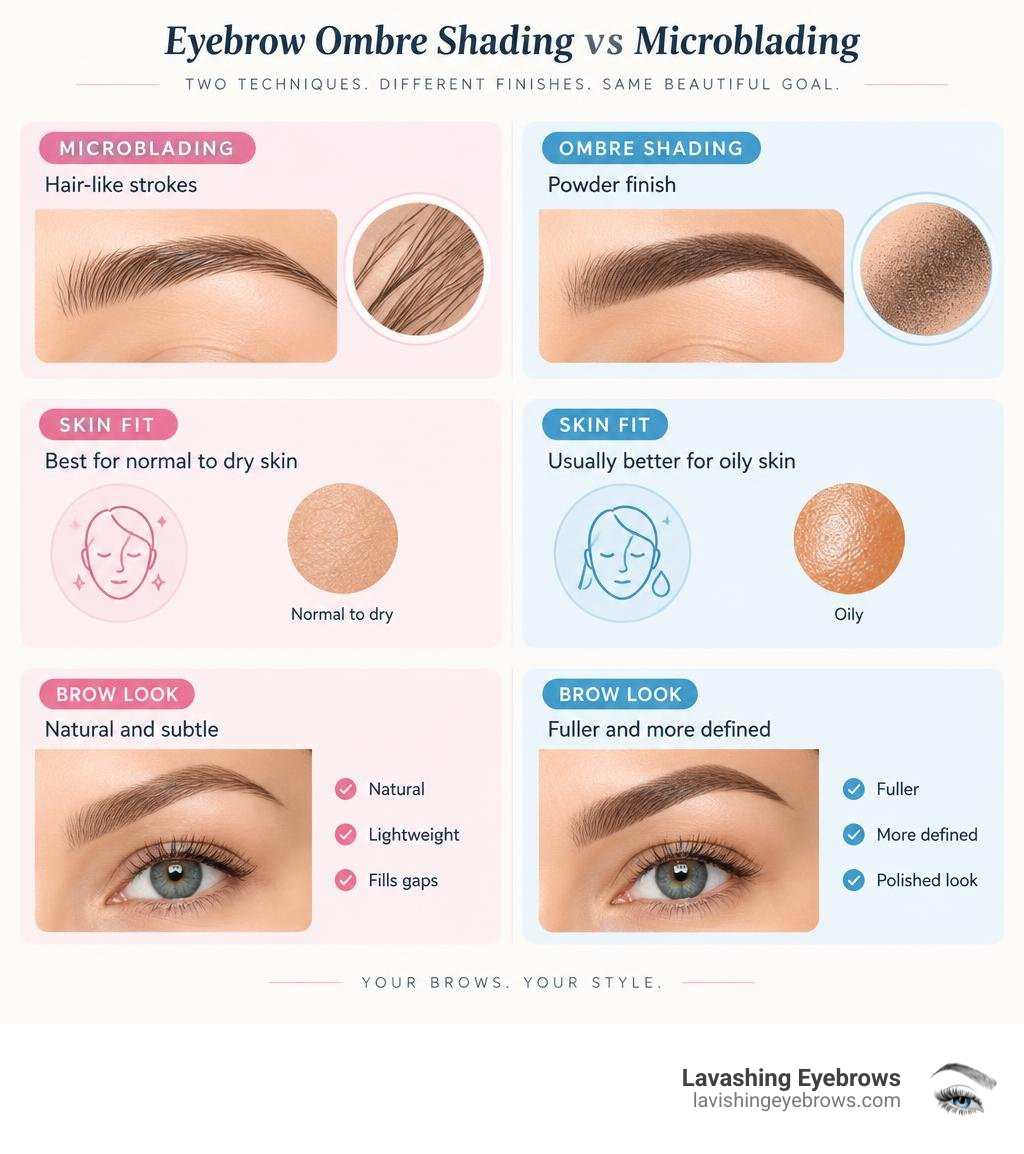
When comparing eyebrow ombre shading vs microblading, the key difference is the finish. Microblading creates fine, hair-like strokes for a natural look that can fill gaps in thinning brows. Ombre shading builds a soft, powder-like color that gets darker toward the brow tail for a fuller, more defined look.
Microblading often works best on normal to dry skin. Ombre shading is usually a better fit for oily skin, where fine strokes may blur or fade faster. Your ideal choice depends on your skin, the brow look you want, and how often you are willing to get touch-ups.
Eyebrow ombre shading vs microblading: technique and results
Both are forms of cosmetic brow tattooing: pigment is placed in the skin to add color and definition. The difference is how the pigment is applied. Microblading uses a handheld tool to make fine, hair-like marks. Ombre shading uses a machine or shading tool to place many tiny pigment deposits, building a soft wash of color.
For a general overview of the two approaches, see microblading and microshading explained.
| Feature | Microblading | Ombre shading |
|---|---|---|
| Application | Fine strokes made with a manual blade-shaped tool | Tiny pigment deposits built up with a shading tool |
| Healed appearance | Individual hair-like marks | Soft, filled-in color with a gradient |
| Definition | Subtle and natural-looking | More makeup-like and defined |
| Skin trauma | Creates small incisions; may cause more irritation | Usually creates less trauma than stroke work |

What does eyebrow ombre shading vs microblading look like?
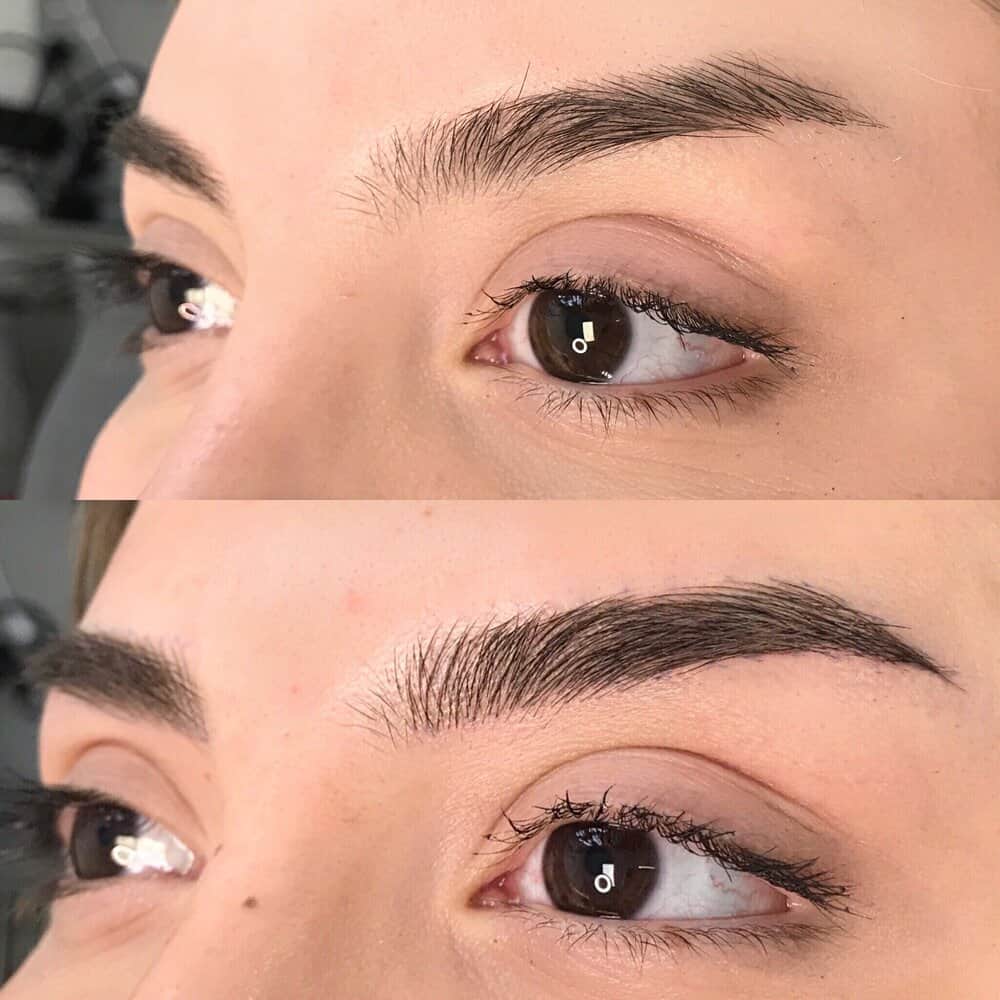
Microblading is designed to resemble individual brow hairs. It can add definition where brows are sparse or patchy while keeping the overall look understated. Results depend on the artist’s stroke placement and your natural brow pattern.
Ombre shading usually has a lighter front that gradually deepens toward a more defined tail. The finished look can resemble softly applied brow powder or pencil. The gradient may be subtle or more noticeable, depending on the design and your preferences. Our guide to ombre powder brows explains this shaded style, and our comparison of microblading and powder brows explores how the finishes differ.
Microblading and ombre shading pros and cons
Microblading can be a good option when you want hair-like detail or need to visually fill small gaps. However, its fine strokes may blur or fade sooner on oily skin, and the procedure can be more irritating than shading because it involves small incisions.
Ombre shading creates an even, fuller appearance and can be easier to tailor from soft to defined. It may suit people who already fill in their brows with makeup. The trade-off is that it does not create the same individual hair-stroke effect. Shading still involves pigment placement in the skin, so it is not risk-free and requires proper aftercare.
We explain the stroke technique in our guide to microblading, while our guide to soft powder brow results covers a gentler shaded finish.
Which technique suits your skin and brow goals?

Skin type is a useful part of the decision, but it is not the only one. Your existing brow hair, skin condition, healing history, face shape, and preferred level of definition all matter. A consultation helps us consider those details together instead of choosing a technique based on a trend.
Which is better for your skin: eyebrow ombre shading vs microblading?
Microblading is often a better match for normal to dry skin, where fine strokes may hold their shape more clearly. On oily or combination skin, natural oils can make strokes soften, blur, or fade faster. Shading is commonly considered for oily skin because it builds color through small deposits rather than relying on crisp individual strokes.
Sensitive or mature skin does not automatically rule out either method. The condition of the skin and its healing history matter, so we recommend discussing any concerns with a qualified technician before booking. If your skin is currently irritated or has a condition that could affect healing, ask a healthcare professional whether it is appropriate to proceed.
The choice is not one-size-fits-all. You can also compare microblading or powder brows and review our guide to microblading versus microshading as you consider the options.
Choose a natural look or a more defined brow
If you want a natural-looking result that adds the appearance of hairs, microblading may fit your goal. It can be particularly useful for small gaps or thin areas while preserving a soft finish.
If you prefer a fuller brow that looks like it has been filled in with makeup, ombre shading may be a better match. Shading can also create more visible shape definition than simply adding strokes. In either case, the design should suit your facial proportions and existing brows—not just a photo or current fashion.
Think about your everyday routine, too. Some people like semi-permanent brows because they spend less time filling them in. We recommend bringing reference images to a consultation and discussing how bold or subtle you want the healed result to look.
Longevity, healing, maintenance, and cost
Results fade gradually, but the timing varies from person to person. Skin type, pigment, sun exposure, skincare habits, health, and aftercare can all affect how long the color remains visible.
| Consideration | Microblading | Ombre shading |
|---|---|---|
| Typical longevity | Up to about 2 years; strokes may soften earlier | Often about 2–3 years, with individual variation |
| Common refresh timing | Around 8–12 months | Around 18 months |
| Initial healing | Redness or tenderness, followed by flaking; surface healing often takes 7–10 days | Similar surface-healing period; color settles over several weeks |
| Cost | Varies by artist, location, and what follow-up care is included | Varies by artist, location, and what follow-up care is included |
A follow-up appointment may be recommended after the initial procedure to refine the healed result. Ask whether it is included in the quoted price.
How long does eyebrow ombre shading vs microblading last?
Microbladed brows can last up to around two years, but the fine strokes may soften within the first six months. Many people consider a refresh after about 8–12 months, depending on how the pigment has healed and faded.
Ombre shading may remain visible for around 2–3 years, with some people needing a refresh at about 18 months. These are estimates, not guarantees: individual results vary, and pigment may remain visible longer.
Sun exposure and exfoliating products such as retinoids or hydroxy acids can contribute to faster fading. Skin oiliness, genetics, and the way your skin heals also make a difference. For more detail, see our guide to how long ombre brows last and our overview of semi-permanent brow options.
What healing and aftercare should you expect?
Some redness, tenderness, or mild swelling can occur after either procedure. As the skin heals, the treated area may flake or scab lightly. The surface healing period is often about 7–10 days, but the color can take several more weeks to settle into its final appearance.
Follow the specific aftercare instructions from your technician. These commonly include keeping the area clean, avoiding unnecessary moisture or friction while it heals, and protecting it from direct sun. Do not pick or scratch flaking skin. Ask your technician which products to use and whether they recommend a dry or ointment-based healing approach; instructions can vary.
How much do the procedures cost?
We do not quote a single price for Hemet or Redlands because fees vary by provider and appointment details. The cost may depend on the technique, the artist’s experience, the time involved, and whether a follow-up visit is included. Ask for a full quote that spells out what is covered, including any recommended touch-up.
When comparing estimates, consider the artist’s healed results and hygiene practices as well as the price. An unusually low quote is not necessarily a bargain if the work or safety standards are unclear.
Safety, artist qualifications, and combination brows
Both procedures involve breaking the skin, so hygiene and informed decision-making matter. Possible risks include infection, allergic reaction, scarring, swelling, uneven healing, and pigment that changes color or migrates beyond the intended area. Correction or removal can be difficult, so it is sensible to choose a conservative design if you are unsure.
A consumer guide to eyebrow tattooing, risks, and practitioner qualifications discusses safety considerations, healing, and questions to ask before treatment. Pregnancy or breastfeeding is a reason to postpone and speak with a healthcare professional before considering cosmetic tattooing. If you have known allergies, ask about the pigment and whether a patch test is appropriate. A patch test cannot guarantee that a reaction will not occur.
Microblading and shading can also be combined. A technician may use strokes in selected areas and shading to add overall fullness, creating a result that has both hair-like detail and a softly filled-in effect. Whether that approach is suitable depends on your skin and brow goals; the combined method still has the risks and aftercare needs of cosmetic tattooing.
How to choose a qualified brow technician
Before booking, ask about the technician’s training, relevant certificates, insurance, hygiene procedures, and local requirements for providing skin-penetration services. Requirements can vary, so check the rules that apply where you plan to have the procedure.
We also recommend asking:
- What pigment and tools will be used, and how are they kept sterile?
- What healing and aftercare instructions will I receive?
- Is a follow-up appointment recommended, and is it included in the price?
- Can I see clear examples of healed results in the technique I want?
- How do you tailor brow shape and color to my features and natural brows?
Look for consistent, healed examples rather than relying only on freshly completed photos. You can also ask for referrals from past clients. A good consultation should give you time to ask questions and understand the proposed shape, risks, cost, and likely maintenance before you decide.
Conclusion
The right technique depends on the finish you want, your skin, and how you prefer to maintain your brows. Microblading may suit someone seeking subtle, hair-like detail, while ombre shading may better match a fuller, makeup-inspired look. Neither choice is automatically best for everyone.
At Lavishing Eyebrows, we specialize in personalized microblading for thin brows, with designs tailored to individual facial features. We encourage an informed consultation so you can discuss your goals, skin, and long-term upkeep before choosing a brow plan.