Why Do Eyebrows Thin as You Age?

Eyebrows can thin with age as hormone levels change and brow hairs grow back more slowly. Years of plucking can also take a toll. While thinning eyebrows cause frustration for many people as they age, aging is not the only factor: thyroid disease, skin inflammation, nutrient deficiencies, and autoimmune conditions can all lead to brow loss.
The medical term for eyebrow or eyelash hair loss is madarosis. If your brows thin suddenly, develop bald patches, or change along with your skin or health, see a dermatologist. The cause matters: some brows can regrow once it is treated, while damaged follicles may not.
What Is Madarosis and How Does Aging Affect Brow Follicles?
A healthy brow typically features between 250 and 500 individual hairs. These hairs frame our expressions and act as natural sweatbands for our eyes. However, as we move through our 40s, 50s, and beyond, biological changes alter how hair follicles function beneath the skin’s surface.
In clinical terms, the loss or thinning of eyebrow or eyelash hair is known as madarosis. According to the clinical definition of madarosis, it is classified as a symptom rather than a standalone illness. Madarosis can be non-scarring (where the hair follicle remains alive and capable of producing hair) or scarring (where inflammation permanently destroys the follicle).
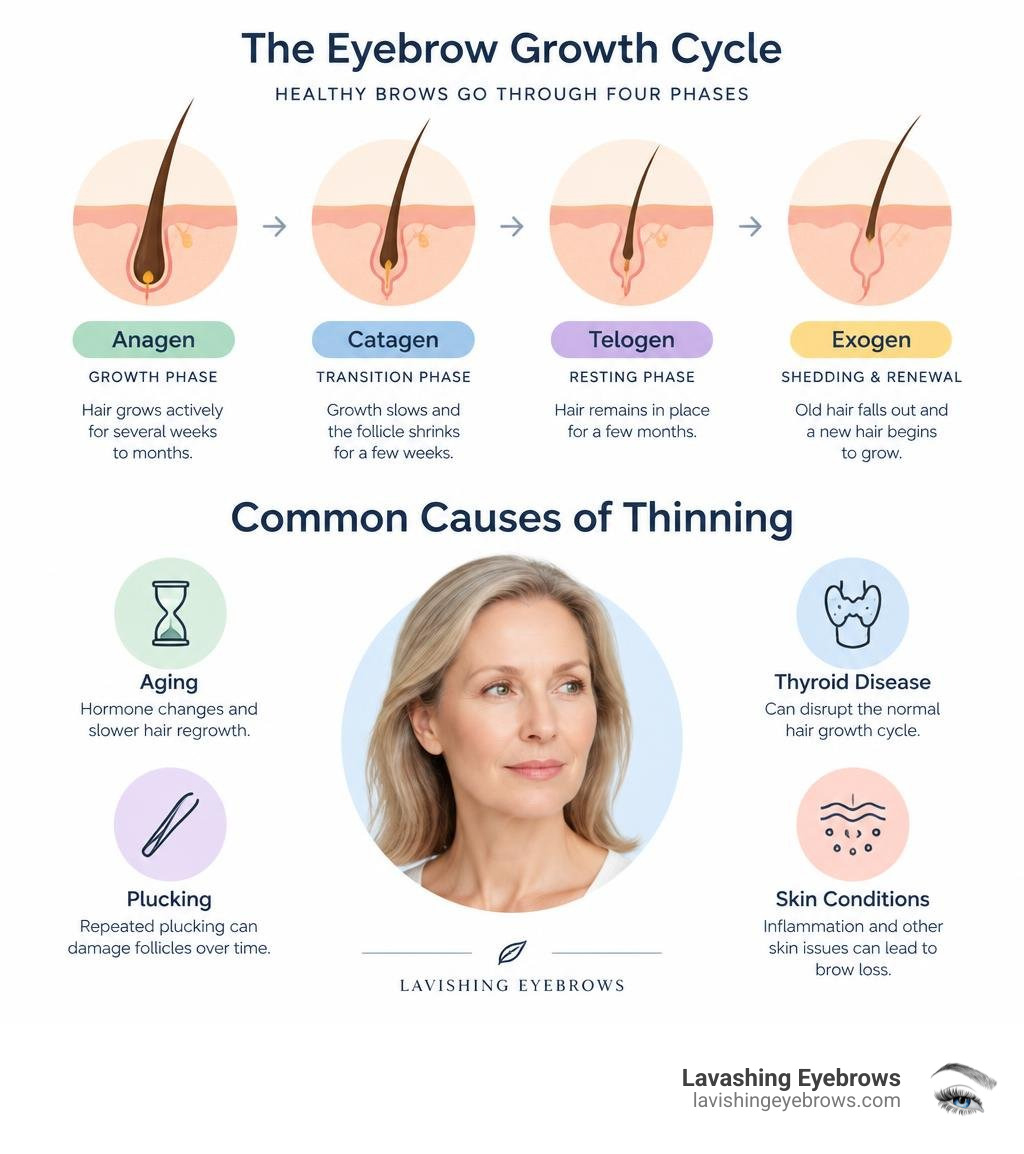
Understanding the natural lifecycle of eyebrow hair helps explain why brows thin over time:
- The Anagen (Growth) Phase: Unlike scalp hair, which grows actively for several years, brow hairs have a brief anagen phase lasting only 2 to 3 months.
- The Catagen (Transition) Phase: The follicle shrinks and detaches from its blood supply over 2 to 3 weeks.
- The Telogen (Resting/Shedding) Phase: Brow hairs rest for roughly 2 to 4 months before naturally shedding to make room for new growth.
As we mature, the anagen phase shortens, and the telogen phase lengthens. Follicles undergo miniaturization, producing finer, lighter, and more brittle strands. Combined with a gradual decline in dermal collagen and loss of skin elasticity around the supraorbital ridge, fewer active follicles can sustain robust brow density simultaneously.
Common Thinning Eyebrows Cause Factors: Medical and Hormonal Triggers
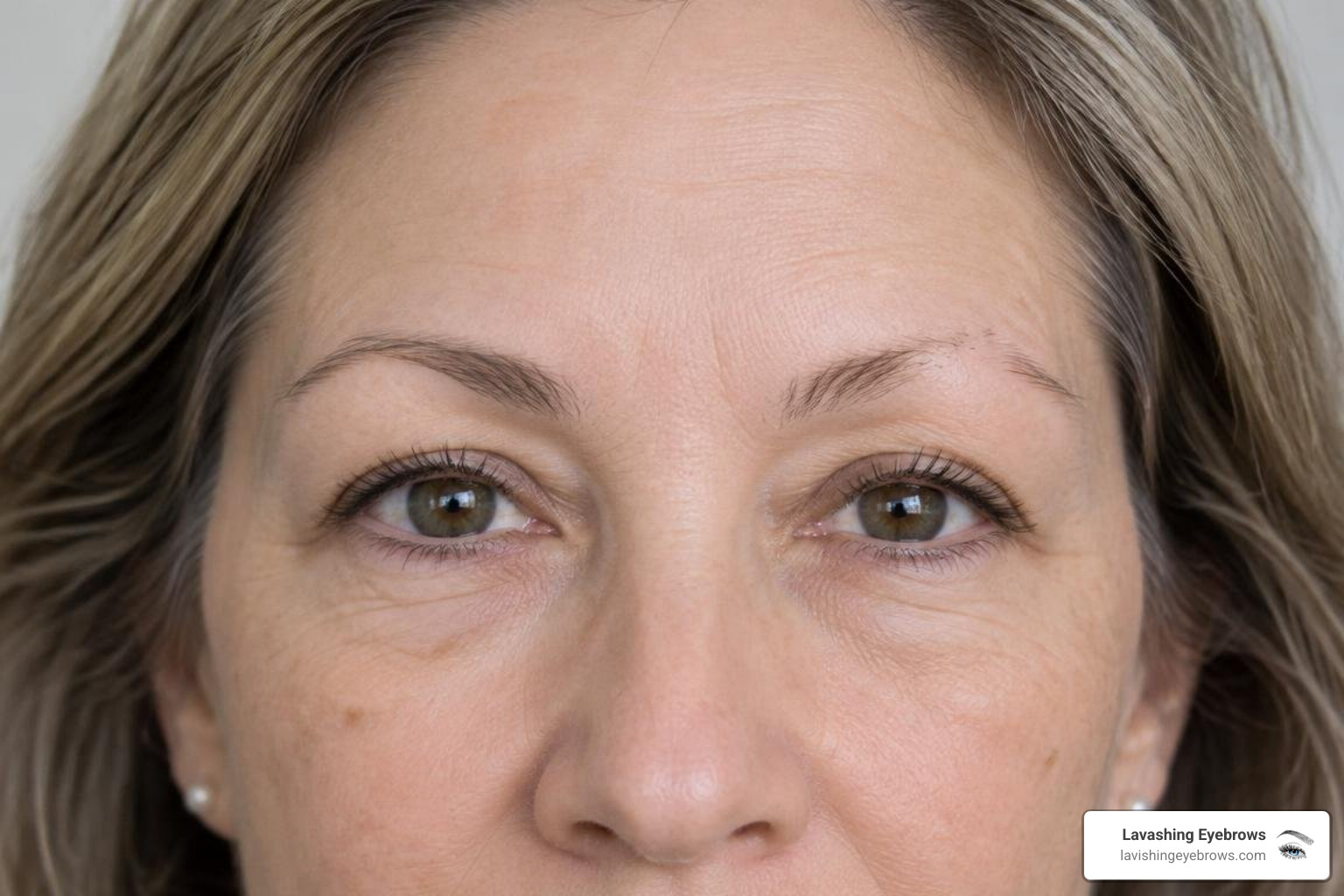
While chronological aging changes follicle density, systemic health issues frequently act as the primary catalyst for sudden or uneven brow loss. Identifying the underlying cause requires examining internal health indicators, including metabolic function, hormone balance, and autoimmune activity. In many cases, a thinning eyebrows cause can be traced back to one of these systemic triggers rather than aging alone.
Thyroid Imbalances and Hertoghe’s Sign as a Thinning Eyebrows Cause
The thyroid gland regulates whole-body metabolism, tissue repair, and follicular cellular division. When thyroid hormone production drops (hypothyroidism) or surges (hyperthyroidism), hair follicles throughout the body enter premature resting states.
A classic clinical hallmark of hypothyroidism is the Hertoghe sign—the pronounced thinning or total loss of the outer third of the eyebrows. When hormone output drops, peripheral circulation to the outer brow tail diminishes, causing selective follicle dormancy. A thorough endocrine evaluation of brow hair loss helps determine whether standard thyroid hormone replacement therapy can normalize hormone levels and encourage natural follicle reactivation.
Hormonal Shifts During Menopause and Andropause
Hormone production shifts noticeably beginning in our 40s. In women, circulating estrogen and progesterone levels decline significantly during perimenopause and post-menopause. Because estrogen prolongs the growth phase of hair follicles, its loss causes brow hairs to shed faster than they can regenerate.
Understanding why your brows are ghosting you during perimenopause involves looking at the ratio of estrogen to androgens. As estrogen drops, residual androgens like dihydrotestosterone (DHT) can bind to genetically sensitive brow receptors, shrinking the follicle. Men experience a similar gradual thinning during andropause as testosterone levels naturally decrease, leading to sparser, finer arches.
Autoimmune Conditions and Dermatological Disorders
Autoimmune conditions occur when the immune system mistakenly attacks healthy tissue, including hair follicles:
- Alopecia Areata: An autoimmune reaction where white blood cells target follicle roots, causing smooth, round, patchy bald spots across the brow arch.
- Frontal Fibrosing Alopecia (FFA): A scarring alopecia primarily affecting post-menopausal women. FFA causes progressive hair recession along the front hairline and eyebrows; in roughly 39% of cases, eyebrow loss precedes scalp recession.
- Eczema and Atopic Dermatitis: Chronic skin inflammation triggers redness, intense itching, and flaking that damages delicate brow roots through rubbing and scratching.
- Psoriasis and Seborrheic Dermatitis: Accelerated skin cell turnover leads to thick scales and localized inflammation that suffocate follicle openings.
- Tinea Capitis and Contact Dermatitis: Fungal infections or allergic reactions to cosmetic preservatives create localized inflammation that forces hairs into shedding phases.
A broader overview of medical conditions causing eyebrow loss shows that controlling underlying skin inflammation early is essential to prevent permanent scarring of the follicle root.
Nutritional Deficiencies and Telogen Effluvium
Hair follicles are among the most metabolically active structures in the human body. When essential nutrients fall below optimal levels, non-essential functions like brow hair production slow down:
- Iron and Ferritin: Low iron stores starve follicle matrix cells of oxygen, triggering diffuse hair shedding.
- Vitamin D3: Plays a central role in activating dormant stem cells in hair follicles; deficiency is strongly linked to autoimmune hair shedding.
- Zinc and Biotin (B7): Zinc aids cellular repair and protein synthesis around the brow root, while biotin supports keratin infrastructure.
- Omega-3 Fatty Acids: Nourish the skin barrier around brow arches, preventing localized dehydration and follicle brittleness.
Our beginners guide to thinning eyebrows causes also highlights telogen effluvium—a condition where systemic shock, high stress, major surgery, or severe illness pushes up to 70% of active hairs into a resting state simultaneously, leading to noticeable shedding 2 to 4 months later.
Lifestyle Habits That Accelerate Age-Related Brow Loss
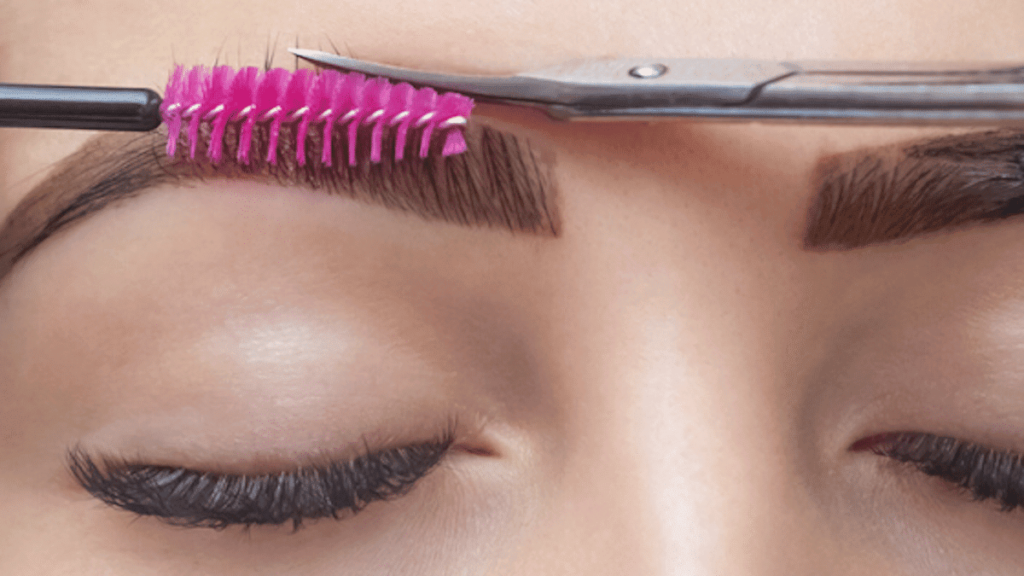
External grooming habits and daily skincare practices can also contribute to thinning brows over time.
Over-Tweezing and Physical Trauma as a Cumulative Thinning Eyebrows Cause
Decades of repetitive plucking, aggressive hot waxing, and tight threading place chronic mechanical stress on delicate brow follicles. Known as traction alopecia, repeated extraction damages the dermal papilla—the tiny blood-supplying structure at the base of the hair root.
Over time, this mechanical trauma creates micro-scarring inside the follicle channel. Eventually, damaged follicles lose their ability to produce terminal hairs, leaving behind sparse patches that no longer respond to serums or lifestyle changes. Giving brows a 9 to 12-month break from all grooming is often necessary to evaluate whether resting follicles can recover.
Skincare Product Buildup and Harsh Ingredients
Modern skincare routines often feature concentrated active ingredients that require careful handling around the eyes:
- Migrating Retinoids and Exfoliating Acids: Potent retinoids, salicylic acid, and glycolic peels applied close to the supraorbital rim can irritate the delicate skin underneath the brows, weakening follicle anchoring.
- Heavy Waxes and Occlusives: Thick, pore-clogging waxes, eyebrow pomades, and waterproof styling cosmetics can build up around follicle openings, causing low-grade inflammation.
- Fragrances and Preservatives: Synthetic scents in cleansers and creams can cause allergic contact dermatitis, leading to quiet shedding.
To protect brow roots, apply a lightweight barrier cream along the brow ridge before using potent anti-aging actives, and thoroughly cleanse the brow area with a gentle, fragrance-free formula daily.
Approaches to Addressing Sparse Brows
Managing eyebrow thinning involves treating internal medical factors while using aesthetic techniques to restore shape and definition.
| Restoration Pathway | Target Causes | Timeline for Visible Results | Best Suited For |
|---|---|---|---|
| Medical / Dermatological Care | Thyroid imbalance, FFA, eczema, nutrient deficits, alopecia areata | 3 to 12 months (dependent on follicle health) | Addressing active inflammation, systemic illness, or deficiency |
| Personalized Microblading | Scarred follicles, over-tweezing loss, age-related sparseness | Immediate visual enhancement (settles in 4 to 6 weeks) | Restoring natural arch structure, symmetry, and realistic density |
Exploring the best treatments for thinning eyebrows helps you select an approach based on your specific health profile and aesthetic goals.

Medical Evaluation for Underlying Causes
Before pursuing cosmetic procedures, consult a physician or dermatologist to evaluate unexpected hair loss. Diagnostic testing may include:
- Comprehensive blood panels (TSH, Free T3, Free T4, Ferritin, Complete Blood Count, Vitamin D, Zinc).
- Trichoscopy (high-magnification examination of brow follicles and skin patterns).
- Targeted punch biopsy (used when scarring alopecias like FFA are suspected).
Treating the root cause—such as adjusting thyroid levels, using topical anti-inflammatory solutions, or correcting nutritional deficiencies—stabilizes active shedding and protects surrounding follicles.
Personalized Microblading for Sparse Brows
When hair follicles have scarred over from decades of over-plucking, aging, or medical conditions, natural regrowth may be limited. In these situations, semi-permanent cosmetic tattooing provides an effective way to restore the look of full, balanced brows.
At Lavishing Eyebrows, we specialize in microblading to enhance thin eyebrows, offering personalized services to create natural-looking brows. Our unique selling point centers on skilled artistry tailored to your individual facial features, bone structure, and skin tone. Rather than using one-size-fits-all stencils, our artists handcraft ultra-fine, crisp hair strokes that blend directly into your existing brow pattern.
Learning how to save your disappearing eyebrows with microblading shows how manual hair strokes combined with soft powder shading can recreate a balanced, natural arch for mature or thinning brows.
When to See a Dermatologist and Prevention Tips
While gradual brow thinning is a common part of aging, certain patterns warrant prompt medical attention. Review these dermatological evaluation guidelines to determine if your symptoms require clinical care.
Schedule an evaluation if you notice:
- Sudden, rapid hair loss over days or weeks.
- Patchy, well-defined bald spots on the brows or scalp.
- Eyebrow loss accompanied by unexplained fatigue, sudden weight changes, cold intolerance, or brittle nails.
- Redness, severe flaking, swelling, burning, or pain along the brow bone.
Daily Brow Protection Practices:
- Pause Aggressive Hair Removal: Put down the tweezers and waxing strips. Trim long hairs with small beauty scissors instead of pulling from the root.
- Eat a Nutrient-Dense Diet: Ensure adequate intake of clean proteins, iron-rich leafy greens, zinc, and healthy omega fatty acids.
- Cleanse Gently: Wash brow hairs daily with a mild, sulfate-free facial cleanser to remove sebum, cosmetics, and environmental buildup.
- Shield Delicate Skin: Keep strong retinoids, chemical peels, and concentrated exfoliating acids away from the orbital brow bone.
Frequently Asked Questions About Thinning Eyebrows
Can thinning eyebrows naturally grow back after aging or over-plucking?
Yes, natural regrowth is possible if the underlying hair follicles remain viable and unscarred. If thinning stems from nutritional imbalances, temporary stress-related shedding (telogen effluvium), or mild over-tweezing, brows often begin recovering within 3 to 6 months after the root cause is addressed. However, if repeated plucking or scarring skin disorders have replaced the follicle with scar tissue, natural hair growth cannot resume, making microblading the most practical aesthetic solution.
What deficiency causes thin eyebrows?
The most common nutritional deficiencies linked to thinning eyebrows include:
- Iron deficiency (with or without anemia): Depletes ferritin stores needed for follicle cell division.
- Vitamin D3 deficiency: Disrupts hair follicle cycling and regeneration.
- Zinc deficiency: Weakens hair shaft protein structures and slows skin healing.
- Biotin (Vitamin B7) and Vitamin B12 deficiencies: Interfere with essential keratin production and oxygen delivery to the brow roots.
How do you know if brow thinning is a sign of a serious underlying condition?
Brow thinning may point to a systemic issue if it occurs rapidly, produces distinct patchy bald spots, or specifically targets the outer third of the brow (Hertoghe’s sign, commonly associated with hypothyroidism). It is also a red flag if hair loss is accompanied by systemic symptoms such as extreme fatigue, joint pain, unexplained weight changes, or localized skin issues like flaking, scaling, or burning sensations.
Conclusion
Thinning eyebrows are a natural part of the aging process, influenced by changing hormones, slower cell turnover, and years of grooming. At the same time, because our brows reflect our systemic health, sudden or uneven shedding can also indicate thyroid imbalances, autoimmune activity, skin conditions, or nutrient shortages.
A complete brow restoration plan starts with identifying internal root causes through appropriate medical evaluations, combined with gentle daily care to protect remaining follicles. When follicles are permanently scarred or dormant, semi-permanent artistry offers a reliable way to regain shape and fullness.
If you are wondering why your eyebrows are making a run for it and want to restore your arches, we can help. At Lavishing Eyebrows in Hemet, CA and Redlands, CA, our personalized microblading services are designed around your unique facial features to restore natural-looking definition and bring lasting confidence back to your everyday look.