Microshading Versus Microblading: Core Differences and Technique
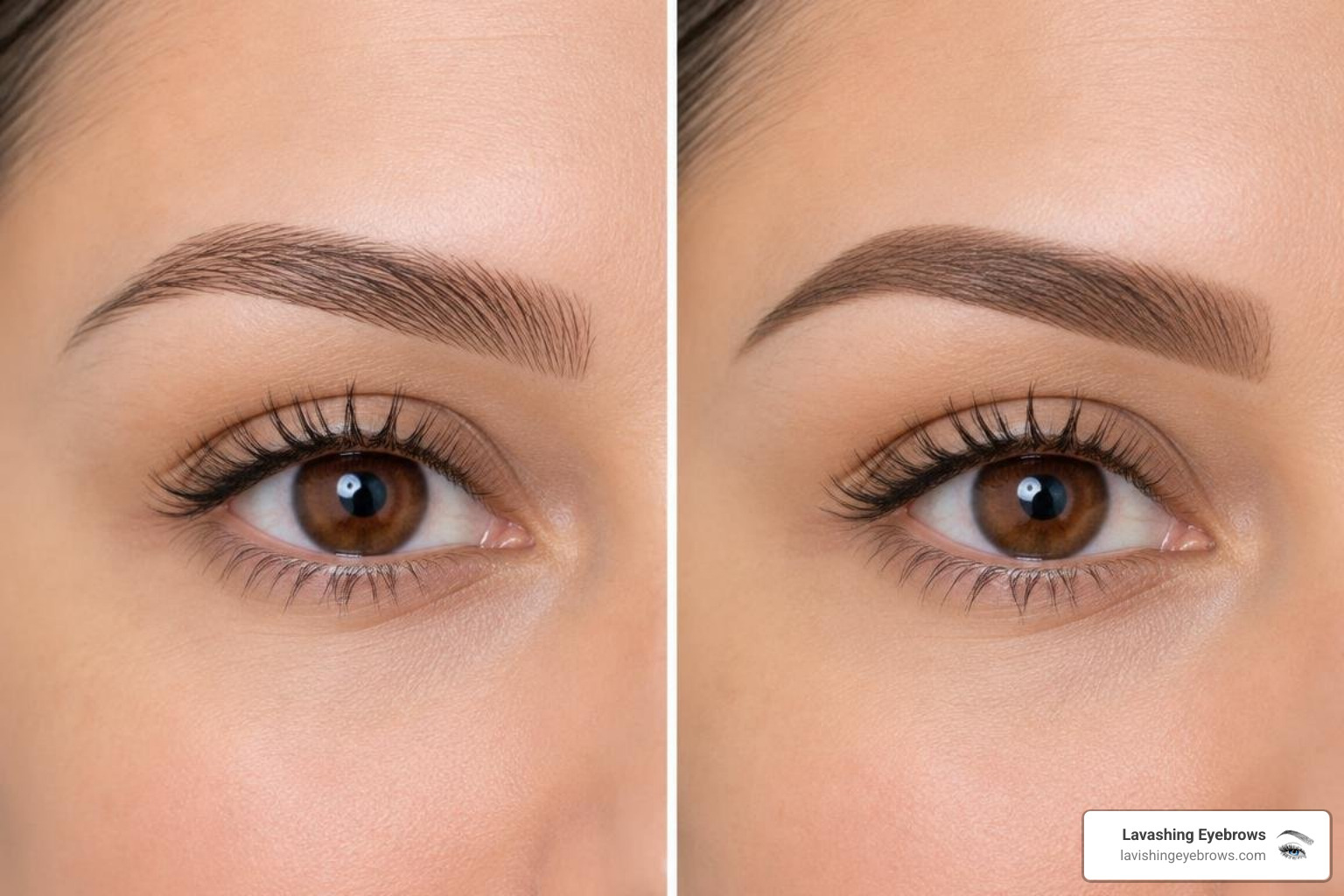
When comparing semi-permanent brow enhancements, the distinction comes down to the application method, the tools involved, and how the pigment settles beneath your skin. While both techniques deposit cosmetic pigment into the superficial layers of the dermis, the mechanical approach defines the visual result.
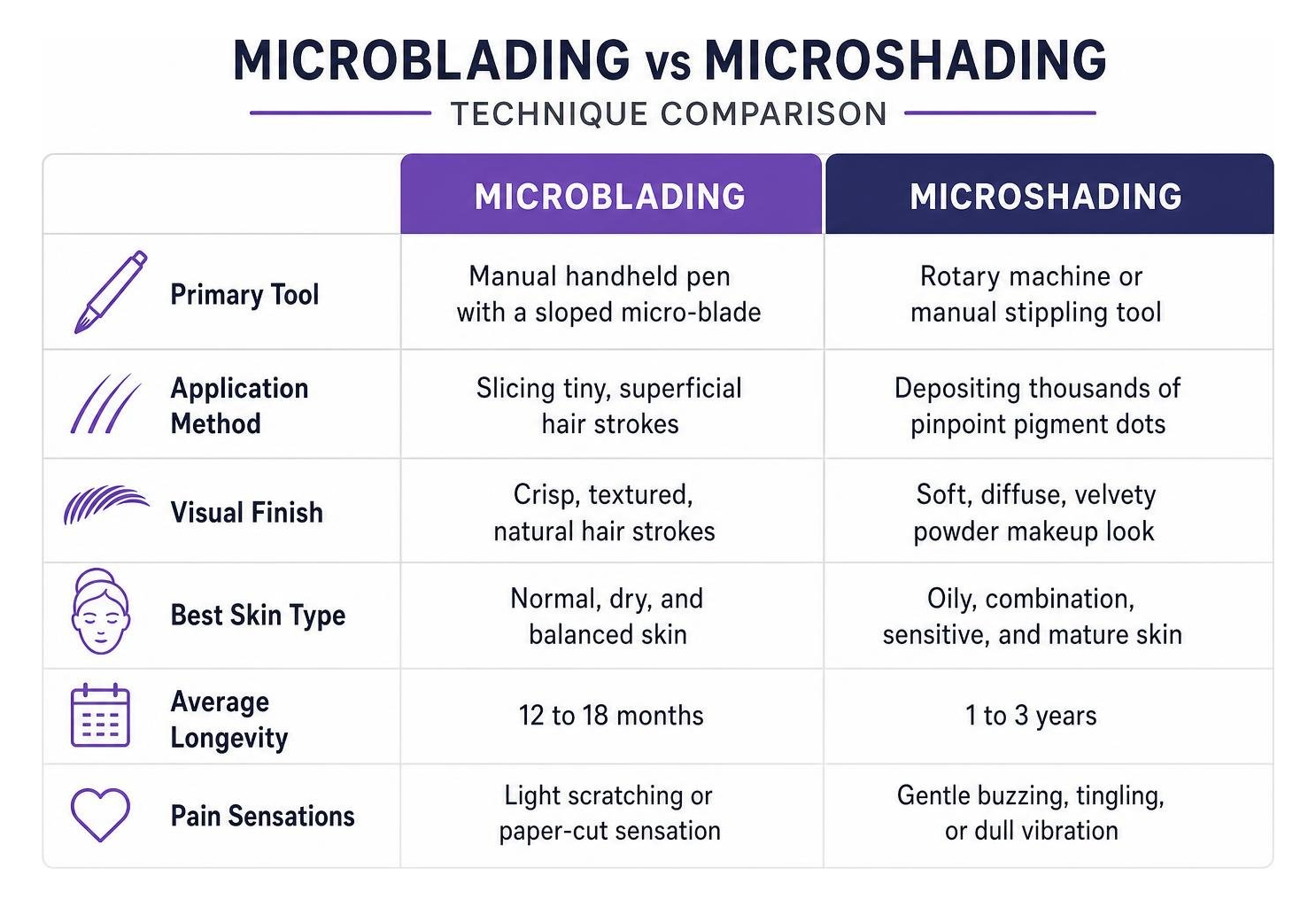
| Feature | Microblading | Microshading |
|---|---|---|
| Primary Tool | Manual handheld pen with a sloped micro-blade | Rotary machine or manual stippling tool |
| Application Method | Slicing tiny, superficial hair strokes | Depositing thousands of pinpoint pigment dots |
| Visual Finish | Crisp, textured, natural hair strokes | Soft, diffuse, velvety powder makeup look |
| Best Skin Type | Normal, dry, and balanced skin | Oily, combination, sensitive, and mature skin |
| Average Longevity | 12 to 18 months | 1 to 3 years |
| Pain Sensations | Light scratching or paper-cut sensation | Gentle buzzing, tingling, or dull vibration |
As industry standards continue to evolve in 2026, understanding Microblading vs Microshading The Truth Revealed 2026 allows you to select a procedure tailored to your facial architecture and daily routine rather than fleeting trends. At Lavishing Eyebrows, our artists carefully assess your brow bone structure, natural hair growth patterns, and skin behavior before recommending a technique. This ensures that the method you choose supports lasting symmetry, balanced pigment retention, and a finish that complements your everyday look.
The Hair-Stroke Effect of Microblading
Microblading relies on a manual tool fitted with a row of microscopic needles arranged in a fine blade. The artist creates tiny, controlled incisions along the epidermis while depositing pigment into each channel.
This technique mimics the organic direction, curve, and diameter of genuine brow hairs. Learning what is microblading helps explain why it is a favored choice for individuals with sparse patches or overplucked arches who desire an understated, natural boost. The resulting 3D hair strokes blend with your natural hair, making it difficult to distinguish between the cosmetic pigment and real brow growth. Because each stroke is placed individually, the artist can adjust length, density, and curvature to follow the client’s existing brow pattern for a seamless result.
The Soft Powder Gradient of Microshading
Microshading—often referred to as powder brows or ombre brows—takes a stippling approach. Instead of slicing linear strokes into the skin, the artist utilizes a specialized rotary machine or manual tool to deposit thousands of microscopic dots of pigment across the brow area.
This creates a gentle, pixelated shadow beneath the natural hair, mimicking the appearance of soft cosmetic powder. Our soft powder brows complete guide outlines how this technique creates a soft, airy gradient that begins translucent at the inner bulb and transitions into a denser, defined tail. The layering process allows the artist to control saturation gradually, building a finish that ranges from a barely-there tint to a more polished, makeup-like definition.
Nano Brows and Combo Brows: Specialized Options at Lavishing Eyebrows
If you find yourself torn between hair strokes and full powder density, our studio also provides adaptable hybrid options tailored to your skin:
- Nano Brows: When exploring nano brows vs microblading, the key difference is that nano brows create hair strokes using an ultra-fine, single-point machine needle rather than a manual blade. Our artists utilize this method to deliver hair-stroke realism with gentle tissue handling, making it suitable for clients who have oilier or more delicate skin.
- Combo Brows: Our studio’s hybrid treatment known as combo brows combines microblading or nano strokes at the inner head with microshading stippling throughout the body and tail. This approach provides structured fullness and crisp hair-like texture where you need it most, while the shaded areas anchor the overall shape and add depth behind the natural hair.
Skin Type Suitability, Longevity, and Cost Comparison
Your skin’s natural oil production and cellular turnover directly influence pigment retention, healing clarity, and how often you will need a touch-up.
Microshading versus microblading for Oily and Sensitive Skin
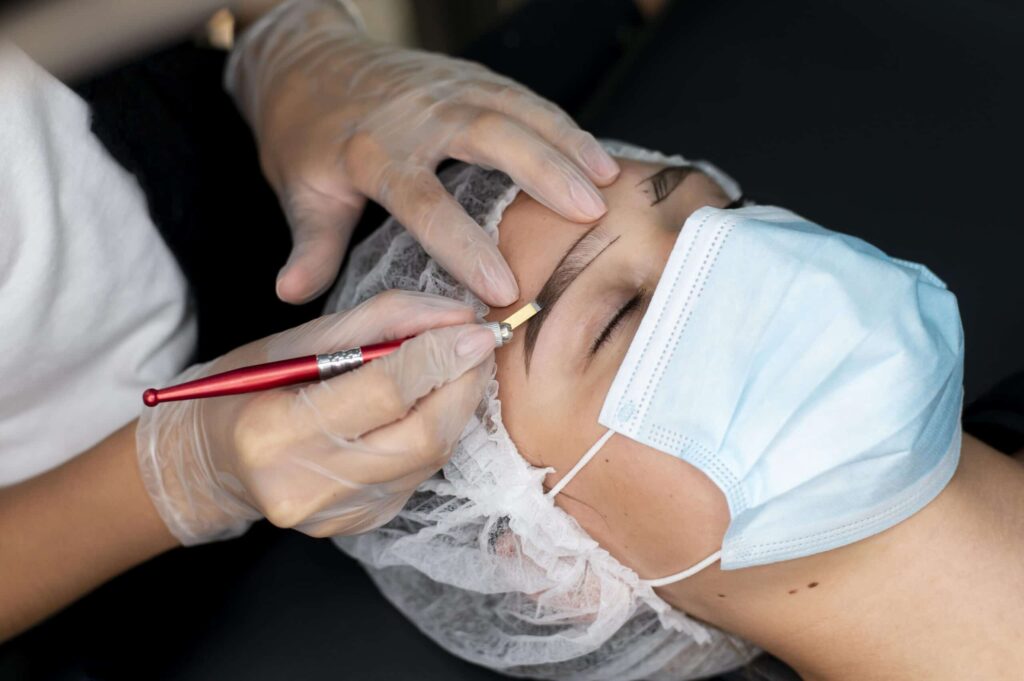
Evaluating Microshading versus microblading for oily skin reveals a clear technical advantage for shading methods. Skin with enlarged pores and active sebum production naturally pushes pigment out during the healing phase, causing fine microbladed lines to blur or expand over time.
Microshading solves this issue because dot-matrix placement does not rely on ultra-crisp line retention to look cohesive; the healed result simply blends into a soft, even wash of color. Our studio’s oily skin guide to perfect nano brows also notes that stippling and machine work cause less localized irritation on reactive, sensitive skin types.
Ideal Candidates for Dry, Normal, and Mature Skin
Dry and normal skin types offer an optimal canvas for manual hair strokes because lower sebum levels allow the skin to hold clean edges as it heals. For mature clients, our specialized microblading for older women restores lost structural shape caused by age-related thinning, hormonal shifts, or decades of overplucking.
However, if mature skin is thin, fragile, or prone to easy bruising, a soft microshading or machine-based technique from our artists may be recommended to preserve skin integrity while providing a youthful lift.
Longevity and Price Analysis
Microblading typically lasts 12 to 18 months before requiring a color refresh, whereas microshading lasts between 1 and 3 years (averaging 2 to 3 years) due to its stippled pigment density.
Understanding the microblading cost breakdown and reviewing microshading touch-up pricing helps plan your long-term maintenance. Initial appointments for both services range from $500 to $2,000, depending on artist expertise and location. At our studios in Hemet and Redlands, CA, we focus on balanced, long-lasting pigment retention to maximize the lifespan of your initial investment.
Appointment Experience, Aftercare, and Healing Process
Your total appointment takes approximately 2 to 3 hours. The majority of this time is dedicated to personalized consultation, precise symmetry mapping, and color matching, while the active tattooing procedure takes about 45 minutes.
Before any pigment is applied, your artist evaluates facial proportions, brow bone prominence, and natural hair growth direction to create a balanced blueprint. This mapping stage is essential because it allows you to preview the proposed shape and request adjustments before the procedure begins. Pigment selection is equally individualized, with undertones matched to your skin temperature and hair color so the healed result looks harmonious rather than harsh.
Microshading versus microblading Pain Levels and Appointment Duration
Discomfort is managed using topical numbing creams formulated with 5% lidocaine applied prior to and during the treatment.
- Microblading Sensation: Clients describe this as a light scratching, similar to tweezing multiple hairs at once.
- Microshading Sensation: Often felt as a mild, dull vibration or tickling sensation across the brow bone. Some clients even drift off to sleep during machine work.
Reviewing how to prepare for microblading ensures smooth healing: avoid caffeine, alcohol, aspirin, ibuprofen, fish oil, and retinoids for 48 to 72 hours prior to your session to prevent excess bleeding, which can dilute the pigment. Arriving with clean, makeup-free brows also helps the artist see your natural hair pattern clearly and reduces the risk of contamination during the procedure.
Day-by-Day Healing Timeline and Recovery Protocols
Eyebrow healing spans roughly 4 to 6 weeks, progressing through distinct phases:
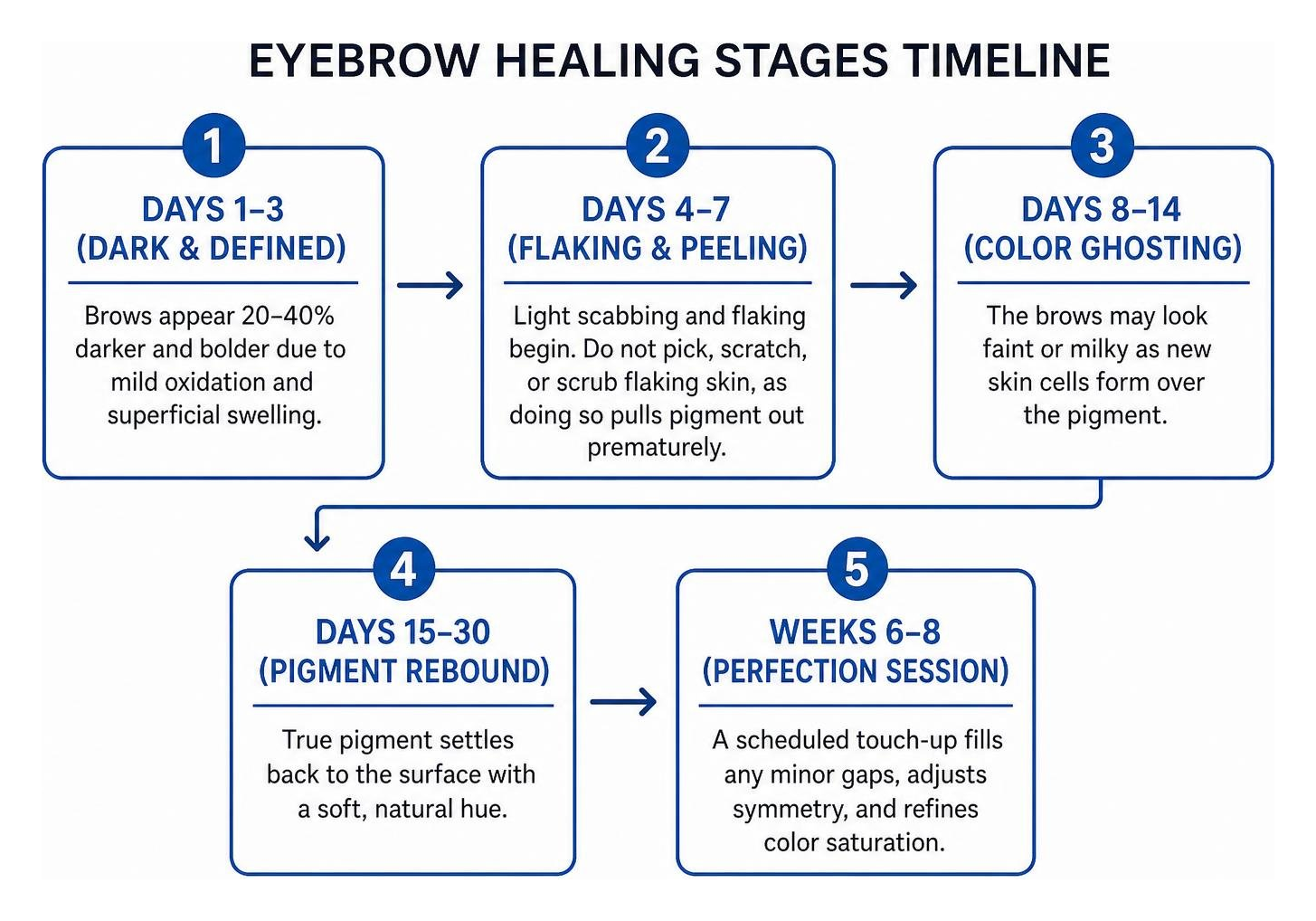
- Days 1–3 (Dark & Defined): Brows appear 20–40% darker and bolder due to mild oxidation and superficial swelling.
- Days 4–7 (Flaking & Peeling): Light scabbing and flaking begin. Following our microblading healing day by day instructions and checking the microshading recovery manual is critical: do not pick, scratch, or scrub flaking skin, as doing so pulls pigment out prematurely.
- Days 8–14 (Color Ghosting): The brows may look faint or milky as new skin cells form over the pigment.
- Days 15–30 (Pigment Rebound): True pigment settles back to the surface with a soft, natural hue.
- Weeks 6–8 (Perfection Session): A scheduled touch-up fills any minor gaps, adjusts symmetry, and refines color saturation.
Frequently Asked Questions About Semi-Permanent Eyebrows
What are the main side effects and safety risks of brow tattooing?
Temporary redness, mild swelling, and tenderness for 24 to 48 hours are standard responses to the procedure. When evaluating microblading safety, health risks are minimized when treatments are performed in a sterile environment using single-use, disposable cartridges and needles. Always disclose skin conditions, allergies, or medications during your intake consultation to prevent adverse reactions.
Can you combine microblading and microshading?
Yes. Combining hair strokes at the bulb with stippled shading throughout the body creates a realistic 3D appearance. This hybrid method is helpful for clients with sparse natural brow hair, as shading adds depth behind the individual hair strokes and creates the illusion of a fuller, more structured arch without looking overly drawn.
How long does it take to see final healed results?
While surface healing occurs in about 7 to 14 days, deeper dermal stabilization requires 4 to 6 weeks. Your brows are considered complete following the complementary 6- to 8-week touch-up session, at which point any areas that faded unevenly during healing can be reinforced for a uniform, polished outcome.
Conclusion
Choosing between microshading and microblading depends on your skin type, daily makeup habits, and personal aesthetic goals. Microblading delivers fine, hair-like strokes for dry to normal skin, while microshading provides durable, soft powder depth for oily, combination, or sensitive complexions.
At Lavishing Eyebrows, our certified artists in Hemet, CA, and Redlands, CA, design customized brow shapes tailored to your individual features. We take the time to understand how much daily maintenance you want, whether you prefer a natural no-makeup look or a more defined cosmetic finish, and how your skin has responded to previous treatments. This personalized approach helps us recommend a technique that will heal cleanly and retain its beauty for as long as possible. If you are ready to refine your brow routine, explore our detailed microshading technique step-by-step guide and schedule your personalized consultation with our team today.