When Microblading Goes Wrong — And What You Can Do About It
Microblading correction is a specialized procedure that fixes unsatisfactory permanent brow work — whether that means color that shifted to gray or orange, a shape that never looked right, or strokes that blurred over time.
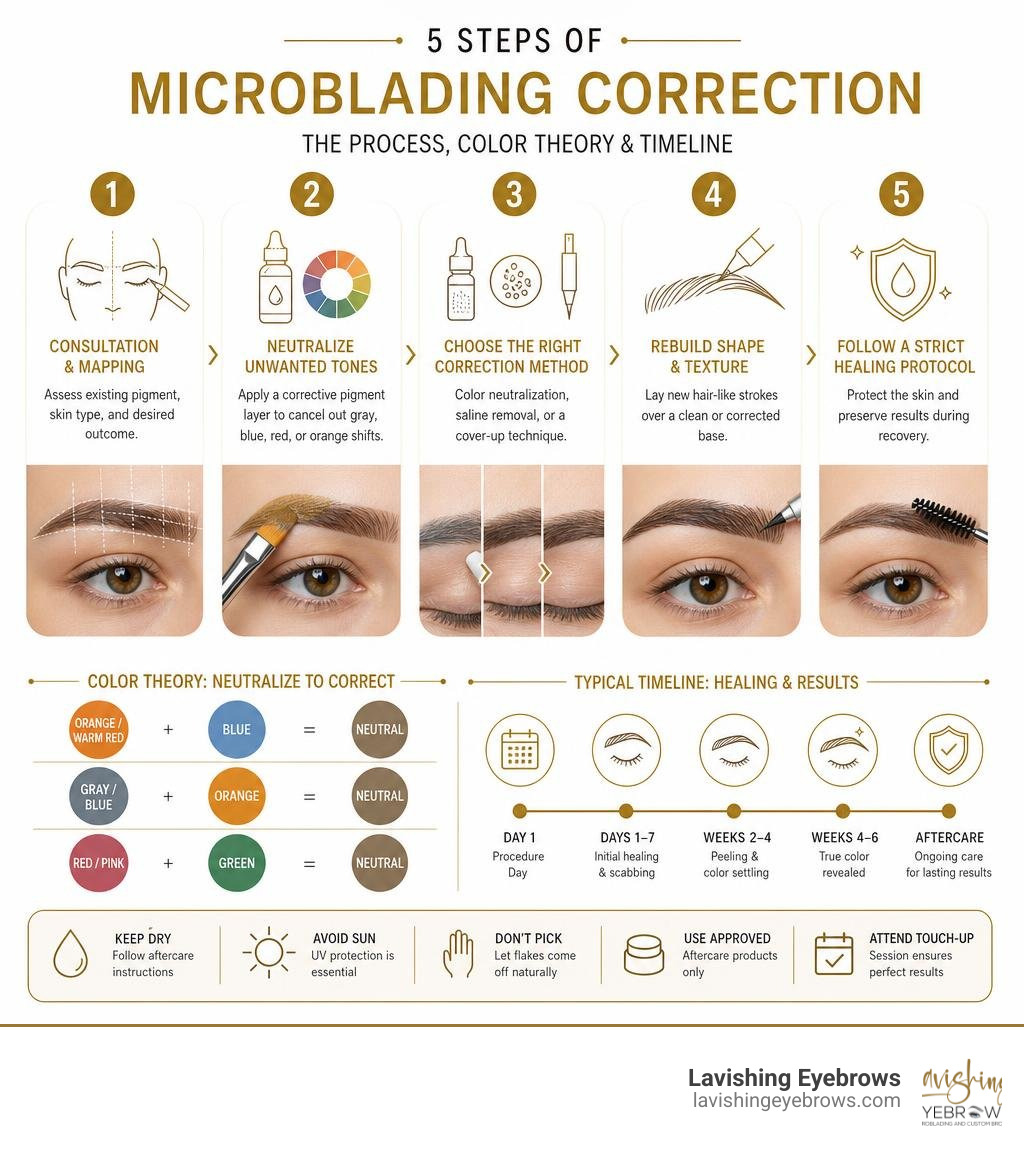
Here’s a quick overview of how brow correction works:
- Consultation and mapping — assess existing pigment, skin type, and desired outcome
- Neutralize unwanted tones — apply a corrective pigment layer to cancel out gray, blue, red, or orange shifts
- Choose the right correction method — color neutralization, saline removal, or a cover-up technique
- Rebuild shape and texture — lay new hair-like strokes over a clean or corrected base
- Follow a strict healing protocol — protect the skin and preserve results during recovery
You’re not alone if you’re unhappy with your brows. Right now, 4 out of 10 people who walk into a brow studio are already carrying old pigment that has shifted color, lost its shape, or aged poorly. That’s a huge number — and it means microblading correction has become one of the most in-demand services in the industry.
The hard truth? Microblading is semi-permanent. Without intervention, it can stick around for one to three years. That’s a long time to look in the mirror and feel frustrated.
The good news is that almost everything is fixable — with the right specialist, the right method, and realistic expectations about the process.
Below, we walk you through exactly how brow correction works in five clear steps, so you know what to expect before you book.
Easy microblading correction glossary:
Understanding Microblading Correction vs. Standard Touch-Ups
When clients contact us at Lavishing Eyebrows in Murrieta, CA, they often ask if their botched or faded brows can be fixed with a quick touch-up. To understand why this isn’t possible, we have to look at the fundamental differences in pigment depth, skin tissue, and technical execution.
A standard touch-up is a maintenance session designed to refresh pigment that has naturally faded evenly within the original, well-mapped shape. It is a straightforward process performed on healthy, unscarred skin tissue.
In contrast, microblading correction is a highly specialized restorative process. It is designed to repair work that was poorly executed, misplaced, or has chemically shifted in the skin over time. Correction work requires a deep understanding of color theory, advanced skin anatomy, and pigment behavior.
When an artist performs a correction, they are not working with a clean canvas. They must navigate existing pigment depth, potential scar tissue from aggressive hand-tool cuts, and uneven saturation. Simply tattooing more dark brown pigment over a poorly shaped or color-shifted brow will not fix the issue; in fact, it often makes the brows look muddy, oversaturated, and heavy.
To explore what separates high-quality work from poor applications, you can view our detailed resource on A visual guide to good vs bad microblading. Understanding these differences is also key to understanding the pricing structure, which you can read about in our guide to Understanding microblading costs.
Why Do 40% of Clients Need Microblading Correction?
As we head into mid-2026, the permanent makeup industry has grown rapidly, but so has the number of underqualified or poorly trained technicians. Today, 4 out of 10 clients seeking brow services already have previous pigment in their skin that requires professional correction.
The most common reasons clients seek correction include:
- Color Shifts: The brows have faded into unnatural hues of cool gray, bluish-charcoal, sunset orange, or salmon pink.
- Shape Asymmetry: One brow sits significantly higher, or the fronts and tails do not align with the client’s natural bone structure. You might have one brow that looks like a high-arched “social butterfly” while the other is a flat, low “homebody.”
- Pigment Migration and Blurring: The clean strokes of the original microblading have blurred together, creating a solid, blocky, or muddy appearance. This is especially common in clients with oily skin, where natural oils break down the pigment lines.
- Incorrect Injection Depth: If an artist cuts too deeply into the dermis, the pigment interacts with the skin’s deeper layers, causing permanent graying and potential scarring.
To see real-world examples of how these issues present and how they can be safely resolved, browse our visual gallery of Botched to bare brows in pictures.
The Science of Pigment Discoloration and Color Theory
To understand why brows change color, we must look at the chemical composition of cosmetic pigments. Most permanent makeup pigments are formulated using iron oxides and titanium dioxide. The human immune system naturally breaks down and processes these chemical components at different rates.
For example, warm red and yellow iron oxides tend to be broken down by the body much faster than cool black or carbon-based pigments. When the warm tones fade away, the cool tones remain behind, leaving the brows looking ashy, gray, or blue. Conversely, some organic pigments oxidize over time, leaving behind stubborn reddish-pink or orange undertones.
Another major scientific factor is the Tyndall effect. This is a physical phenomenon where light scatters as it passes through the upper layers of the skin. If a technician deposits dark brown or black pigment too deeply into the dermis, the light reflecting off the pigment must travel through more skin tissue. This makes the pigment appear cool gray or blue to the naked eye, even if the pigment in the bottle was a warm brown.
To fix these shifts, a correction specialist must use advanced color theory to neutralize the unwanted undertones before applying a target brown shade. For those in Southwest Riverside County looking to address these complex color shifts, we offer specialized solutions. You can learn more about our local correction and enhancement options by visiting Lavishing Eyebrows Services.
How to Do Microblading Correction in 5 Simple Steps
Correcting poorly done brow work is a structured, multi-session process that requires patience and high technical skill. We treat every correction as a customized restoration project to safely transition your brows from a source of frustration into a flattering frame for your face.
For a deeper look at how we approach these transformations, read our guide on Turning disasters into masterpieces.
Below is our breakdown of the 5 essential steps to achieving a successful microblading correction.
Step 1: Comprehensive Consultation and Mapping
Every successful correction begins with an in-depth consultation and physical assessment. During this step, we analyze:
- The depth and saturation of the existing pigment.
- The integrity of the skin tissue (checking for scarring or keloids).
- The client’s skin type (dry, combination, oily, or mature).
- The natural facial symmetry and bone structure.
We never use generic stencils or follow fleeting trends. Instead, we map the new brow shape directly to your unique bone structure. We always perform a precise pre-drawing step, using a makeup pencil to show you exactly where the new boundaries will sit. This ensures that any old pigment falling outside the new frame is identified for targeted removal, while the rest is seamlessly integrated.
Step 2: Neutralizing Unwanted Undertones
Once the new shape is established, we apply color theory to neutralize the existing discolored pigment. Think of this step as applying a corrective primer to a wall before painting it a new color.
We use specialized neutralizing pigments to cancel out the unwanted shades:
- Orange correctors are used to neutralize cool gray, blue, or charcoal tones.
- Olive/green correctors are used to neutralize stubborn warm red, pink, or orange tones.
- Yellow correctors are used to neutralize deep purple undertones.
By tattooing this corrective layer directly over the old faded work, we bring the brows back to a neutral, warm canvas.
Step 3: Selecting the Right Microblading Correction Method
Depending on the saturation and shape of your old permanent makeup, we must choose the most effective path forward. The primary correction methods include:
- Color Neutralization & Cover-Up: Best for brows that are faded enough (at least 50% lighter than their original state) to accept new pigment without looking thick or muddy.
- Saline Pigment Removal: A safe, non-laser method that uses a specialized saline solution to lift old pigment to the surface of the skin via osmosis. This is highly effective for targeted areas (like a tail that is too long) or for overall lightening before a rebuild.
- Custom Shading Adjustments: Combining techniques to mask old uneven work.
To understand which styling technique fits your skin type and correction goals, read our comparison of Microblading vs microshading.
Step 4: Rebuilding the Brow Shape and Texture
Once the base color is neutralized or lightened, we rebuild the brow shape. While traditional hand-tool microblading cuts the skin, we often prefer using a specialized facial machine to create machine nano brows or micro-pixel shading for correction work.
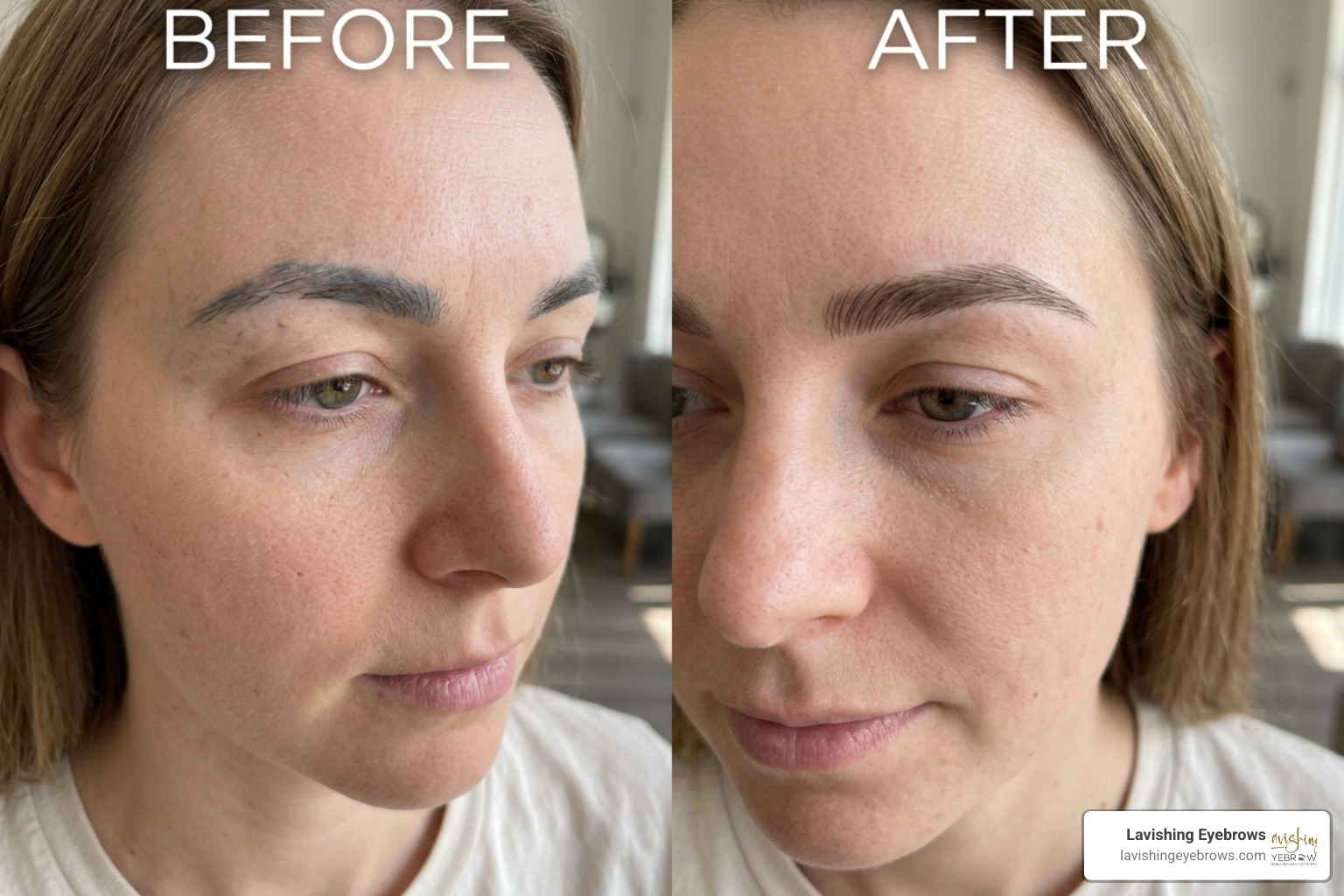
This machine-based approach uses an ultra-fine needle to deposit pigment gently without slicing the skin, which minimizes bleeding and prevents the formation of scar tissue. This allows us to create beautiful, hair-like strokes or a soft, dimensional powder finish that blends perfectly with your natural brow hair.
To explore our primary styling options, visit our dedicated Microblading services page.
Step 5: Following a Strict Healing and Aftercare Protocol
The success of your correction depends heavily on how you care for your skin during the healing window. Because correction work often involves compromised or previously worked skin, following our aftercare instructions is critical.
We advocate for a clean, dry-healing method. This means keeping your brows free from heavy ointments, makeup, and excessive moisture for the first 7 to 10 days. You must also avoid active skincare ingredients like retinoids, glycolic acids, and vitamin C near the brow area, as these will cause the corrective pigments to fade prematurely or shift color.
To prepare for your recovery journey, read our detailed timeline of the Microblading healing process and download our complete Microblading aftercare instructions.
The Cost, Timeline, and Risks of Brow Correction
Correction work is a journey that requires time, specialized pigments, and advanced technical skill. Because of this, it is generally more expensive and time-consuming than a first-time microblading session.
To help you plan, we have compiled a comparison of typical costs, timelines, and requirements for different correction paths:
| Correction Path | Sessions Required | Average Cost Per Session | Total Estimated Journey Cost | Time Between Sessions |
|---|---|---|---|---|
| Simple Color Correction (No removal needed) | 2 sessions | $500 – $800 | $1,000 – $1,600 | 4 – 6 weeks |
| Moderate Correction (Targeted saline removal + rebuild) | 3 – 5 sessions | $150 – $250 (removal) / $500 – $800 (rebuild) | $1,200 – $2,000 | 4 – 8 weeks |
| Complex Correction (Heavy saturation, full removal + rebuild) | 5 – 8+ sessions | $150 – $250 (removal) / $500 – $800 (rebuild) | $1,500 – $3,000+ | 6 – 8 weeks |
Note: Touch-up corrections for minor shape or color refinements typically run from $100 to $300 per session.
For a deeper dive into how brow service pricing is calculated, consult our guide on Understanding microblading costs.
Risks and Limitations of Correction Work
While professional correction can achieve a 70% to 90% improvement in the appearance of your brows, clients must understand the risks and limitations involved:
- Scar Tissue: If your previous artist was too aggressive, existing dermal scar tissue may resist new pigment retention, requiring multiple touch-ups.
- Patience is Mandatory: Attempting to rush the process by applying too much pigment or scheduling sessions too close together can damage the skin and cause permanent scarring.
- DIY Risks: Never attempt home remedies, salt scrubs, or internet removal kits. These methods frequently cause severe chemical burns, permanent skin damage, and infections, making professional repair much more difficult and costly.
Frequently Asked Questions About Brow Correction
Can you fix microblading that turned gray, blue, or red?
Yes, this is the most common issue we correct. Using the principles of color theory, we can neutralize these cool gray, blue, or warm red tones. We apply a warm neutralizing pigment layer (such as orange or olive) directly over the discolored areas to balance the tone before rebuilding the brows with a natural brown shade. In many cases, this color neutralization process can be completed successfully without requiring full pigment removal.
How many sessions are required for a full correction?
The number of sessions depends on the saturation of your existing pigment and your ultimate goals. Simple color corrections typically resolve in 2 sessions spaced 4 to 6 weeks apart. However, complex cases that require saline removal to fade heavy, dark, or misplaced pigment before rebuilding can take 2 to 6+ sessions over a 6 to 12-month period.
How does saline pigment removal work for fading old pigment?
Saline removal is a safe, natural method that utilizes the scientific principle of osmosis. We tattoo a specialized, sterile saline solution into the upper layers of the skin over the old pigment. The salt draws the water out of the skin cells, lifting the pigment particles upward into a scab that forms on the surface. Once the scab naturally flakes off during the healing process, a portion of the old pigment goes with it, gradually fading the area safely.
Conclusion
Living with botched or discolored permanent makeup can be incredibly frustrating, but you do not have to live with brows you resent. Reclaiming your confidence starts with choosing a highly trained, certified correction specialist who understands skin anatomy, advanced color theory, and patient, staged restoration.
At Lavishing Eyebrows in Murrieta, CA, owner Vicky brings perfectionist artistry and a warm, reassuring approach to every consultation. Serving clients throughout Southwest Riverside County — including Temecula, Menifee, Lake Elsinore, Corona, and Riverside — we use premium, US-sourced products to turn brow disasters into natural-looking masterpieces.
Ready to restore your brows and your confidence? Book professional brow correction services with Lavishing Eyebrows today.