The real trade-off with microblading is pretty straightforward. You get long-lasting, natural-looking brows and shave a ton of time off your morning routine, but in exchange, you have to be ready for the initial cost, the healing process, and the reality of future touch-ups. It’s a fantastic semi-permanent fix for sparse or uneven brows that won’t smudge at the gym or wash off at the pool.
Is Microblading the Secret to Perfect Eyebrows?
Let’s be honest, the dream of waking up with perfect eyebrows is a powerful one. For so many of us, microblading feels like a shortcut to that easy confidence, a way to ditch the daily hassle of brow pencils and powders for good. The technique itself is an art form—using a special tool to create tiny, hair-like strokes that mimic your natural brows, just fuller and more defined.
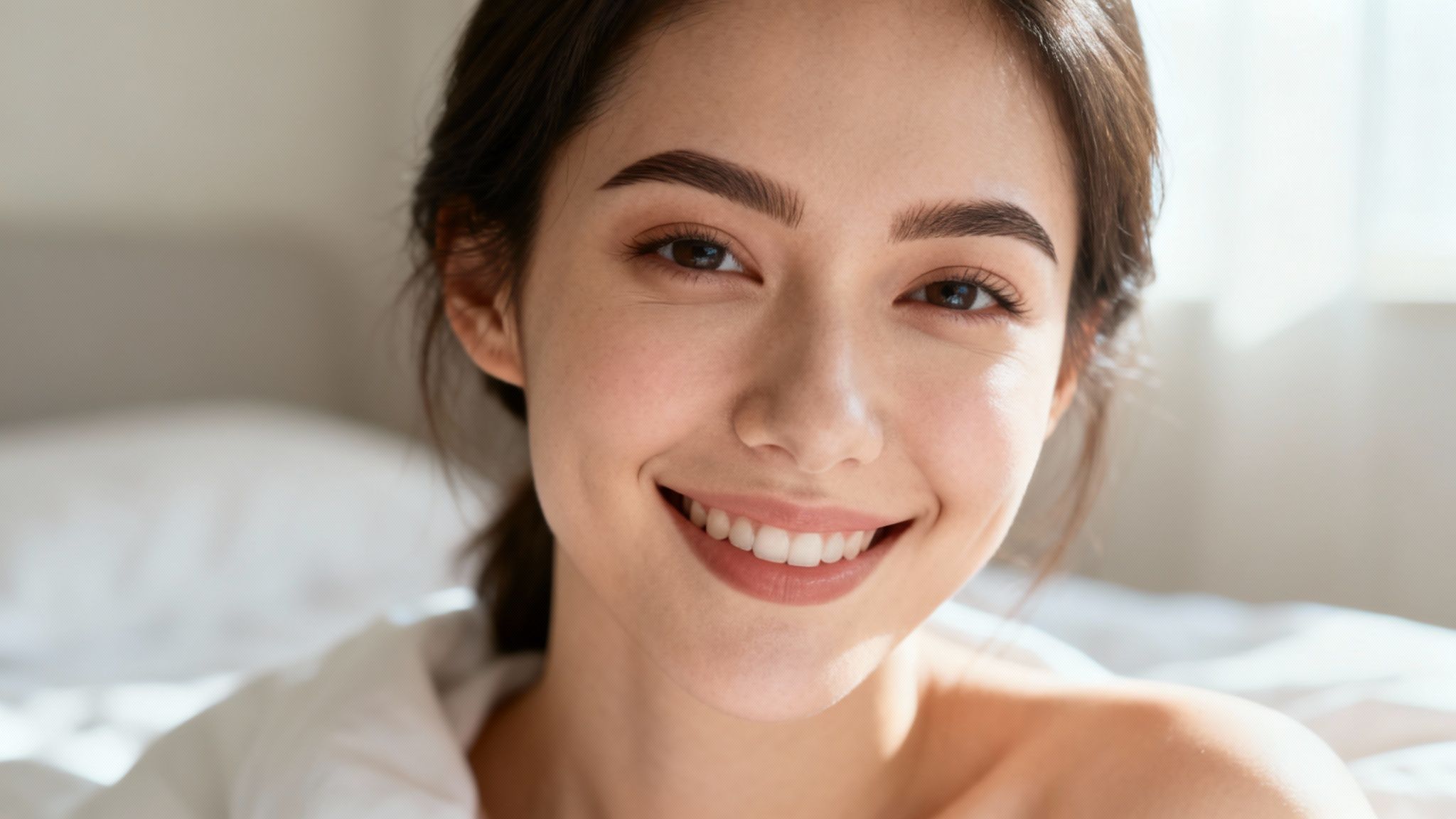
It can be a game-changer if you’ve been dealing with thinning brows from years of over-plucking, a medical condition, or just plain genetics. But deciding to go for it is about more than just how you'll look. It’s a real investment, and you need to weigh the amazing benefits against the potential downsides.
Understanding the Trade-Offs
Before we get into the nitty-gritty, it's good to have a big-picture view. Microblading isn't forever; your results will typically last anywhere from 1 to 3 years. How long depends on things like your skin type (oily skin tends to fade faster), your lifestyle, and how well you follow the aftercare instructions. This semi-permanent nature means you’ll need to schedule maintenance appointments to keep your brows looking sharp.
The single most important factor in a successful microblading experience is the skill of your artist. A certified professional ensures not only beautiful results but also adherence to strict safety and hygiene standards.
The financial side is another key piece of the puzzle. There's the cost of the initial session, a mandatory follow-up appointment a few weeks later, and then the periodic touch-ups down the line to refresh the color and shape.
To help you see it all at a glance, here’s a quick breakdown of what you’re weighing up.
Microblading at a Glance: Quick Pros and Cons
| Key Pros | Key Cons |
|---|---|
| Creates natural, hair-like strokes for a realistic look. | Higher upfront cost compared to makeup products. |
| Saves significant time in your daily makeup routine. | Requires a healing period of 7-14 days with aftercare. |
| Results are waterproof, smudge-proof, and long-lasting. | Not suitable for all skin types, especially very oily skin. |
| Can correct sparse, uneven, or asymmetrical eyebrows. | Semi-permanent results require touch-ups every 1-3 years. |
Looking at it this way, you can start to see if the long-term convenience and confidence boost feel worth the initial investment and upkeep for you personally.
The Benefits: A Closer Look at Why People Love Microblading
Let's be honest, the biggest reason people fall in love with microblading is the confidence boost. It’s a game-changer. If you’ve spent years fighting with sparse brows—thanks to the over-plucking trends of the 90s, a medical condition, or just genetics—this procedure feels like a fresh start. It's about getting back what you lost or finally achieving the balanced, symmetrical look you've always wanted.
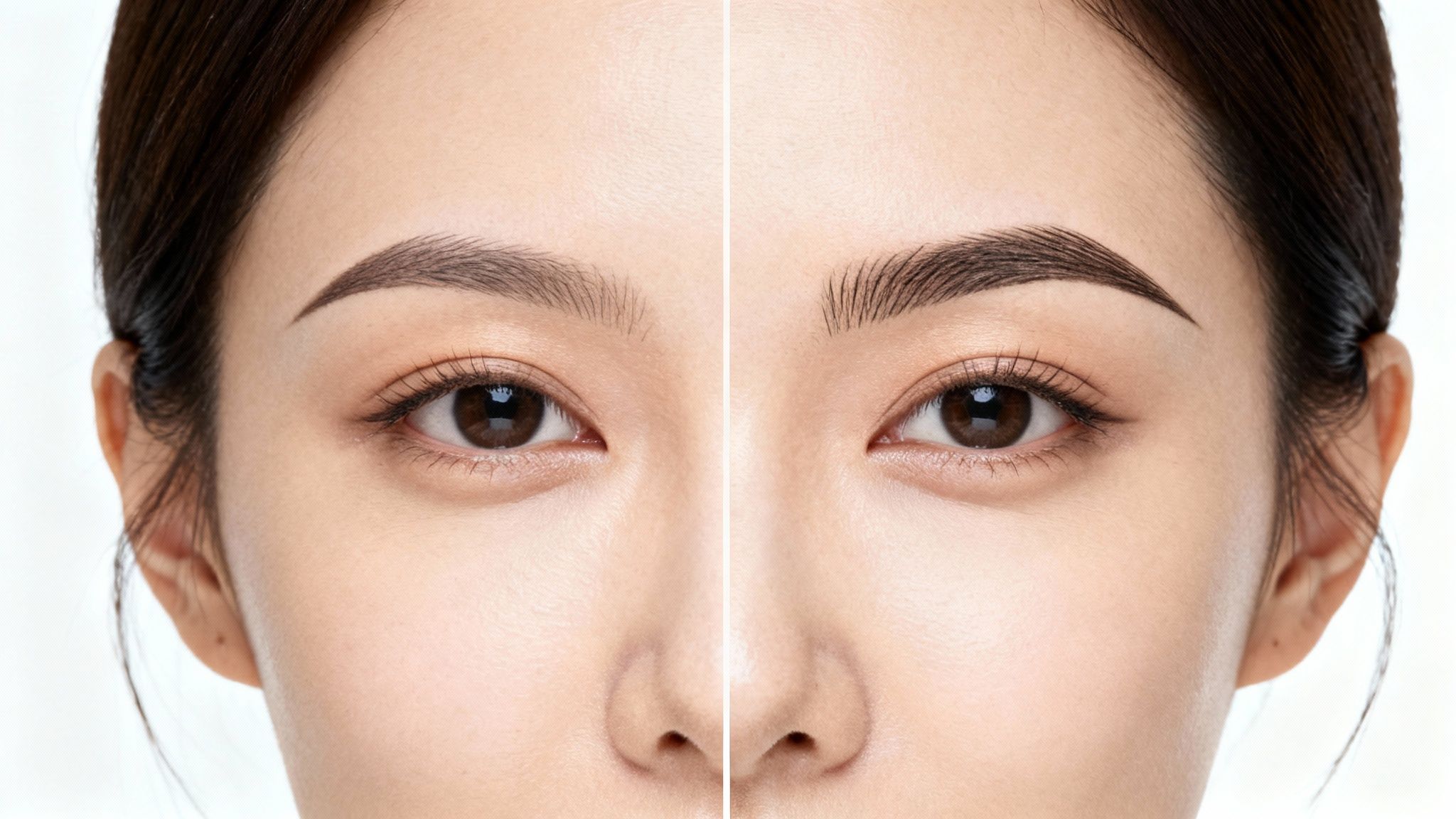
This is far from a cookie-cutter service. A talented artist doesn’t just fill in your brows; they design a shape that truly complements your unique facial features and bone structure. They'll custom-mix a pigment that perfectly matches your natural hair and skin tone, making sure the final result looks like it was always meant to be there.
The magic is in the details—those hyper-realistic, hair-like strokes that blend in so perfectly you can’t tell where your real hair ends and the pigment begins. That’s the kind of artistry that creates such a polished, natural finish.
Regain Your Time and Simplify Your Mornings
For most of my clients, the single biggest perk is the time they get back every single day. If you're a busy parent, a professional with a packed schedule, or just someone who'd rather hit snooze one more time, you know the daily struggle. Those minutes spent fussing with pencils, powders, and gels really add up. Microblading just erases that step from your morning routine.
Think about it: you wake up with perfect, smudge-proof brows, ready to go. And that convenience goes way beyond your morning coffee.
- Workout-Proof Brows: Go ahead and sweat. Your brows will look just as good after a spin class or a hot yoga session as they did before.
- Vacation-Ready Confidence: Jump in the pool, lounge on the beach, and enjoy that humid weather without a single thought about your brow makeup melting off.
- Effortless Polish: You can look completely put-together with almost zero effort, whether you're just running errands or heading into a big meeting.
This kind of low-maintenance beauty is exactly why the procedure has exploded in popularity. The entire micropigmentation market, which microblading is a huge part of, was valued at USD 102.16 million and is expected to nearly double to USD 202.02 million by 2033. This surge shows just how much clients right here in Murrieta, Temecula, and the greater Inland Empire are looking for beauty solutions that last. If you're curious about the industry side, you can find more insights about the microblading needle market and see the trends for yourself.
Enjoy Long-Lasting and Reliable Results
Unlike the brow pencil you have to buy every few months, microblading is a semi-permanent solution that delivers real value. The pigment does fade slowly over time, as it's designed to, but you can generally expect your gorgeous new brows to last anywhere from 1 to 3 years before you’ll want a touch-up.
The real advantage here is predictability. Once your brows are healed, they look the same day in and day out. No more morning guesswork, no more frustration trying to get them even. Just a consistent, reliable look you can count on.
This consistency frees you from the daily hassle of trying to nail that perfect arch or fill in patchy spots. The artist places each stroke with precision to build a fuller, more defined shape that beautifully frames your eyes. For so many people, it’s not just a cosmetic tweak—it's a massive confidence boost and a way to make life just a little bit simpler.
The Drawbacks: A Candid Look at the Risks and Realities
Alright, let's talk about the other side of the coin. While gorgeous, effortless brows are the goal, getting there isn't without its hurdles. To make a smart decision, you need the full story—the investment, the healing, and the potential hiccups along the way.
First and foremost, let's be upfront about the cost. Microblading is a premium service for a reason. You're paying for an artist's skill, meticulous training, and top-of-the-line materials. This isn't just a one-and-done deal; it's an ongoing investment in your look.
The semi-permanent nature of the pigment means it's designed to fade softly over time. That's a good thing—it allows for adjustments as styles and faces change. But it also means you'll need to pop back in for touch-ups to keep the color fresh and those strokes looking sharp. It’s all part of the process.
The Financial and Time Investment
One of the biggest considerations is that microblading isn’t truly permanent, which means future appointments and costs. While the demand for permanent makeup is booming, the reality is that the pigment fades. Most brows will last anywhere from 1-3 years, depending heavily on your skin type and how much sun you get.
In fact, about 60% of clients find they need an annual refresh, which can run you about $300 on average. For our clients here in Southern California, from Murrieta to Los Angeles, an initial session can range from $400 to $800. So, thinking about those maintenance costs from the get-go is just plain smart budgeting. You can get more insights on permanent makeup market trends on Fortune Business Insights.
The best way to think about microblading is not as a single purchase, but as a recurring part of your beauty budget. When you factor in the touch-ups from day one, you get a much more realistic picture of the total cost.
The Healing Process and Your Role In It
Getting those perfect brows involves a critical healing phase, and your commitment here is everything. Right after your appointment, your brows are going to look dark and bold. Don't panic! This is totally normal.
Over the next 7 to 14 days, you’ll see some light scabbing and flaking as your skin repairs itself. Following your artist’s aftercare rules during this period is non-negotiable. Here’s why it matters so much:
- It Prevents Infection: Keeping the area clean and dry is your number one job.
- It Protects the Pigment: If you pick at the scabs, you're literally pulling the pigment out, which leads to patchy brows.
- It Guarantees a Better Result: Good aftercare helps the pigment settle in properly for that natural, crisp look you want.
This healing time does mean putting a few things on pause—no intense, sweaty workouts, no swimming, and definitely no sunbathing. How dedicated you are to the aftercare will directly shape how great your brows look and how long they last.
Potential Risks and Who It’s Not For
While problems are rare with a skilled, certified artist, it's important to know they can happen. Allergic reactions to the pigment are uncommon but possible. The other risk? Simply not loving the final shape or color. This is exactly why choosing an artist with a strong portfolio of healed results is so crucial. A great consultation should iron out any potential surprises.
To get a deeper understanding of the safety side of things, our guide on whether microblading is a safe procedure is a great resource.
Finally, microblading just isn't the right fit for everyone. There are a few key things that can make you a less-than-ideal candidate:
- Very Oily Skin: That extra oil can cause the delicate hair strokes to blur together and fade much more quickly.
- Certain Medical Conditions: Things like diabetes or autoimmune disorders can complicate the healing process.
- Reactive Skin: If you're prone to keloid scarring or have skin conditions like eczema on your face, it might not be a safe option.
The only way to know for sure is to have an honest, in-depth conversation with your artist about your health, your skin, and your expectations.
Comparing Your Options: Microblading vs. Other Brow Solutions
To really get a feel for what microblading offers, it helps to see how it stacks up against the other options out there. For years, our choices were limited to daily makeup—pencils, powders, and gels. They get the job done, sure. They're also affordable and give you total control to change your look day by day.
But let's be honest, they demand time and a steady hand every single morning. And they definitely won't survive a sweaty gym session or a dip in the pool.
This is where microblading comes in, offering a smudge-proof, waterproof solution that lasts for years. It’s a game-changer for convenience. But it’s not the only semi-permanent technique on the block. Its main counterpart is microshading (often called "powder brows"), and understanding the difference is crucial to picking the right one for you.
Microblading vs. Microshading
The easiest way to think about it is with an art analogy. Microblading is like delicate calligraphy, using a fine-tipped pen to draw individual, hair-like strokes. This creates a hyper-realistic, natural-looking brow, making it amazing for filling in sparse areas.
Microshading, on the other hand, is more like stippling or airbrushing. It uses a machine to deposit tiny dots of pigment, building up a soft, pixelated finish that mimics the look of brow powder.
The best choice for you really boils down to two things: your skin type and the final look you're hoping to achieve.
- Microblading: Gives you those crisp, individual hair strokes. It’s absolutely beautiful but works best on normal to dry skin. On oily skin, those perfect strokes can sometimes blur or fade more quickly.
- Microshading (Powder Brows): Creates a fuller, more defined "makeup" look. This technique is a fantastic choice for oily or sensitive skin types and often holds its color a bit longer than microblading.
A lot of people I see end up choosing "combo brows." This technique gives you the best of both worlds: natural, microbladed hair strokes at the front of the brow, blended into soft shading through the arch and tail for extra definition.
If you want to go deeper, check out our detailed guide comparing microblading vs. microshading to really nail down which one fits your vision.
To simplify things even more, here’s a quick comparison of the two most popular methods side-by-side.
Microblading vs Microshading Which Is Right for You?
| Feature | Microblading | Microshading (Ombré/Powder Brows) |
|---|---|---|
| Technique | Manual blade creates individual hair strokes. | Machine with a fine needle creates a stippling effect. |
| Final Look | Natural, feathery, hair-like texture. | Soft, powdered, filled-in "makeup" look. |
| Best for… | Normal to dry skin types. | Oily, mature, or sensitive skin types. |
| Longevity | 1-2 years on average. | 1-3 years on average. |
| Pain Level | Mild to moderate; a scratching sensation. | Mild; often described as less intense than microblading. |
Ultimately, both techniques deliver beautiful, long-lasting brows, but the method and final aesthetic are quite different. This table should give you a clear starting point for your consultation.
And if you're a visual person, this decision tree can help you see where you land based on your skin, budget, and how you feel about aftercare.
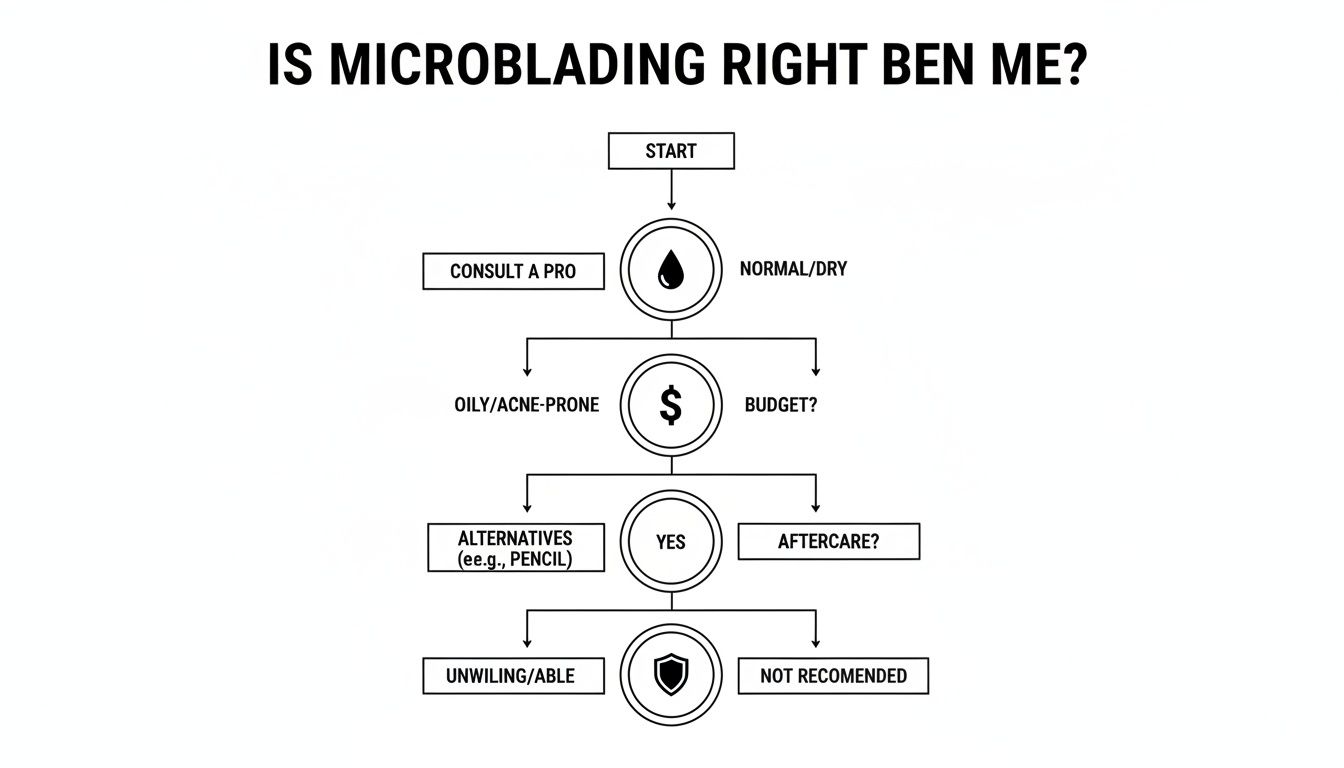
As you can see, factors like oily skin might steer you toward microshading for results that will look better and last longer. It’s all about matching the technique to the canvas
How to Choose the Right Microblading Artist
So, you’ve weighed the pros and cons, and you're leaning towards microblading. Here's the most important thing to understand: the success of your procedure comes down almost entirely to the artist you choose. This isn't just about getting your brows done; it's about commissioning a piece of art for your face.
Choosing an artist is the single biggest factor in getting results you'll love.
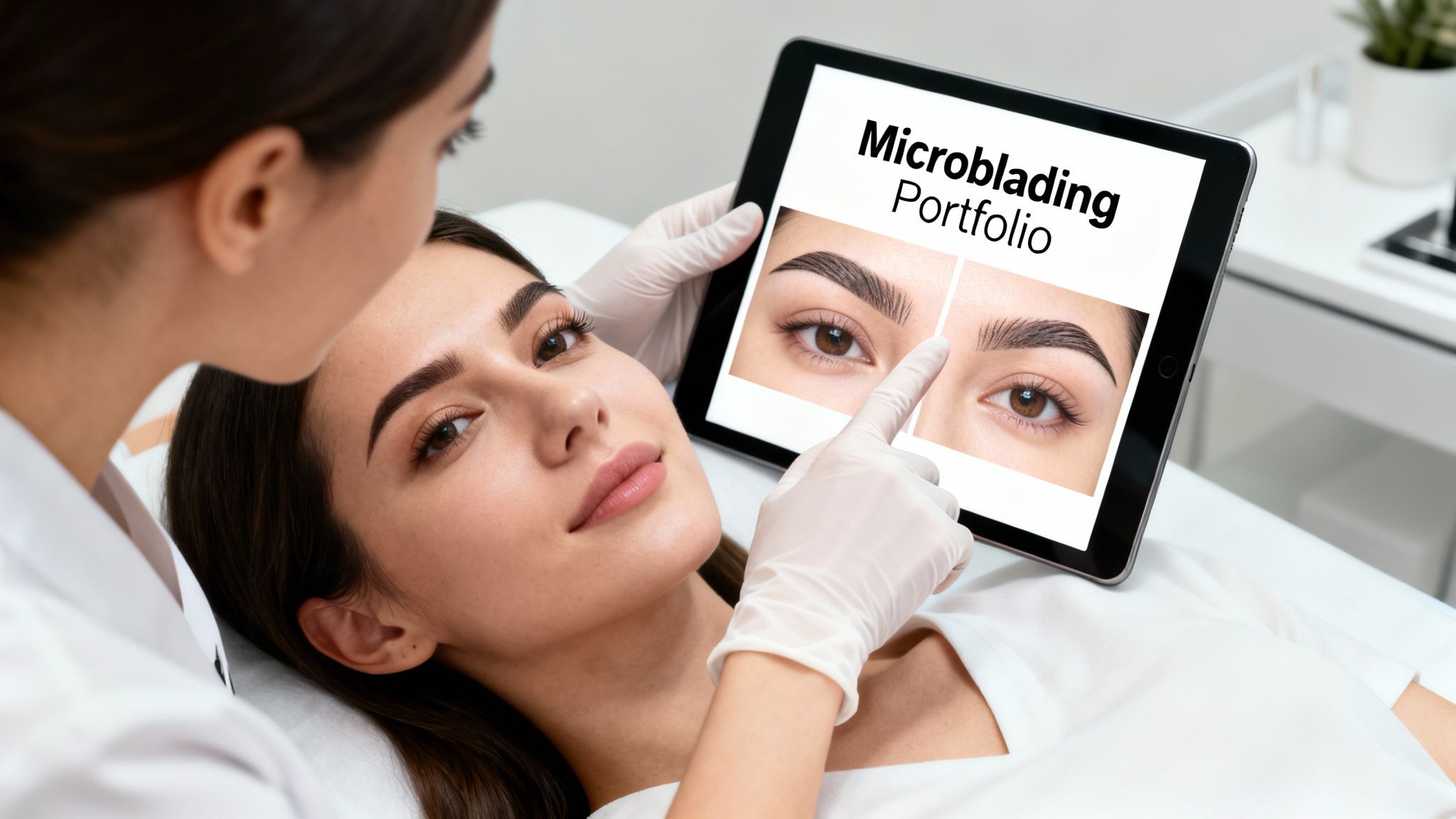
Before you even think about brow shape, start with the essentials: licensing and safety certifications. A legitimate professional will have these on display, including proof of bloodborne pathogen training. Pay attention to the studio, too. It should feel clean and sterile, and your artist must open new, single-use tools right in front of you. No exceptions.
This isn't just nitpicking. The permanent makeup market is booming and expected to reach USD 1.5 billion by 2030, fueled by the quest for perfect brows. With so many new artists popping up, doing your homework on safety and experience is critical. You can find more details about the growing permanent makeup market on intentmarketresearch.com.
Evaluating an Artist’s Work
When you start looking through portfolios, be a savvy critic. Don't just get wowed by the "freshly done" pictures taken minutes after a session. The color is always darker and bolder right away, which can be deceiving.
The true test of an artist's skill lies in their gallery of healed results.
Healed work reveals the artist's real talent. It shows how the strokes settle into the skin over time, if the color holds true, and whether the overall look is genuinely natural weeks or months later.
Your next step is the consultation. This is your interview. A great artist will listen to your goals, map a custom brow shape that complements your facial structure, and give you a realistic idea of the outcome. They should be able to explain their process clearly and make you feel comfortable.
If a consultation feels rushed, or if the artist seems dismissive of your questions, walk away. Taking your time to find the right person makes all the difference. For more advice, take a look at our guide on how to prepare for microblading.
Your Microblading Questions Answered
Even after you've weighed the pros and cons, a few lingering questions are completely normal. Let's tackle some of the most common ones so you can feel totally confident about your decision.
So, Does It Actually Hurt?
This is probably the number one question I get! The short answer is: for most people, it's more of a strange sensation than actual pain. Before we even start, I apply a strong topical numbing cream to your brow area to take the edge off.
We also use a secondary anesthetic as we go to keep you comfortable from start to finish. Most of my clients describe the feeling as a light, repetitive scratching—definitely not the intense pain you might be picturing.
How Long Does It Really Take to Heal?
The initial healing stage, where you'll see some light scabbing and maybe a bit of redness, usually wraps up in about 7 to 14 days. But that's just the first step.
The full healing process, where the pigment truly settles into its final, beautiful color, takes a bit longer—typically about four to six weeks.
A Quick Note on Aftercare: Following your artist's aftercare instructions to the letter during this time is the most critical thing you can do. It's the secret sauce for getting those gorgeous, long-lasting results and avoiding any issues.
What If I Don't Like It? Can It Be Removed?
Yes, microblading can be removed, but it's not a simple eraser. While the pigment is designed to fade over time, getting rid of it ahead of schedule involves laser or saline removal treatments, which can be a long and expensive journey.
This is exactly why choosing the right artist is so important. Really take your time to find someone whose portfolio of healed work you absolutely love. A great consultation is your best friend here—it’s where you and your artist get on the exact same page to create a look you'll be thrilled with.
Ready to explore if microblading is the perfect fit for you? At Lavishing Eyebrows, we start with a detailed consultation to design brows that are uniquely yours. Book your appointment online today!
Article created using Outrank